 Anshika Jain
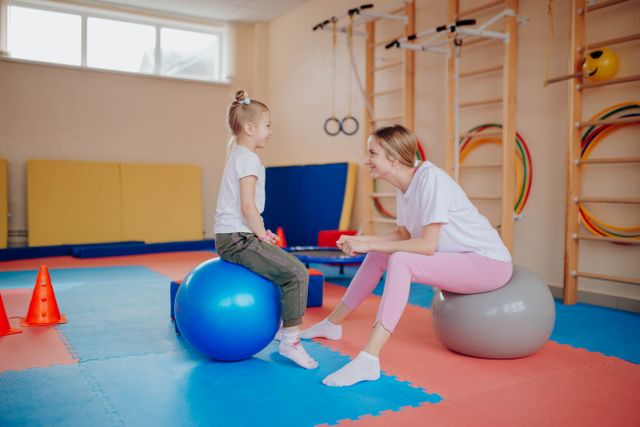
The human body performs thousands of coordinated movements every day without requiring constant visual attention. Walking across a room, climbing stairs, reaching for a glass or maintaining balance while standing all depend on the brain’s ability to understand where different body parts are positioned and how they are moving. Even when the eyes are closed, the nervous system can estimate the position of the arms, legs and joints with considerable accuracy. This internal sense is known as proprioception.
Proprioception is sometimes described as the body’s sixth sense because it provides information about movement and position without relying primarily on vision, hearing or touch from the external environment. It helps the nervous system coordinate muscles, adjust posture, regulate movement and respond to unexpected changes in physical surroundings. When proprioceptive information becomes unreliable, everyday activities can become more difficult, even when muscle strength remains relatively normal.
Understanding this sensory system is a significant challenge in neuroscience. Proprioceptive signals originate from specialised receptors in muscles, tendons and other tissues before travelling through complex neural pathways to the spinal cord and brain. The brain must combine these signals with information from vision, the vestibular system and motor commands to construct a continuously updated estimate of the body’s position.
Artificial intelligence is creating new opportunities to investigate this process. Machine learning models can analyse movement data, simulate sensory signals, examine neural activity and identify patterns associated with body-position estimation. Researchers are also exploring how AI can support the assessment and rehabilitation of proprioceptive difficulties. This emerging field of proprioceptive health intelligence could improve scientific understanding of movement and contribute to more personalised approaches to neurological and physical rehabilitation.
Understanding Proprioception and the Brain’s Internal Body Map
Proprioception is the ability to sense the position, movement and, in a broader sense, force or effort associated with different body parts. It allows the brain to estimate whether a joint is bent or extended, whether a limb is moving and how much force a muscle may be producing. These signals support both deliberate actions and automatic adjustments that help maintain stability.
The sensory information comes from specialised receptors known as proprioceptors. Muscle spindles detect changes in muscle length and the speed at which muscles stretch. Golgi tendon organs respond to tension within tendons and contribute information about muscle force. Sensory receptors in and around joints and other tissues can also provide information relevant to movement and position.
These receptors send signals through sensory neurons towards the spinal cord and brain. Some information contributes to spinal reflexes and rapid adjustments, while other signals travel through ascending pathways to higher neural centres. The brainstem, thalamus, somatosensory cortex and cerebellum all contribute to different aspects of proprioceptive processing and movement coordination.
The brain does not simply receive a fixed description of body position. It continuously interprets changing sensory information alongside motor commands and other sensory inputs. This creates an internal estimate of the body’s state, allowing movements to remain coordinated even when visual information is limited or unavailable.
A 2025 study published in Brain Communications further explored the relationship between proprioception and body awareness. Research involving patients with right-hemisphere stroke found that proprioceptive deficits were associated with disturbances in the sense of body ownership and awareness of movement difficulties. These findings suggest that proprioception contributes not only to physical coordination but also to how people experience and understand their own bodies.
Why Proprioceptive Processing Is Difficult to Study
One of the major challenges in proprioceptive research is that the sensory system operates continuously and often without conscious attention. Researchers can ask a participant to identify the position of an arm or reproduce a movement, but these tasks capture only selected aspects of a much more complex process.
Another difficulty is the interaction between sensory information and voluntary movement. When a person reaches for an object, the brain receives feedback from muscles and tendons while simultaneously issuing commands to produce the movement. It must distinguish between expected changes caused by its own actions and unexpected changes caused by external forces.
Proprioception also interacts with vision and the vestibular system, which provides information about head movement and orientation. When visual information is available, the brain can combine it with proprioceptive signals to estimate body position. When vision is reduced, proprioceptive and vestibular information become especially important.
These systems do not always provide perfectly consistent information. A person may experience muscle fatigue, altered joint sensitivity or an unfamiliar movement environment. The brain must adjust the importance assigned to different signals according to their reliability and the demands of the task.
Traditional experiments can isolate certain sensory components, but it is difficult to reproduce the full range of natural movements and neural interactions in a laboratory. AI-based modelling offers a way to investigate these relationships through simulations and comparisons with recorded neural activity.
How AI Can Model the Proprioceptive Pathway
AI can help researchers study proprioception by building computational models that process simulated sensory information in ways that resemble selected aspects of neural processing. These models can be trained to estimate limb position, movement speed or other properties of the body’s changing state.
A particularly important example appeared in a 2024 research highlight published in Signal Transduction and Targeted Therapy. The work discussed a study in Cell in which researchers used task-driven artificial neural networks to investigate the computational principles of proprioceptive processing. They generated simulated muscle spindle signals using a three-dimensional musculoskeletal model and trained neural networks to perform different possible sensory-processing tasks.
The researchers examined multiple hypotheses about what proprioceptive pathways might be computing, including limb-state estimation, action recognition and sensorimotor control. They then compared the internal representations developed by the models with neural recordings from the cuneate nucleus and primary somatosensory cortex of non-human primates performing active and passive arm movements.
Models trained to estimate limb position and velocity were particularly effective at predicting aspects of the recorded neural activity. This provided evidence that estimating the changing state of the limbs is an important computational function of the proprioceptive pathway. The work demonstrates how AI can help researchers test hypotheses about brain function rather than simply classify movement data.
This approach is important because a successful computational model can offer clues about the information the nervous system may be trying to extract from sensory signals. It does not mean that an artificial neural network reproduces the complete biological brain. Instead, it provides a framework for testing specific explanations of how neural information may be organised.
AI and the Integration of Muscle, Joint and Movement Signals
Proprioception involves several sources of information that must be interpreted together. Muscle spindle activity provides information about muscle stretch, while tendon-related signals contribute information about force. Joint movement, limb acceleration and the timing of sensory feedback also influence the brain’s estimate of body position.
AI models can examine these signals as interconnected time-dependent measurements. Recurrent neural networks and other sequence-learning architectures can process information that changes over time, making them relevant to the study of movement and sensory feedback. More advanced models can combine muscle activity, joint angles, acceleration and external movement measurements to estimate the state of a limb.
For example, a system could analyse the relationship between muscle activity and joint movement during a reaching task. It might identify when the movement follows an expected pattern and when the observed motion differs from the predicted trajectory. These differences could help researchers investigate movement corrections and sensory-motor coordination.
However, movement measurements should not be confused with direct measurements of proprioceptive accuracy. A person may move differently because of pain, weakness, fatigue, fear or limited mobility rather than because of impaired proprioception. AI systems must therefore interpret movement patterns alongside suitable sensory tests and clinical information.
Wearable Sensors and Digital Proprioceptive Assessment
Wearable technology offers another opportunity to study proprioceptive health. Inertial measurement units, accelerometers, gyroscopes and motion sensors can capture information about body movement, orientation and acceleration. When placed on selected body segments, these devices can provide continuous measurements during walking, balance tasks and rehabilitation exercises.
AI can analyse these measurements to identify movement patterns that may be difficult to quantify through visual observation alone. It can estimate joint movement, compare left and right limb coordination, detect changes in balance strategies and monitor progress across repeated sessions.
For instance, a person recovering from a lower-limb injury may perform a balance or joint-position reproduction task. Wearable sensors can record the movement trajectory, while an AI model can compare the performance across sessions. The resulting information may help a clinician understand whether movement control is becoming more consistent.
Nevertheless, wearable sensors measure movement rather than proprioceptive signals directly. Their measurements may be influenced by sensor placement, calibration, body movement patterns and environmental conditions. A person may also compensate for reduced sensory accuracy by relying more heavily on vision or changing their movement strategy.
A 2026 review in Frontiers in Bioengineering and Biotechnology examined wearable sensors and AI for proprioceptive assessment and rehabilitation after sports injuries. It highlighted opportunities for measurement and feedback while emphasising that sensor-derived outcomes can be affected by pain, strength, fatigue, attention and compensatory movement. The review also identified limitations involving reliability, standardisation and clinical validation.
Proprioceptive Health Intelligence in Neurological Rehabilitation
Proprioceptive difficulties can occur in different neurological and physical conditions. Stroke, peripheral nerve injuries and certain neurological disorders may affect the pathways responsible for transmitting or interpreting sensory information. Individuals may have difficulty identifying limb position, coordinating movements or maintaining stability without visual guidance.
AI-assisted assessment could help clinicians examine these difficulties in greater detail. Instead of relying on a single movement test, an assessment system could combine joint-position reproduction, movement detection, balance performance and wearable sensor measurements. Machine learning could then identify patterns that distinguish different types of movement and sensory difficulties.
In stroke rehabilitation, for example, a patient may have difficulty recognising the position of an affected arm. A digital assessment platform could record the patient’s ability to reproduce specific joint positions and compare the results over time. Such measurements could help clinicians track changes and adjust rehabilitation activities.
AI may also support feedback-based rehabilitation. A system could provide visual or auditory information when a movement differs from a target trajectory. With repeated practice, the individual may learn to improve movement control and coordination. However, the feedback should be designed by rehabilitation professionals because excessive visual dependence may not necessarily improve proprioceptive function itself.
The objective is not to replace physiotherapists or neurological specialists. It is to provide additional measurements that may help them understand a patient’s performance and make rehabilitation more responsive to individual needs.
The Connection Between Proprioception, Balance and Motor Learning
Proprioception is closely connected to balance because the nervous system must continuously estimate the position of the body while responding to changes in the environment. When a person stands on an uneven surface, walks along a narrow path or changes direction suddenly, sensory information helps the brain adjust muscle activity and maintain stability.
Motor learning also depends on sensory feedback. When someone learns a new movement, the nervous system compares the intended action with the movement that actually occurs. The difference between the expected and observed result can help refine future motor commands.
AI can investigate this process by analysing movement trajectories across repeated trials. It may identify how movement accuracy changes with practice, whether corrections become faster and how performance changes when visual feedback is removed. These measurements could help researchers understand the relationship between sensory information and the development of motor skills.
In sports science, such approaches may eventually support the analysis of balance, coordination and movement adaptation. In rehabilitation, they could help monitor how patients regain functional movement after injury or neurological illness.
However, improvements in balance or movement performance do not automatically demonstrate that proprioceptive sensitivity has improved. Researchers need carefully designed tests to distinguish changes in sensory function from changes in strength, confidence, attention or general motor ability.
Proprioception, Body Awareness and Human–Machine Interfaces
Proprioception is also relevant to the development of prosthetic limbs, robotics and human–machine interfaces. A prosthetic device may reproduce the physical movement of a missing limb, but users do not automatically receive the same sensory information that would normally come from muscles, tendons and joints.
This creates a challenge for natural movement control. Without useful feedback about the position and movement of a prosthetic limb, users may need to depend heavily on vision. Researchers are investigating ways to provide artificial sensory feedback through mechanical stimulation, electrical stimulation and other interface technologies.
AI could help interpret signals from prosthetic devices and coordinate them with sensory feedback. Computational models may estimate the position of a prosthetic limb and adjust control signals according to the user’s intended movement. Future systems could also investigate how sensory feedback should be delivered to create more intuitive control.
The same principles may contribute to advanced rehabilitation robotics. A robotic system could monitor movement, provide carefully controlled assistance and adapt its response to the user’s changing performance. However, reproducing natural proprioceptive experience remains a complex research challenge. A digital estimate of limb position is not equivalent to recreating the biological sensation of movement.
Challenges in Developing Reliable Proprioceptive AI Systems
Despite its potential, AI-based proprioceptive research faces several important limitations. One major challenge is the lack of large, standardised datasets containing both detailed movement measurements and reliable sensory assessments. Models trained on small or highly specialised groups may not generalise to people with different ages, physical abilities or neurological conditions.
Another difficulty is separating sensory impairment from other causes of unusual movement. Pain, muscle weakness, fatigue, fear of falling and limited joint mobility can all influence performance. If an AI model interprets every movement error as a proprioceptive problem, it may produce misleading conclusions.
There are also technical challenges associated with wearable devices. Sensor placement, calibration and measurement noise can affect the quality of recorded movement data. Different laboratories may use different testing protocols, making it difficult to compare results.
Neural modelling presents additional challenges. Artificial networks can predict patterns in recorded brain activity, but a successful prediction does not necessarily reveal the exact biological mechanism responsible for that activity. Researchers must compare computational findings with physiological experiments and independent datasets.
Future progress will depend on transparent model design, clinically meaningful measurements, diverse research participants and external validation. AI should support scientific interpretation rather than create an appearance of certainty where the evidence remains incomplete.
The Future of Proprioceptive Health Intelligence
The future of proprioceptive health intelligence may involve combining neural modelling, wearable technology, movement analysis and clinical assessment into more integrated research systems. Instead of studying isolated joint movements, researchers may investigate how the brain updates its internal representation of the body during complex activities such as walking, reaching, turning and adapting to unfamiliar environments.
AI systems could also become more personalised by considering an individual’s movement history, sensory performance and rehabilitation progress. Longitudinal data may help researchers understand whether changes in movement are temporary adaptations or signs of longer-term improvement.
Another promising direction is the development of models that combine proprioceptive information with vision and vestibular signals. Such systems could help investigate how the brain changes the importance assigned to different sensory sources when one becomes unreliable. This may be particularly relevant to balance disorders and neurological rehabilitation.
Advances in neuroprosthetics may also benefit from a deeper understanding of proprioceptive processing. More effective artificial feedback systems could help users control devices with less dependence on visual monitoring. However, these developments will require substantial work in neuroscience, engineering and clinical research.
Ultimately, AI may help researchers move from observing movement to understanding the sensory computations that make coordinated movement possible. This distinction is essential for developing technologies that address the underlying mechanisms of proprioceptive difficulties.
Conclusion
Proprioception is a fundamental part of human movement, allowing the brain to estimate body position, interpret changes in muscle and joint activity and coordinate actions without constant visual attention. Its role extends beyond balance and physical coordination to include motor learning and aspects of body awareness.
Artificial intelligence offers new methods for studying this complex sensory system. Neural networks can investigate how proprioceptive signals are processed, while wearable sensors and machine learning can support the analysis of movement and rehabilitation performance. Research using task-driven neural networks has already demonstrated how computational models can help test hypotheses about the brain’s representation of limb position and movement.
However, AI cannot directly measure every aspect of proprioception through movement data alone. Reliable assessment requires appropriate sensory tests, physiological evidence and clinical interpretation. As datasets and experimental methods improve, proprioceptive health intelligence could contribute to more detailed neuroscience research, personalised rehabilitation and advanced human–machine interfaces.
The long-term opportunity is to understand not only how the body moves, but how the brain continuously senses, predicts and adjusts that movement.