 Anshika Jain
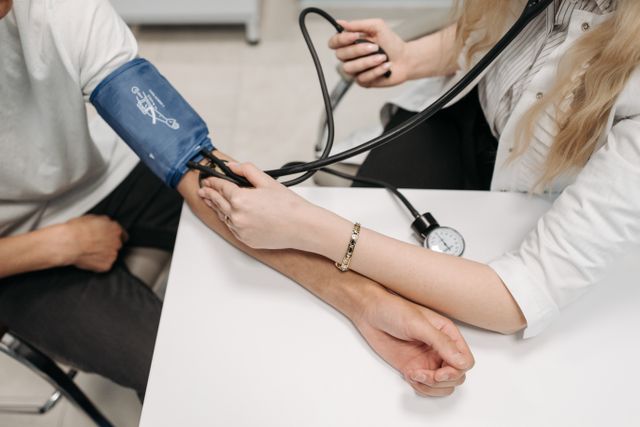
The human body continuously generates biological signals that reflect its internal condition. Every heartbeat, breath, muscle contraction, change in blood oxygen level and fluctuation in brain activity provides information about a different aspect of human physiology. Modern wearable devices, medical monitors and diagnostic technologies can capture these signals at increasingly high frequencies, producing enormous quantities of health-related data. However, collecting millions of measurements does not automatically provide a clear understanding of a person’s overall health.
A heart-rate monitor may reveal changes in cardiovascular activity, while an electrocardiogram records the electrical behaviour of the heart. A wearable sensor may measure movement, skin temperature or blood oxygen saturation, whereas laboratory tests provide information about biochemical processes. Each measurement represents only one part of a much larger biological system. Understanding how these signals relate to one another requires an approach that can combine different forms of information without losing their biological meaning.
This is where the concept of Physiological State Compression becomes relevant. It explores whether artificial intelligence can transform millions of complex biological measurements into a compact representation that summarises an individual’s current physiological condition. Rather than examining every signal separately, AI could identify important patterns, relationships and changes and encode them into a smaller mathematical representation known as a latent health-state representation.
This approach could support continuous health monitoring, clinical risk assessment, personalised healthcare and earlier identification of physiological changes. However, reducing biological complexity into a single representation is a significant scientific challenge. The objective is not simply to compress data, but to preserve the information that matters for understanding the body’s changing condition.
Understanding Physiological State Compression
Physiological State Compression is a conceptual approach in which AI converts large volumes of biological measurements into a compact representation of the body’s condition. The representation is intended to capture important patterns across multiple physiological systems while reducing unnecessary information and measurement noise.
Consider an individual whose wearable devices continuously collect heart rate, respiratory rate, movement, skin temperature and blood oxygen measurements. A conventional monitoring system may display each measurement separately, requiring the user or healthcare professional to interpret several streams of information. An AI-based compression system could analyse these measurements together and generate a mathematical representation that reflects the combined physiological pattern.
In machine learning, such a representation is commonly described as a latent space or embedding. It contains numerical features learned from the original data. Instead of retaining every detail of every measurement in the final representation, the model attempts to preserve the characteristics that are useful for a particular analytical purpose.
For example, the representation might capture patterns associated with cardiovascular activity, respiratory function, physical recovery and changes in autonomic regulation. It could also preserve information about how these systems interact over time.
Importantly, a compressed representation is not necessarily a complete description of human health. Its usefulness depends on what information the model was trained to preserve. A representation designed to detect cardiovascular abnormalities may not retain all the information required to understand neurological or metabolic conditions.
Why Millions of Biological Signals Are Difficult to Interpret
Human physiology is highly interconnected. Cardiovascular activity influences blood circulation, respiratory function affects oxygen availability, and nervous-system activity helps regulate several processes simultaneously. Changes in one system may produce measurable effects in others.
The difficulty increases when biological signals are collected continuously. A wearable device may generate thousands of measurements every hour, while hospital monitoring systems can record multiple high-frequency waveforms simultaneously. When data from several devices are combined, the volume becomes difficult to interpret manually.
Another challenge is that different signals operate at different frequencies and timescales. An electrocardiogram captures electrical activity associated with individual heartbeats, while body temperature may change more gradually. Blood glucose can fluctuate in response to meals and physical activity, whereas movement sensors record rapid changes in acceleration and orientation.
These measurements also differ in format, accuracy and reliability. Some are electrical waveforms, others are numerical measurements or biochemical readings. Sensors may produce missing values, motion artefacts or inconsistent measurements when devices are worn incorrectly.
AI-based physiological compression attempts to address these challenges by learning relationships across different signals. Rather than treating every measurement as an independent observation, the system can investigate how multiple signals change together and which combinations provide meaningful information about the body’s condition.
How AI Converts Biological Signals Into Compact Representations
The process generally begins with signal collection and preprocessing. Data may come from electrocardiograms, photoplethysmography sensors, electroencephalograms, accelerometers, respiratory monitors, temperature sensors and biochemical monitoring devices. Clinical measurements and relevant health records may provide additional context.
Before analysis, the data must be checked for missing values, noise, inconsistent sampling rates and measurement errors. Different signals may need to be aligned in time so that the model can understand which physiological events occurred together.
The next stage involves feature extraction and representation learning. Deep-learning architectures can identify patterns within the original signals and transform them into numerical features. These features may represent waveform characteristics, rhythmic patterns, changes in signal frequency or relationships between different biological measurements.
Autoencoders are one established technique for this purpose. An encoder transforms high-dimensional input data into a smaller representation, while a decoder attempts to reconstruct the original information from that representation. During training, the model learns which features are important for retaining useful information.
Variational autoencoders introduce a probabilistic approach to latent representations, allowing the model to learn a structured distribution rather than simply mapping each input to a fixed compressed vector. Transformer architectures can also process long sequences and identify relationships between events occurring at different times.
The final representation can then be used for downstream tasks such as physiological classification, anomaly detection, risk estimation or monitoring changes over time. The central requirement is that compression should preserve information relevant to the intended health application.
Multimodal Learning: Combining Signals From Different Biological Systems
One of the most important elements of physiological state compression is multimodal learning. This approach enables AI systems to combine information from different measurement technologies and biological domains.
For example, an electrocardiogram provides information about the electrical activity of the heart, while photoplethysmography measures changes in blood volume beneath the skin using optical signals. Accelerometers capture physical movement, and respiratory sensors provide information about breathing patterns. Combining these measurements may reveal relationships that cannot be identified through individual signals alone.
A 2026 review published in Advanced Science examined how multimodal wearable biosensing can be integrated with multidomain AI. It described the potential of combining physiological, biochemical and physical measurements with clinical information to support more comprehensive health analysis. The review also highlighted challenges involving data quality, cross-modality alignment, privacy and generalisation across different users and environments.
Multimodal models can use different fusion strategies. Early fusion combines information from multiple sources before deeper processing. Intermediate fusion allows separate signal-processing networks to learn features before combining them. Late fusion combines the predictions or representations generated by individual models.
Each method has different advantages. Early fusion can capture detailed interactions but may be sensitive to differences in signal formats. Intermediate fusion allows each modality to be processed according to its characteristics. Late fusion can be easier to implement when some data sources are unavailable, although it may lose certain cross-signal relationships.
The challenge is to create a shared representation without assuming that all biological signals contain equivalent information. A useful model must preserve the distinctive properties of each measurement while identifying meaningful relationships between them.
Physiological Foundation Models and the Development of General Health Representations
A promising direction is the development of physiological foundation models. These are AI systems trained on large and diverse collections of biological data so that they can learn general patterns before being adapted to specific healthcare tasks.
Traditional machine-learning models are often designed for one purpose, such as identifying irregular heart rhythms or estimating respiratory rate. A foundation model aims to learn broader representations that may be reused across several applications.
For example, a model trained on large collections of physiological waveforms could learn patterns associated with normal biological rhythms, changes in signal quality and relationships between different measurements. Researchers could then adapt it for specific tasks such as risk estimation, monitoring or clinical classification.
A 2026 study introducing PhysioJEPA demonstrated the potential of self-supervised representation learning for physiological signals. The model was trained on more than 10.7 million minutes of intensive-care physiological data, using arterial blood pressure, electrocardiography and photoplethysmography. Its learned representations were evaluated on tasks involving short-term hypotension risk estimation and shock-index estimation, including testing on an independent healthcare system. The findings suggest that models can learn reusable information from large volumes of physiological time-series data.
This is an important step towards more general physiological representations. However, a model trained using intensive-care data should not automatically be assumed to work equally well for healthy individuals using consumer wearables. The populations, measurement conditions and biological patterns can differ substantially.
What Could a Single Health-State Representation Contain?
A compact physiological representation could contain information about several interconnected aspects of the body’s condition. Cardiovascular features might reflect heart rhythm, pulse patterns and blood-pressure relationships. Respiratory features could capture breathing frequency and variations in respiratory activity. Movement-related features might describe activity patterns, physical stability and recovery after exertion.
Other components could represent autonomic regulation, sleep-related patterns, temperature variation and selected biochemical measurements. When longitudinal data is available, the representation could also encode changes from an individual’s previous physiological patterns.
This last feature is particularly important. A measurement that falls within a population-level reference range may still represent a meaningful change for a particular person. For example, a sustained alteration in resting heart rate or sleep-related physiological patterns could be relevant when interpreted alongside other measurements and the individual’s history.
A personalised representation could therefore compare the current state with the person’s own baseline rather than relying exclusively on general population averages.
However, the model must preserve the distinction between a statistical pattern and a clinically established condition. A compact health-state representation should not be treated as a diagnosis simply because it contains information associated with a particular disease.
Continuous Health Monitoring and Early Detection of Physiological Changes
One potential application of physiological state compression is continuous health monitoring. Wearable devices already collect information about heart rate, movement, sleep and other physiological measurements. AI could combine these streams into a changing representation of an individual’s physiological condition.
Instead of examining isolated readings, the system could identify patterns that develop over several hours or days. For example, changes in resting heart rate, sleep-related measurements and activity patterns might occur together. A model could identify whether the combined pattern differs substantially from the individual’s usual baseline.
This may help researchers investigate early physiological changes that are not obvious when each measurement is considered separately. It could also support remote monitoring for selected patients when used within appropriately validated clinical systems.
However, early detection is not the same as predicting that a person will develop a particular disease. Physiological changes may result from exercise, dehydration, medication, environmental temperature, emotional stress or ordinary biological variation.
The value of a compressed health-state representation would depend on its ability to distinguish meaningful changes from normal fluctuations and to communicate uncertainty clearly.
Applications in Personalised Healthcare and Clinical Decision Support
Physiological state compression could contribute to personalised healthcare by helping clinicians interpret multiple measurements within a shared analytical framework. In complex clinical situations, healthcare professionals may need to consider vital signs, laboratory results, medical history and continuous monitoring data together.
A compact representation could help organise this information and identify patterns that deserve further examination. For example, a model might detect that several physiological measurements are changing together in a way that differs from the patient’s previous pattern.
Such a system could potentially support risk stratification, patient monitoring and clinical decision-making. It may also help researchers compare physiological responses across different patient groups or investigate how individuals respond to treatment.
The 2026 review on AI applied to physiological signals in BioMedInformatics examined applications involving cardiovascular, neurological, respiratory and other physiological measurements. It highlighted the development of unimodal and multimodal AI approaches while emphasising that strong performance on a specific analytical task does not automatically establish clinical usefulness or generalisability.
Clinical decision support must therefore remain evidence-based. A compressed representation may help identify patterns, but healthcare professionals need access to the original measurements, relevant clinical context and an explanation of the model’s uncertainty.
The Importance of Temporal Information
Human physiology is not static. Biological systems change continuously in response to activity, food intake, sleep, medication, stress and environmental conditions. A useful health-state representation must therefore capture not only what the body is doing at a particular moment, but also how its condition changes over time.
Temporal models can examine sequences of measurements and identify relationships between earlier and later events. For example, a system may analyse how heart rate changes during exercise and how quickly it returns towards the individual’s resting pattern. It may also examine how sleep-related measurements relate to activity and recovery on the following day.
This creates an opportunity to develop dynamic physiological representations. Instead of producing one permanent health score, the model could generate a sequence of compact representations that describe changes in the body’s condition.
Such representations may help researchers distinguish short-lived physiological responses from persistent patterns. They could also provide a more detailed understanding of how different biological systems adapt to changing demands.
However, temporal analysis requires careful interpretation. A pattern observed over several days may not have the same meaning as one observed over several months. The model must account for differences in timescale, measurement frequency and the biological processes being studied.
Challenges of Compressing Complex Biological Information
The most significant challenge is deciding which information should be preserved. Compression reduces the amount of data represented, but some details may be essential for identifying a specific physiological abnormality. A model designed to preserve broad patterns may remove subtle signal characteristics that are important for a specialised clinical task.
Another challenge is interpretability. A latent representation may contain hundreds of numerical features, but their individual biological meanings may not be immediately clear. Researchers need methods to understand which original signals contributed to a particular representation and how changes in those signals influenced the model’s output.
Data quality also matters. Physiological sensors can produce noise, missing measurements and artefacts. Wearable devices may behave differently across skin types, body movements and environmental conditions. If the training data does not represent these variations adequately, the model may perform inconsistently in real-world settings.
Population diversity is another important concern. Age, sex, genetics, health conditions, medication and lifestyle can influence physiological measurements. A model trained on a narrow population may not produce equally reliable representations for everyone.
Finally, there is the risk of information loss. A compact representation may be useful for a particular task but unsuitable for another. Researchers must therefore evaluate compression quality according to the biological and clinical purpose rather than assuming that a smaller representation is automatically better.
Privacy and Ethical Considerations
Physiological data can reveal highly personal information about an individual’s health, behaviour and daily routines. Continuous monitoring may generate detailed records of sleep, activity, cardiovascular patterns and other biological processes.
Compressing these measurements does not automatically make them anonymous. A latent representation may still contain information that can be linked to an individual or reveal sensitive health characteristics. Data governance must therefore remain a central part of system design.
Healthcare organisations and technology developers should establish clear rules for data collection, storage, sharing and secondary use. Users should understand what measurements are being collected and how AI-generated representations may influence decisions.
Another concern is the possibility of treating a single compressed health-state value as a complete judgement of a person’s condition. Human health cannot be reduced to one unexplained number. Any summary must preserve access to the underlying evidence and communicate uncertainty rather than creating false confidence.
The Future of Physiological State Compression
Future systems may combine wearable biosensors, clinical records, laboratory measurements and physiological waveforms into increasingly comprehensive representations. Advances in self-supervised learning could allow AI models to learn from large amounts of unlabeled biological data, reducing dependence on manually annotated datasets.
Researchers may also develop representations that are more closely aligned with biological mechanisms. Instead of learning statistical patterns alone, models could incorporate information about cardiovascular regulation, respiratory dynamics and other known physiological relationships.
Another promising direction is personalised and continuously updated health-state modelling. A system could learn an individual’s normal patterns over time and identify deviations that may deserve attention. Such models could support research into recovery, chronic disease monitoring and changes associated with ageing.
However, these developments will require independent validation, diverse datasets and clear clinical evaluation. The long-term success of physiological state compression will depend not only on how much information AI can reduce, but also on whether the resulting representation remains accurate, understandable and useful in real healthcare environments.
Conclusion
Physiological State Compression explores an important possibility in modern healthcare: using artificial intelligence to transform millions of biological measurements into a compact representation of the body’s changing condition. By combining cardiovascular, respiratory, neurological, movement-related and other physiological signals, AI could help researchers identify patterns that are difficult to recognise when measurements are examined separately.
Multimodal learning, autoencoders, transformers and physiological foundation models provide promising methods for developing these representations. Early research demonstrates that AI can learn useful information from large collections of biological time-series data and apply those representations to selected monitoring and risk-estimation tasks.
Nevertheless, compressing biological information involves more than reducing data volume. Models must preserve clinically relevant details, account for individual differences and explain their limitations. A single health-state representation should support a broader understanding of physiology rather than replace the underlying measurements or professional medical judgement.
As research advances, physiological state compression could contribute to more integrated health monitoring, personalised risk assessment and data-driven clinical support. Its greatest value may lie in helping healthcare move from isolated measurements towards a more connected understanding of how the human body functions over time.