 Anshika Jain
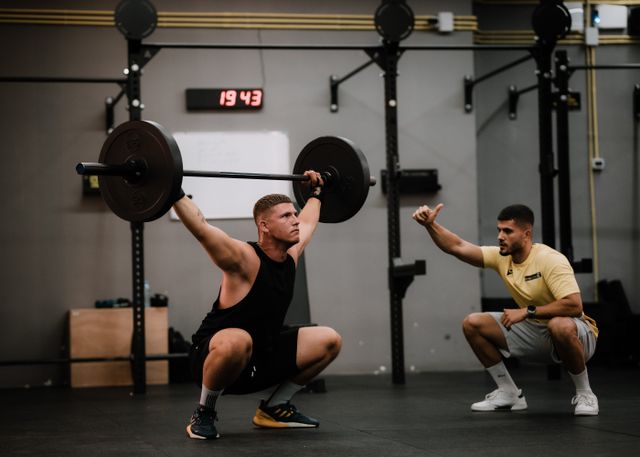
Strength training is widely recognised as an effective way to improve muscular strength, endurance, physical performance and overall fitness. However, the effectiveness of an exercise depends not only on how much weight a person lifts or how many repetitions they complete, but also on how their body performs each movement. A small change in lifting technique may alter joint positions, movement patterns and the distribution of physical load across different muscles. These changes are not always obvious, particularly when they develop gradually over several repetitions or training sessions.
Consider someone performing a barbell squat. During the first few repetitions, the movement may appear controlled and consistent. As fatigue increases, the individual might begin leaning forward more than usual, allowing the knees to move inward or reducing the depth of the squat. These changes may be subtle enough to escape ordinary observation, especially in a busy gym where trainers cannot continuously monitor every movement. If similar deviations continue without being recognised, they may contribute to unnecessary mechanical stress or poor movement habits.
Artificial intelligence could offer a new approach through Exercise Technique Deviation Intelligence, a system designed to identify small changes in exercise mechanics using computer vision, wearable sensors and biomechanical analysis. Rather than simply counting repetitions, it would examine how each repetition is performed and compare the movement with the individual’s established technique. The objective would be to identify potentially important deviations early enough for users or trainers to review and correct them. Although AI cannot guarantee injury prevention, it could become a valuable tool for improving exercise awareness, supporting safer training decisions and identifying movement patterns that deserve attention.
What Is Exercise Technique Deviation Intelligence?
Exercise Technique Deviation Intelligence refers to an AI-based approach that continuously analyses exercise movements to identify differences between an individual’s usual technique and their current performance. It focuses on movement quality rather than only recording exercise quantity. Traditional fitness applications commonly track repetitions, sets, workout duration and resistance. An intelligent technique-monitoring platform would examine additional details, including joint alignment, body position, movement speed, range of motion, balance and coordination.
The system would first establish a reference movement pattern for a particular exercise. For example, when a user performs a controlled squat, the AI could record the approximate positions of the hips, knees, ankles and upper body. It could also measure how the movement changes from the beginning to the end of a repetition. After collecting information from several repetitions, the platform could establish a personalised baseline that represents the user’s usual movement under those conditions.
During later training sessions, the system could compare new movements with this baseline. If the user’s trunk begins leaning further forward, the depth of the squat becomes inconsistent or the movement speed changes unexpectedly, the platform could identify these differences. It could then provide feedback explaining which movement characteristic has changed and whether the deviation should be reviewed.
The important distinction is that the system would not automatically classify every difference as incorrect technique. Human movement naturally varies, and different body structures, training objectives and exercise variations can require different movement patterns. The intelligence would come from understanding the context of the exercise and distinguishing meaningful deviations from normal individual variation.
Why Tiny Changes in Lifting Form Deserve Attention
Exercise technique is influenced by several interconnected factors, including muscle strength, joint mobility, coordination, fatigue, resistance and training experience. Even when someone understands the correct technique, maintaining the same movement quality throughout an entire workout can be challenging. Repeated contractions and increasing physical effort may gradually change how the body performs an exercise.
For example, a person completing a deadlift may initially maintain a consistent lifting pattern but begin changing their trunk position as fatigue increases. Another individual performing a shoulder press may gradually compensate by extending the lower back or moving the head forward. During a lunge, the front knee may move differently as the individual becomes tired or loses balance. These changes do not automatically indicate that an injury will occur, but they may reveal that the exercise is becoming more difficult to control.
Repeated movement deviations can be relevant because exercise loading is distributed through muscles, joints and connective tissues. A change in technique may alter the forces acting on different structures, although the exact effect depends on the movement, resistance, individual anatomy and training context. The same deviation may have different implications for two people.
This is why early movement analysis could be useful. Instead of waiting until a person experiences discomfort or a noticeable reduction in performance, an intelligent system could highlight changes that deserve attention. The user could reduce the resistance, rest, review the technique or seek guidance from a qualified trainer when appropriate.
How AI Could Detect Exercise Technique Deviations
The first stage of an intelligent technique-monitoring system would involve recognising the exercise being performed. Computer vision models could analyse video footage to identify whether the user is performing a squat, deadlift, bench press, lunge, shoulder press or another movement. Recognising the exercise is important because each movement has different biomechanical requirements.
Once the exercise is identified, the system could estimate the user’s body position through human pose estimation. This technology identifies key body landmarks, such as the shoulders, elbows, hips, knees and ankles. By tracking these points across video frames, AI could estimate joint angles, movement trajectories, body alignment and the timing of different movement phases.
The platform could then divide the exercise into individual repetitions. Each repetition could be analysed for movement depth, speed, stability and consistency. For instance, during a squat, the system might compare the relationship between hip and knee movement across repetitions. During a deadlift, it could examine changes in trunk position and the movement path of the barbell if the bar is visible.
The next stage would involve deviation detection. Machine learning models could compare the current movement with the user’s previous performance and an exercise-specific reference model. If the system detects a consistent change beyond a predefined tolerance, it could generate an alert. The alert might explain that the user’s movement has become less consistent or that a particular body position has changed significantly.
A reliable platform would need to consider more than one video frame. A temporary change in posture may occur naturally during a movement, while a repeated pattern across several repetitions could be more meaningful. Analysing movement over time would help the AI distinguish brief variations from persistent technique changes.
The Role of Computer Vision and Pose Estimation
Computer vision could make Exercise Technique Deviation Intelligence accessible through ordinary smartphones, tablets and gym cameras. Instead of requiring expensive laboratory equipment, a user could place a camera at a suitable angle and record an exercise. A pose-estimation model could then identify body landmarks and calculate approximate joint positions.
For example, when monitoring a squat, the system could track the shoulders, hips, knees and ankles throughout the movement. It might detect whether the knees move inward during the descent, whether the torso angle changes between repetitions or whether the user consistently shifts weight towards one side. During a push-up, it could examine body alignment, elbow movement and the consistency of the lowering phase.
More advanced systems could use depth cameras or multiple camera angles to estimate three-dimensional movement. This may improve the analysis of movements that are difficult to understand from a single two-dimensional view. However, camera placement remains important. A front-facing camera may be useful for observing left-to-right movement differences, while a side view may provide better information about trunk position and movement depth.
Computer vision also has limitations. Loose clothing, poor lighting, crowded backgrounds, equipment obstruction and body parts moving outside the camera frame can reduce tracking accuracy. Some exercises involve complex movements in which several body parts overlap. Therefore, AI-generated technique feedback should communicate its confidence and avoid presenting uncertain estimates as exact biomechanical measurements.
How Wearable Sensors Could Improve Detection
Smartphone video can provide useful information about visible movement, but wearable sensors could add another layer of analysis. Inertial measurement units, commonly called IMUs, contain accelerometers and gyroscopes that measure acceleration and angular velocity. When attached to appropriate body segments, they can help track movement direction, speed, timing and changes in orientation.
A system might place sensors on the thigh, lower leg, pelvis or upper body, depending on the exercise being assessed. During a squat, these sensors could help identify changes in movement speed or differences between the left and right sides. During a deadlift, multiple sensors could provide information about how different body segments move in relation to one another.
Surface electromyography could provide additional information about muscle activation patterns. Electrodes placed on the skin record electrical signals associated with muscle activity. AI could analyse these signals to identify changes in activation timing or patterns during exercise. However, electrical activity does not directly measure muscle force, and results can be influenced by electrode placement, movement artefacts and individual differences.
Combining video, wearable sensors and other measurements could produce a more comprehensive picture than relying on one data source. Computer vision could describe body position, IMUs could track movement dynamics, and force sensors could measure external forces when available. The system could combine these signals to identify changes that may not be visible through video alone.
A Practical Example: Detecting a Deadlift Technique Change
Imagine a person who regularly performs barbell deadlifts as part of a strength-training programme. During the first few weeks, the AI system records several controlled sessions and establishes a reference pattern. It observes the user’s usual trunk position, hip movement, lifting speed and consistency across repetitions. The platform does not assume that every lifter must have an identical posture; it builds a reference based on the individual’s movement and the exercise being performed.
During a later session, the user increases the resistance. The first few repetitions appear similar to the reference pattern, but subsequent repetitions show a noticeable change. The system detects that the user’s trunk position is becoming less consistent and that the barbell movement is slowing considerably during the lifting phase. It also observes that the user is changing the movement pattern near the end of each repetition.
Rather than predicting that an injury is about to occur, the system could provide a clear warning that the current technique differs from the user’s usual performance. It might suggest pausing the set, checking the resistance and reviewing the movement with a trainer. If the user reports pain, the platform should advise stopping the exercise and seeking appropriate professional assessment rather than encouraging them to continue.
This example illustrates the practical purpose of technique deviation intelligence. Its value lies in identifying changes that may otherwise go unnoticed and encouraging a timely review before the user continues repeating a potentially problematic movement pattern.
Understanding Fatigue-Related Technique Changes
Fatigue is one of the important factors that can influence exercise technique. As muscles become tired, the body may change movement strategies to complete the task. These changes can appear as slower repetitions, reduced range of motion, altered coordination or increased use of other muscle groups.
An AI platform could monitor these changes across a workout. For example, it might observe that the user’s squat depth becomes progressively shallower or that the movement takes longer to complete as the set continues. During a bench press, the system might detect inconsistent bar movement or changes in elbow positioning. During a plank, it could identify increasing movement around the hips or trunk.
However, fatigue cannot be accurately diagnosed from movement changes alone. A slower repetition may reflect a deliberate training strategy rather than exhaustion, while a change in posture may be part of a planned exercise variation. The system would need information about the user’s training goal, resistance, repetition range and exercise instructions before interpreting the movement.
Combining movement analysis with other information, such as perceived exertion, heart rate and previous training records, could improve the context of its feedback. The platform could then distinguish between expected performance changes and patterns that may deserve further review.
Personalised Technique Baselines Instead of Universal Rules
One of the biggest advantages of AI-based technique monitoring could be individualisation. Conventional exercise demonstrations often show one reference movement, but people differ in height, limb proportions, joint structure, mobility and training experience. A squat performed by a person with relatively long femurs may look different from one performed by someone with different body proportions, even when both are using an appropriate technique.
An intelligent system should therefore avoid judging every movement against one rigid visual template. Instead, it could establish a personalised baseline using professionally reviewed movement assessments and repeated observations. The platform could record the user’s comfortable range of motion, typical movement speed and exercise-specific technique under controlled conditions.
This baseline could also adapt as the person becomes stronger or changes their training goals. A beginner may initially perform an exercise with lighter resistance and a limited range of motion while learning coordination. Over time, the system could update the reference as the individual’s ability develops. However, changes to the baseline should be reviewed carefully so that gradually worsening technique is not mistakenly accepted as normal simply because it has become frequent.
Individualisation would be especially important in rehabilitation and adapted exercise programmes. A movement that is suitable for one individual may not be appropriate for another person recovering from injury. AI could support the monitoring process, but the reference standards and progression rules should be established with qualified professionals where clinical needs are involved.
Applications in Gyms, Sports Training and Physiotherapy
In commercial gyms, AI technique monitoring could provide additional feedback during independent workouts. Trainers often supervise several people at the same time, making continuous observation difficult. A camera-based system could identify repeated movement deviations and notify the user when an exercise requires attention. Trainers could then focus on the most relevant issues instead of relying entirely on occasional visual checks.
Sports organisations could use the technology to analyse repeated strength and conditioning exercises. Athletes perform demanding movements under different levels of fatigue and training intensity. Monitoring changes in technique may help coaches understand how movement quality responds to increasing workload. When combined with other performance information, these observations could support decisions about exercise progression and training recovery.
Physiotherapy could represent another important application. Patients performing prescribed exercises at home may not always have a professional present to observe their technique. A validated movement-monitoring system could record exercise performance and share relevant information with the treating physiotherapist. It might identify whether a patient is completing the prescribed range of motion or compensating with another body part.
These applications should remain supportive rather than replacing professional supervision. The system can identify patterns, but interpreting their clinical importance requires knowledge of the individual’s condition, treatment goals and medical history.
Can AI Really Prevent Injuries?
AI may help identify movement patterns that are associated with increased mechanical stress or poor exercise control, but detecting a technique deviation is not the same as predicting an injury. Injuries can occur through many interacting factors, including training volume, recovery, previous injury, tissue capacity, sudden changes in workload, individual anatomy and external circumstances.
A person may demonstrate a technically consistent movement and still experience an injury. Another person may perform an exercise with a visible variation without experiencing any problem. Therefore, the presence of a deviation does not automatically mean that injury is likely, and the absence of a detected deviation does not guarantee safety.
Research in sports biomechanics has explored the potential of AI for movement analysis and injury-risk monitoring. A 2025 scoping review of AI in sports biomechanics identified promising applications in technique assessment and injury prediction, while highlighting limitations involving data standardisation, model interpretability and real-world validation. This distinction is important: promising model performance in a research setting does not establish that a consumer fitness application can reliably predict an individual’s future injury.
The most realistic goal is therefore early identification of potentially concerning movement changes. AI could help users notice patterns, adjust training decisions and seek professional guidance when appropriate. Injury prevention would remain a broader process involving appropriate programming, recovery, technique education and individual assessment.
Challenges in Developing Reliable AI Technique Monitoring
The first major challenge is obtaining high-quality training data. AI models need examples of different exercises performed by people with varied body proportions, movement abilities, experience levels and equipment. A model trained mainly on experienced athletes may not perform reliably for beginners or older adults. It may also struggle with people whose movement patterns differ from the examples included in its training dataset.
Another challenge is distinguishing between harmless variation and meaningful deviation. Not every change in joint angle or movement speed is a technique error. Some exercises allow different movement strategies depending on the individual’s anatomy and goals. A reliable system must understand the exercise context rather than treating all differences as incorrect.
Real-world conditions create additional difficulties. Gym environments often contain mirrors, moving people, equipment and changing lighting. Camera angles may shift, and sensors may be positioned incorrectly. These factors can affect the quality of movement data and create false alerts. A system that produces too many unnecessary warnings may eventually cause users to ignore its feedback.
Privacy and data security must also be considered. Video recordings can contain identifiable images and reveal personal exercise habits. A responsible platform should explain how recordings are processed, minimise unnecessary data collection and provide clear control over storage and sharing. Users should be able to understand whether their information is being used to improve the AI model.
The Future of Real-Time Exercise Technique Intelligence
Future systems may combine smartphone cameras, smart gym equipment, wearable sensors and AI-based movement models into a single training environment. Instead of reviewing technique only after a workout, the platform could analyse each repetition as it happens. Visual indicators or short audio messages could alert users when movement patterns change beyond a suitable threshold.
Another development could involve exercise-specific digital biomechanics models. These models would represent the expected relationships between body segments, joint positions and external resistance during particular movements. AI could compare an individual’s movement with these models while accounting for personal differences. This may provide more meaningful feedback than a general-purpose posture detector.
The system could also become more context-aware. It might understand whether a user is performing a strength exercise, a rehabilitation movement or a high-speed athletic drill. Its feedback could then change according to the purpose of the activity. A slow, controlled repetition may be appropriate during rehabilitation, while an athlete training for power may deliberately use a different movement speed.
Over time, longitudinal data could help users and coaches understand how technique changes across training cycles. They might identify whether movement consistency decreases during periods of high training volume or whether particular exercises repeatedly produce unwanted compensations. Such insights could make strength training more measurable and support better-informed decisions.
Conclusion
Exercise Technique Deviation Intelligence could introduce a new level of precision into strength training by analysing how movements are performed rather than simply counting repetitions and recording weights. Through computer vision, pose estimation, wearable sensors and machine learning, AI could identify subtle changes in joint positions, movement speed, range of motion and coordination. These observations could help users and trainers recognise technique changes that might otherwise remain unnoticed.
Its greatest potential lies in personalised monitoring. By establishing an individual’s normal movement patterns and comparing future sessions against them, the system could provide feedback that accounts for differences in body structure, training experience and exercise goals. It could also support gyms, sports organisations and physiotherapy programmes through more consistent movement analysis.
However, technique monitoring should not be confused with guaranteed injury prediction. Movement deviations are only one part of a complex relationship involving training load, recovery, physical capacity and individual health. AI systems must be validated across diverse users and real-world conditions before their feedback can be treated as dependable.
Ultimately, AI could help transform exercise monitoring from a repetition-counting activity into a more intelligent process of movement analysis. By identifying small changes, explaining why they matter and encouraging timely professional review, Exercise Technique Deviation Intelligence could become a useful companion for people seeking more informed and controlled strength training.