 Anshika Jain
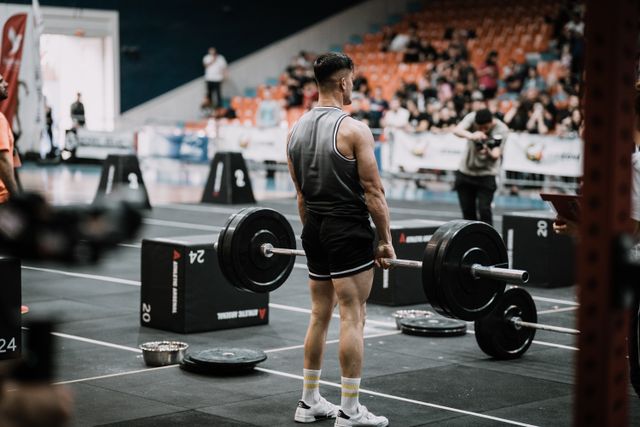
Walk into almost any gym and strength is often measured through familiar numbers: how much weight someone can lift, how many repetitions they can complete, or how their performance compares with people of a similar age, body weight or training category. These measurements are useful for understanding current performance, but they do not necessarily reveal how much strength an individual could develop over time. Two people may have the same body weight and lift the same amount, yet their training histories, physical characteristics, recovery patterns and capacity to adapt may be very different. A standard benchmark can describe where someone stands today, but it cannot fully explain their individual potential.
Artificial intelligence could introduce a more personalised approach by analysing the factors that influence strength development rather than relying only on general gym standards. An AI-based strength potential system could examine a person’s current performance, training experience, movement mechanics, progress over time, recovery patterns and responses to different training loads. It could then estimate realistic development ranges and identify which factors may be limiting progress. Such a system would not reveal a fixed or guaranteed maximum strength level. Instead, it could help users understand their current capabilities, likely training adaptations and opportunities for improvement through continuous, evidence-informed assessment.
Why Standard Gym Benchmarks Do Not Tell the Whole Story
Gym benchmarks usually compare performance with reference values or categories. For example, a strength chart may classify a person’s squat, bench press or deadlift according to body weight, age, sex or experience level. These comparisons can provide useful context, particularly when someone wants to understand whether their current performance is typical for a particular group. However, reference categories are not individual predictions. They cannot account for every difference in training background, physical development, movement skill or response to exercise.
Consider two people who can both squat the same weight. One may have trained consistently for several years and already be approaching a slower phase of progress. The other may have started resistance training recently and still be developing coordination, confidence and basic lifting technique. Their present performance is identical, but the factors influencing their future progress are not. A benchmark may place them in the same category even though their training needs and development opportunities could be very different.
Standard comparisons can also overlook differences in limb proportions, joint structure, mobility, exercise technique and familiarity with a particular movement. A person’s performance in one lift does not automatically represent their total muscular strength. Someone may be relatively strong in pulling exercises but less experienced in pressing movements. A useful assessment therefore needs to examine strength across relevant movement patterns instead of reducing the entire body to one score.
What Does True Strength Potential Actually Mean?
True strength potential should not be understood as a hidden number that an AI system can discover with complete certainty. It is better described as an individual’s capacity to improve strength under suitable training conditions, considering their present abilities, biological characteristics, experience and opportunities for adaptation. This potential can change as a person becomes more skilled, follows a consistent programme, improves recovery and develops greater tolerance for training.
Strength itself is also multidimensional. Maximum strength refers to the greatest force a person can produce in a particular task, while muscular endurance describes the ability to sustain or repeat muscular effort. Explosive strength concerns the ability to produce force quickly, and functional strength relates to applying force effectively during everyday or sport-specific activities. These qualities overlap, but they are not interchangeable. An AI system designed to estimate strength potential would need to specify which quality it is assessing rather than presenting one universal score as a complete description of physical ability.
A more meaningful system could therefore generate separate estimates for different movement patterns and performance qualities. It might assess lower-body strength development, upper-body pushing and pulling capacity, muscular endurance and movement efficiency independently. This would help users understand where they are progressing and where additional training attention may be useful.
How an AI Strength Potential Calculator Could Work
An AI strength potential calculator could begin by creating a baseline profile using information about a person’s current performance and training background. The user might enter recent lifting records, exercise variations, sets, repetitions, training frequency and the duration of their resistance-training experience. The system could also record body weight, relevant physical measurements and the equipment available for assessment. These details would provide context for interpreting performance instead of treating a single lifting result as an isolated measurement.
The next stage would involve collecting information over time. With the user’s permission, the system could analyse workout logs, wearable-device measurements, movement recordings and recovery-related information. Machine-learning models could identify patterns between training exposure and changes in performance. For example, they might examine whether an individual’s repetitions, lifting speed or estimated strength improve after a particular training structure, or whether performance repeatedly declines when training volume becomes difficult to recover from.
The system would then compare the person’s progress with their own historical data and with relevant research-based reference information. Rather than announcing that someone has a fixed strength ceiling, it could provide a range of possible outcomes under clearly stated assumptions. The estimate would need to be updated as new information becomes available, because strength development is a changing process rather than a one-time calculation.
Analysing Individual Training History Instead of Using One Standard
Training history is one of the most important pieces of information for understanding current strength and future development. A beginner, an intermediate trainee and an experienced lifter may respond differently to the same programme. Someone who has trained inconsistently may have different opportunities for improvement from someone who has followed structured resistance training for years. An AI model could use this history to distinguish between a temporary performance fluctuation and a longer-term change in progress.
For example, imagine a person whose bench press has increased steadily during the first several months of training but has shown little change recently. A basic benchmark might simply report that the person’s current lift falls within a particular strength category. An AI-based system could examine the training records behind that result. It might identify changes in weekly volume, exercise frequency, repetition ranges, rest periods or consistency. It could then suggest that the recent slowdown deserves further assessment rather than immediately labelling the person as having reached their potential.
The system should also recognise that a plateau does not always mean that a person has stopped adapting. Technique improvements, better control, greater movement confidence and changes in training tolerance may occur even when a one-repetition maximum remains unchanged. A detailed training history can help separate these different forms of development.
Understanding Biomechanics and Movement Efficiency
Strength performance depends not only on muscular capacity but also on how effectively a person performs a movement. Joint positions, limb lengths, movement range, stability, coordination and exercise technique can influence the amount of weight lifted. Two people with similar muscle strength may perform differently in a particular exercise because their body proportions and movement strategies are not identical.
Computer vision could help an AI system analyse exercise recordings and estimate joint positions, movement paths, repetition speed and consistency. Wearable inertial sensors could provide additional information about acceleration, movement timing and changes in technique. When connected to appropriate equipment, force sensors could help measure external force or loading characteristics. Combining these data sources could create a more detailed picture of how an individual performs a lift.
However, movement analysis must not be confused with direct measurement of every muscle’s force. A smartphone camera can estimate visible movement patterns, but it cannot independently determine the exact force produced by each muscle. Similarly, wearable motion sensors describe movement-related signals rather than providing a complete measurement of muscular strength. A responsible AI system would explain what it has measured, what it has estimated and where uncertainty remains.
Measuring Progress Through More Than Maximum Weight
One-repetition maximum is a familiar strength measure, but relying on it alone can create an incomplete picture. Maximum testing may not be appropriate for every user or every training situation, and performance can be influenced by fatigue, technique, confidence and testing conditions. An AI system could therefore examine several complementary indicators to understand progress more accurately.
These indicators might include repetitions completed at a given load, estimated one-repetition maximum, lifting velocity, consistency across sets and performance in related exercises. For example, a person may not increase their maximum squat weight during a particular month but may complete more controlled repetitions with the same load. Another person may lift the same weight at a higher movement speed under comparable conditions. These changes could provide useful evidence of progress, although each measurement needs to be interpreted in relation to the exercise and testing method.
A system could also distinguish between short-term performance and longer-term adaptation. A poor workout after inadequate sleep does not necessarily indicate a loss of strength. Likewise, an unusually strong session does not prove that a person’s underlying capacity has permanently increased. Analysing repeated measurements over several weeks could reduce the influence of isolated fluctuations and provide a more reliable view of development.
The Role of Recovery, Sleep and Nutrition
Strength development is influenced by more than the exercises performed inside a gym. Recovery, sleep, nutrition, stress and daily activity can affect training performance and the ability to maintain a consistent programme. An AI system could use voluntarily shared information from sleep trackers, workout diaries and nutrition logs to explore how these factors relate to an individual’s performance.
For example, the system might notice that lifting performance frequently declines after several demanding training sessions or during periods of reduced sleep. It could highlight these patterns and encourage the user to review training load and recovery habits. If workout records show that strength improves during periods of consistent training and adequate recovery, the system could identify this as a useful personal pattern. However, it should not assume that a correlation proves a direct cause. Many factors can influence performance at the same time, and consumer wearables do not measure every aspect of recovery or biological readiness.
Nutrition information could also help provide context. Insufficient energy intake, inconsistent eating patterns or inadequate protein intake may affect a person’s ability to support training adaptations. Yet an AI model should not diagnose nutritional deficiencies from a basic food diary. It should provide general educational guidance and recommend qualified professional support when a person’s circumstances require individual assessment.
Predicting Progress Through Personalised Scenarios
One of the most useful features of an AI strength potential calculator could be its ability to create different development scenarios. Instead of giving every user the same target, the system could estimate how performance might change under different training conditions. These scenarios could consider training consistency, programme structure, recovery patterns and the person’s observed rate of progress.
For instance, a user may have improved their squat performance gradually over several months. The AI could analyse that trend and present a cautious projection if the user continues with a comparable programme. It could also show how the projection might change if training becomes inconsistent or if the programme is modified. Such estimates would need to be expressed as ranges rather than promises because future results depend on factors that cannot be fully measured or predicted.
Scenario-based forecasting could make training goals more practical. A person might discover that a realistic near-term target is to improve movement consistency, increase repetitions at a given load or develop strength in a weaker movement pattern. These smaller goals can be more useful than comparing every workout with an ambitious benchmark designed for a different individual.
Identifying Strength Imbalances and Development Opportunities
A person’s overall lifting ability may hide differences between movement patterns or muscle groups. For example, they may perform well in lower-body exercises but struggle with upper-body pushing movements. They may also show inconsistent performance between left and right sides during certain unilateral exercises. An AI system could identify these patterns by comparing repeated, appropriately standardised assessments.
This does not mean that every difference represents a problem. Human bodies are not perfectly symmetrical, and exercise performance can vary because of technique, mobility, previous experience and the demands of a particular movement. The purpose of the analysis would be to identify areas that deserve attention, not to label ordinary variation as a defect.
A personalised report could show which exercises are improving, which remain stable and which require further assessment. If a user experiences pain, persistent weakness or an unexplained change in physical function, the system should not attempt to diagnose the cause. It should encourage consultation with an appropriate healthcare professional.
What Current AI and Fitness Research Can Support
AI-assisted exercise assessment is developing through the use of wearable sensors, computer vision and machine-learning models. Research has explored applications such as movement classification, biomechanical analysis, performance monitoring and personalised exercise recommendations. These technologies provide a foundation for more detailed training feedback, but they do not yet establish that an AI system can calculate a person’s complete or exact lifetime strength potential.
A 2026 scoping review of AI and wearable technologies in strength training identified applications in biomechanical assessment, physiological monitoring and performance analytics. It also highlighted limitations involving small or homogeneous datasets, inconsistent methods, limited real-world validation and the need for more explainable systems. A separate systematic review of AI in exercise prediction and personalisation found promising applications, but noted that the available intervention evidence remains limited and requires further long-term evaluation.
Research on resistance-training responses also demonstrates why personalisation matters. Individuals can experience substantially different changes in strength and muscle size even when following similar training programmes. This variability makes it difficult to use one population average as a reliable forecast for every person. Nevertheless, individual variation does not mean that AI can automatically identify the cause of each person’s response. Better prediction requires high-quality longitudinal data, carefully designed studies and independent testing across different populations.
Limitations: Why AI Cannot Reveal a Fixed Strength Ceiling
The idea of calculating true strength potential is attractive, but it must be approached carefully. Strength is influenced by genetics, age, training experience, anatomy, health, motivation, recovery and many other factors. Some of these can be measured only indirectly, while others may change over time. Even detailed data cannot remove all uncertainty from a prediction.
AI models can also produce misleading results if they are trained on data that does not adequately represent the people using them. A model developed mainly with experienced athletes may not provide reliable estimates for beginners, older adults or people returning to exercise after a long break. Differences in equipment, exercise technique and testing procedures can further affect the accuracy of comparisons.
Another concern is false precision. A system that reports an exact future lifting number may appear scientific even when its estimate is based on uncertain assumptions. A more responsible approach would display confidence ranges, explain which data influenced the estimate and identify when there is not enough information to make a useful prediction. Users should also retain control over sensitive fitness and health information, including data collected through connected devices.
The Future of Personalised Strength Assessment
Future strength assessment systems could combine workout records, movement analysis, wearable measurements and carefully standardised performance tests into a continuously updated personal profile. Rather than comparing every user with a universal gym chart, the system could compare current performance with the person’s own previous results and relevant reference groups. It could explain whether progress is consistent with their recent training history, identify areas where more data is required and suggest realistic next steps.
Such a system could also help trainers make more informed decisions. A coach might use the analysis to understand why two clients with similar current lifting numbers need different programmes. One may benefit from developing movement skill, while another may need a different training stimulus or more attention to recovery. The AI would provide additional evidence, while the trainer would interpret it alongside direct observation, the client’s goals and professional expertise.
The most valuable development may not be a single strength potential score. It may be a changing strength profile that explains what a person can currently do, how their performance is evolving and which factors appear to influence their progress. This would make strength assessment more informative and less dependent on comparisons that ignore individual circumstances.
Conclusion
AI could make strength assessment more personalised by examining an individual’s training history, movement mechanics, performance trends and recovery patterns instead of relying exclusively on standard gym benchmarks. It could help distinguish current strength from future development opportunities, identify changes that might otherwise go unnoticed and generate realistic progress scenarios based on observed data. However, no current AI system can determine a person’s exact or permanent strength ceiling. Strength potential is influenced by many changing factors, and predictions must remain transparent, evidence-based and open to revision. The real value of AI in fitness may therefore lie not in declaring how strong someone can become, but in helping them understand their own progress and make better-informed decisions about how to develop it.