 Anshika Jain
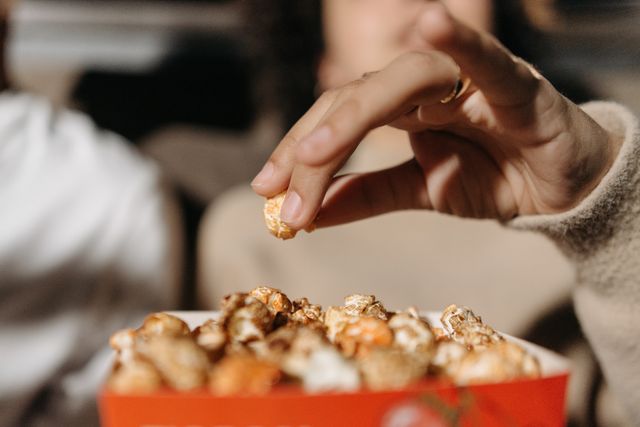
The experience of eating extends far beyond taste and aroma. A crisp potato chip, a spoonful of creamy yoghurt, a dense chocolate brownie, and a light sponge cake may contain similar combinations of carbohydrates, fats, and proteins, yet each creates a distinctly different sensory experience. These differences emerge partly from food texture, which influences how people perceive flavour, evaluate freshness, experience satisfaction, and develop preferences for particular foods. The relationship between the physical structure of food and the way the human brain interprets it is known as the texture–perception interface.
Food texture refers to the mechanical, structural, and surface properties experienced when food is touched, compressed, chewed, or moved around the mouth. Crunchiness, creaminess, firmness, smoothness, chewiness, and density are among the characteristics that contribute to this experience. Although these properties originate in the physical structure of food, their perception depends on a combination of sensory signals from the mouth, jaw muscles, teeth, tongue, and auditory system. The brain integrates these signals with information about flavour, aroma, temperature, appearance, and previous eating experiences.
Texture also influences how quickly a person eats, how long a food remains in the mouth, and how much effort is required to consume it. These effects can change the perception of fullness and satisfaction, although the relationship between texture and appetite varies according to the food, individual, and eating context. Food manufacturers use this knowledge to develop products with specific sensory qualities, while chefs manipulate texture to create contrast and improve the overall dining experience.
Understanding the texture–perception interface therefore requires examining food not simply as a collection of nutrients, but as a structured material whose physical behaviour helps determine how it is experienced.
Understanding the Texture–Perception Interface
The texture–perception interface describes the connection between the physical properties of food and the sensory information through which people experience those properties. It brings together food physics, sensory science, oral physiology, and cognitive psychology to explain why particular textures produce recognisable sensations and emotional responses.
When a person bites into food, the teeth apply force to its internal structure. The material may fracture, compress, stretch, deform, or release liquid. These mechanical events generate signals that travel through sensory receptors in the oral tissues and through the muscles involved in chewing. The brain interprets these signals as characteristics such as crispness, firmness, softness, or creaminess.
The perception of texture is not produced by one sensory pathway alone. Touch receptors in the mouth provide information about pressure, surface characteristics, and movement. Proprioceptive feedback from the jaw muscles helps the brain estimate the force needed to chew. Auditory signals provide additional information when food breaks or fractures, while taste and smell help establish the complete sensory identity of the product.
Expectations also influence perception. A person may anticipate a biscuit to be crisp, a mousse to be light, or a pudding to be smooth. If the actual texture differs from these expectations, the food may seem less appealing even when its flavour remains unchanged. Packaging, visual appearance, cultural familiarity, and previous experiences can all shape these expectations before the first bite.
This interaction explains why texture cannot be evaluated independently of the complete eating experience. The physical structure of a food provides the initial sensory information, but the brain interprets that information within a broader context of taste, memory, expectation, and preference.
Crunchiness: The Physics and Psychology of a Crisp Bite
Crunchiness is one of the most distinctive food-texture sensations because it combines mechanical fracture with auditory feedback. When a crunchy food is bitten, its internal structure breaks into smaller pieces, often producing a series of rapid fractures. These fractures create vibrations that can be detected through the teeth and surrounding tissues, while sound travels through the mouth and reaches the ears.
The physical basis of crunchiness is closely related to the food’s internal structure. Many crunchy foods contain a relatively rigid framework with small air spaces, brittle regions, or layers that fracture under pressure. Potato chips, crackers, roasted nuts, and crisp vegetables illustrate different ways in which food structures can produce a crisp sensation. Their precise fracture behaviour depends on moisture content, porosity, ingredient composition, and processing methods.
Moisture is particularly important. Water can soften many starch-based and porous foods by changing the mechanical properties of their structural networks. A crisp biscuit left exposed to humid air may absorb moisture and lose its characteristic fracture behaviour. Similarly, a fried snack can become less crunchy as moisture migrates into its structure during storage. This is why packaging designed to limit moisture exposure is essential for maintaining crispness.
Crunchiness also influences perceived freshness and quality. The sharp sound and clean fracture of a crisp food can signal that it has retained its intended structure. In some products, a reduction in crunchiness is interpreted as evidence of staleness, even if the product remains safe to eat. The sensory expectation of crispness therefore affects how consumers evaluate food quality.
However, the perception of crunchiness is not determined by sound alone. The force required to fracture the food, the number of fracture events, the size of the resulting particles, and the way these particles behave during chewing all contribute to the experience. A food that produces a loud sound but requires excessive force may not be perceived as pleasantly crunchy. The most appealing texture often involves a balance between resistance, fracture, and ease of chewing.
Creaminess: The Interaction of Lubrication, Structure and Mouthfeel
Creaminess is a complex sensory property associated with smoothness, richness, lubrication, and a soft, cohesive mouthfeel. It is often linked to foods containing fat, such as cream, butter-based sauces, ice cream, and certain desserts. However, fat alone does not determine creaminess. Water distribution, droplet size, viscosity, protein structure, and the interaction between ingredients also influence the sensation.
When a creamy food enters the mouth, it is warmed, compressed, and mixed with saliva. Its internal structure begins to change as the tongue moves it across oral surfaces. Fat droplets, dissolved substances, proteins, and other components interact with the mouth’s moist surfaces, influencing friction and lubrication. These interactions help explain why two products with similar fat content can feel very different during eating.
Lubrication is an important contributor to creaminess. When food reduces friction between the tongue and palate, it can produce a smooth, rich sensation. The perception of lubrication depends on more than the total quantity of fat. The size and distribution of fat droplets, the behaviour of the surrounding liquid phase, and the formation of surface layers can all influence how the food moves across oral tissues.
Viscosity also contributes to the perception of creaminess, but thick foods are not necessarily creamy. A highly thickened gel may feel heavy or sticky rather than smooth and rich. Conversely, a relatively fluid emulsion may produce a creamy sensation if it provides sufficient lubrication and has an appropriate droplet structure. Creaminess is therefore better understood as the combined effect of several physical and sensory properties.
Food scientists often manipulate emulsions, proteins, starches, and hydrocolloids to create creamy textures. An emulsion contains droplets of one liquid dispersed within another, as occurs when fat is distributed through a water-based mixture. The stability and size distribution of these droplets can influence the smoothness and consistency of the final product.
Creaminess is particularly important in dairy products, plant-based beverages, sauces, soups, and reduced-fat foods. When manufacturers reduce fat, they may need to adjust the product’s structure to preserve a satisfying mouthfeel. Appropriate combinations of proteins, fibres, starches, and other ingredients can help reproduce some of the textural characteristics associated with fat, although no single substitute perfectly recreates every aspect of its sensory contribution.
Density: How Compactness Influences the Eating Experience
Density refers to the amount of mass contained within a given volume. In food science, bulk density may include the influence of air spaces, while material density describes the density of the food’s solid components. These distinctions matter because two foods with similar ingredients can have very different physical structures depending on how much air they contain.
A light sponge cake, a dense brownie, and a compact protein bar can differ substantially in density and perceived heaviness. Air incorporated during mixing or generated during baking creates a more open structure, while limited aeration and a compact internal network can produce a denser product. The amount of moisture, fat, sugar, and protein also affects the resulting texture.
Density is not identical to firmness, hardness, or viscosity. A food can be dense yet soft, as in certain moist cakes, or relatively low in density but crisp, as in some expanded snacks. Its perceived heaviness depends on how density interacts with hardness, moisture, particle structure, and the effort required to chew and swallow it.
A dense food may require more chewing if it is firm or compact, potentially extending oral processing time. However, this is not universally true. A soft, moist, dense food may break down readily, while a less dense but highly fibrous food can require considerable chewing. Consequently, density alone cannot reliably predict eating speed or fullness.
Density can also influence expectations about nutritional value. Consumers sometimes associate a heavy or compact food with richness, substantial nourishment, or greater satiety. These judgements are not always accurate because perceived density does not directly reveal the food’s energy content or nutritional composition. A product with substantial air incorporation may provide a large volume with relatively little mass, while a compact product may contain widely varying amounts of energy depending on its ingredients.
For food developers, controlling density is a way to shape product identity and eating experience. Aeration, mixing, extrusion, fermentation, baking, and ingredient selection can all be used to alter the internal structure of a food and the way consumers perceive it.
How Texture Influences Taste and Aroma
Texture and flavour are closely connected in perception, even though they arise from partly different sensory mechanisms. Taste primarily involves the detection of dissolved substances through taste receptors, while aroma depends on volatile compounds detected by the olfactory system. Texture provides additional information about how food behaves in the mouth and can influence the intensity, timing, and persistence of flavour sensations.
The physical structure of food affects the release of taste and aroma compounds. During chewing, a food breaks into smaller pieces, increasing the surface area available for contact with saliva. This can facilitate the release of soluble substances and volatile compounds. The speed and extent of release depend on the food matrix, the distribution of flavour compounds, moisture, fat content, and the intensity of oral processing.
Fat can influence the retention and release of aroma molecules because many aroma compounds interact differently with fat and water. A fatty food may retain some volatile compounds within its structure, changing when and how they become available during eating. Similarly, a dense or highly structured food may release certain compounds differently from a porous product that fractures rapidly.
Texture can also change perceived flavour intensity through sensory integration. A crisp snack may seem more stimulating because of its fracture sounds and rapid breakdown, while a smooth product may produce a more uniform sensory experience. These effects do not mean that texture directly changes the chemical composition of taste receptors. Instead, the brain combines information from multiple senses to create an overall judgement of flavour and food quality.
Temperature further complicates this relationship. Cold ice cream, for example, has a different viscosity and aroma-release profile from the same product after warming. As it melts, its structure changes, and the timing of sweetness and aroma perception may shift. The eating experience therefore evolves from the first contact with the food through chewing, melting, and swallowing.
Texture, Chewing and the Perception of Fullness
Food texture can influence eating behaviour by changing the amount of time and effort required to consume a meal. Foods that require extensive chewing may take longer to eat than products that can be swallowed quickly. This difference can influence the pace of consumption and the opportunity for physiological signals associated with eating to develop.
Crunchy, fibrous, or firm foods may encourage more chewing, while soft, smooth foods often require less oral processing. However, the effect depends on the specific food. A crisp wafer may break down quickly despite producing a strong crunch, whereas a soft piece of meat may require prolonged chewing because of its fibrous structure. Texture should therefore be understood through actual oral processing requirements rather than broad categories alone.
Eating rate is relevant to the perception of fullness, but it is not the only determinant of satiety. Energy density, portion size, protein content, fibre, water content, palatability, and individual physiology all influence how satisfied a person feels after eating. A slowly consumed food does not automatically produce greater fullness, and a dense food is not necessarily more satiating than a lighter alternative.
Texture can also affect expectations about a meal. A thick, substantial soup may be perceived as more filling than a thin broth, even when their nutritional composition is similar. Such expectations can influence reported satisfaction, but subjective impressions may not always match the physiological effects of the food.
For nutrition researchers, the relationship between texture and fullness offers opportunities to investigate how food structure affects meal patterns. For product developers, it highlights the importance of balancing convenience, sensory appeal, and the desired eating experience without making unsupported claims about weight management or appetite control.
The Role of Saliva and Oral Processing
Saliva plays a central role in transforming food texture during eating. It moistens food particles, helps bind them into a bolus, dissolves taste compounds, and supports the movement of food through the mouth. The amount and composition of saliva vary among individuals and can influence how a particular texture is experienced.
Dry, crumbly foods often require substantial saliva to become easier to manage. Crackers, biscuits, and some baked products may initially fracture into many small pieces, which must be mixed with saliva before swallowing. If saliva production is reduced, these foods can become uncomfortable or difficult to consume.
Creamy foods interact differently with oral surfaces because their liquid and fat components may provide lubrication. However, excessive stickiness or a highly adhesive texture can still make a food difficult to clear from the mouth. Smoothness, moisture, and cohesiveness all contribute to the final result.
Chewing also changes the physical properties of food over time. Repeated compression reduces particle size, disrupts cellular structures, and releases liquids and flavour compounds. The material that is eventually swallowed can therefore be very different from the food that first enters the mouth.
These changes illustrate why laboratory measurements made before eating cannot fully predict the complete oral experience. Food rheology and texture analysis provide valuable information, but realistic evaluation may also require sensory testing and consideration of how food changes during chewing and mixing with saliva.
Texture Engineering in Modern Food Development
Food manufacturers increasingly treat texture as a design variable rather than an accidental consequence of ingredient selection. By manipulating the internal structure of a product, they can create distinct sensory identities, improve consistency, and respond to changing consumer preferences.
Extrusion processing is one example. It can transform mixtures of starches, proteins, and other ingredients into expanded snacks or structured products. Adjusting moisture, temperature, pressure, and mechanical energy can alter the resulting porosity, density, hardness, and fracture behaviour. These changes affect whether a product feels airy, crunchy, compact, or chewy.
Emulsification and homogenisation are important in developing creamy foods. By controlling droplet size and distribution, manufacturers can influence smoothness, stability, and mouthfeel. Stabilising ingredients may help prevent separation and maintain consistent texture during storage, although their effects depend on the complete formulation.
Fermentation and baking also change food structure. Gas production during fermentation can create a more open crumb, while protein networks and starch transformations determine the final texture of bread and other baked products. Small variations in processing can therefore lead to noticeable differences in softness, elasticity, and density.
Emerging technologies, including precision formulation and advanced texture analysis, allow developers to study these properties more systematically. Instruments can measure fracture force, compression, elasticity, and other mechanical characteristics, while sensory panels determine how those measurements correspond to human perception. Combining instrumental and sensory data helps explain why a product that performs well in a laboratory test may still fail to deliver the expected eating experience.
The objective of texture engineering is not simply to make food softer, crunchier, or creamier. It is to create a balanced sensory experience that matches the product’s intended purpose, nutritional profile, storage requirements, and consumer expectations.
Future Directions in Texture and Sensory Science
Research into the texture–perception interface is expanding through improved measurement methods and a greater understanding of oral sensory processing. Scientists are examining how fracture patterns, lubrication, particle size, and food structure influence sensory perception during real eating conditions. These investigations may help explain why seemingly small changes in formulation can produce large differences in consumer acceptance.
Personalised food design is another potential direction. Age, chewing ability, saliva production, sensory sensitivity, and cultural preferences can influence how individuals experience food. Better understanding of these differences could support the development of products tailored to specific needs, including foods designed for people who require texture modification.
Sustainability is also influencing texture innovation. Plant-based ingredients, alternative proteins, and upcycled food materials often have structural properties that differ from conventional ingredients. Developers must learn how to manage these differences to create products with familiar textures and acceptable sensory qualities.
Artificial intelligence and data-driven formulation may eventually help predict how combinations of ingredients and processing conditions affect texture. Such tools could reduce the need for repeated trial-and-error experiments, although reliable predictions will still require high-quality data and sensory validation.
As the field advances, the connection between food structure and human perception will remain essential. Texture is not merely a mechanical feature of a product; it is a major part of how food communicates quality, flavour, and satisfaction to the person eating it.
Conclusion: Why Texture Shapes the Way We Experience Food
The texture–perception interface demonstrates that the experience of eating depends on much more than flavour and nutritional composition. Crunchiness creates distinctive sensations through fracture and sound, creaminess emerges from the interaction of lubrication and structure, and density influences perceived heaviness and the mechanical experience of chewing. Each property contributes to the way people interpret food quality and develop preferences.
These sensations are shaped by the combined activity of touch, hearing, taste, smell, and oral movement. The brain integrates these signals with expectations and previous experiences to create a unified perception of food. As a result, texture can influence flavour perception, eating rate, satisfaction, and consumer acceptance, although these relationships depend on the food and the individual.
Modern food science provides tools for measuring and engineering texture with increasing precision. Through controlled aeration, emulsification, extrusion, ingredient selection, and processing, manufacturers can create products with carefully designed sensory characteristics. At the same time, understanding texture helps researchers investigate how foods behave during chewing, how their structures influence nutrient release, and why certain products are preferred over others.
Ultimately, crunchiness, creaminess, and density are not isolated physical properties. They are essential components of the sensory relationship between food and the human body. Understanding this relationship allows food developers to create products that are not only technically consistent but also more satisfying, appealing, and responsive to the diverse ways people experience eating.