 Anshika Jain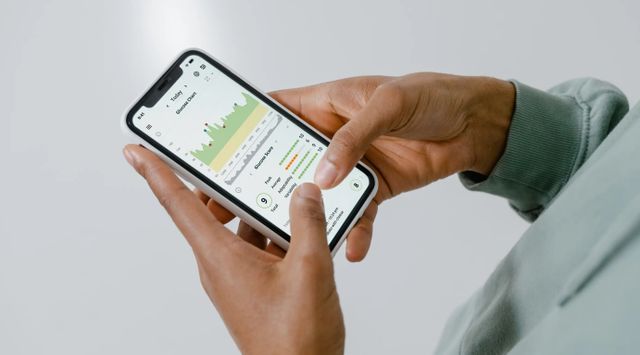
Healthcare is undergoing a major transformation as connected medical technologies, cloud computing, artificial intelligence, and advanced analytics become increasingly integrated into clinical practice. One of the most significant developments within this transformation is the emergence of the Internet of Medical Things, commonly referred to as IoMT. IoMT connects medical devices, sensors, monitoring systems, mobile technologies, and healthcare information platforms to enable continuous collection and analysis of patient-related information.
Traditional healthcare analytics often relies on information collected during scheduled appointments, laboratory investigations, hospital admissions, or periodic assessments. Although these sources remain essential, they provide only intermittent views of a patient’s condition. A patient’s blood pressure, heart rate, oxygen saturation, glucose level, or activity may change significantly between clinical visits. IoT-enabled medical devices can address this limitation by continuously or periodically collecting physiological and behavioral data and transmitting it to analytical platforms.
Real-time healthcare analytics builds on this connected infrastructure by transforming incoming data into clinically meaningful information. Instead of simply storing measurements for later review, real-time analytics can identify patterns, detect abnormal changes, support early intervention, and help healthcare professionals understand how a patient’s condition is evolving.
The combination of IoT-enabled medical devices and real-time analytics therefore represents a shift from episodic healthcare toward more continuous, data-driven monitoring. Its potential extends from hospitals and intensive care environments to remote patient monitoring, chronic disease management, preventive healthcare, and personalized medicine.
The Evolution of Connected Healthcare
Healthcare has traditionally depended on measurements obtained at specific points in time. A patient might visit a physician, undergo diagnostic testing, receive treatment, and return for follow-up. This model can work effectively for acute conditions, but it may provide limited visibility into diseases that evolve gradually or fluctuate between clinical encounters.
Connected medical devices introduce a continuous dimension to healthcare. Wearable sensors can monitor heart rate, physical activity, sleep, oxygen saturation, or other physiological indicators. Glucose monitoring technologies can provide repeated measurements, while connected blood-pressure devices can transmit readings from patients at home. Hospital-based systems can continuously monitor vital signs and equipment status.
These devices create streams of information rather than isolated measurements. When integrated with analytical platforms, this information can provide a more dynamic representation of patient health.
The significance of this development is not simply the quantity of data generated. The real value comes from the ability to interpret information rapidly and identify changes that may require attention. Real-time analytics transforms connected devices from passive measurement tools into components of a broader clinical intelligence system.
Understanding IoT-Enabled Medical Devices
IoT-enabled medical devices are physical devices capable of collecting, processing, transmitting, or receiving healthcare-related information through connected networks. They range from wearable sensors and home-monitoring devices to hospital equipment and sophisticated clinical monitoring systems.
In hospitals, connected devices may include patient monitors, infusion pumps, ventilators, smart beds, cardiac monitoring systems, imaging equipment, and medication-management technologies. In outpatient and home settings, connected devices can include wearable activity trackers, blood-glucose monitors, blood-pressure monitors, pulse oximeters, connected scales, and other remote-monitoring technologies.
The data generated by these devices can be transmitted through wireless networks, mobile applications, gateways, or cloud-based platforms. Once collected, the information can be integrated with electronic health records and analytical systems.
This connectivity enables healthcare organizations to move from isolated device readings toward a coordinated information environment in which physiological measurements can be analyzed alongside clinical histories, laboratory results, medications, and other patient information.
The Role of Real-Time Healthcare Analytics
Real-time healthcare analytics refers to the analysis of healthcare data as it becomes available or within a sufficiently short period to support timely action. The definition of “real time” can vary depending on the clinical context. In an intensive care unit, seconds or minutes may be important, whereas chronic disease monitoring may operate on longer intervals.
The fundamental objective is to reduce the delay between data generation and meaningful interpretation. A connected device may identify an abnormal physiological measurement, but the measurement itself has limited value if no system can recognize its significance.
Analytics can examine individual measurements, trends over time, relationships between variables, and deviations from expected patterns. Algorithms can then generate alerts, risk estimates, dashboards, or recommendations for further evaluation.
For example, a single abnormal measurement may not indicate an emergency, while a gradual deterioration across several measurements may provide a more meaningful warning. Real-time analytics can potentially identify these trends before they become obvious through conventional episodic monitoring.
Remote Patient Monitoring
Remote patient monitoring is one of the most important applications of IoT-enabled healthcare analytics. Patients with chronic conditions often require continuous management rather than occasional clinical assessments.
Connected devices can allow patients to collect health information at home and transmit it to healthcare providers. This can support monitoring of conditions such as diabetes, hypertension, cardiovascular disease, respiratory disorders, and other chronic illnesses.
The advantage is that clinicians can gain insight into how patients are doing in their everyday environments rather than relying exclusively on measurements taken during appointments. This may help identify changes earlier and provide opportunities for timely intervention.
Remote monitoring can also improve continuity of care after hospitalization. Patients recovering from surgery or acute illness can potentially be monitored during the transition from hospital to home, allowing healthcare teams to identify concerning trends and determine whether additional evaluation is needed.
However, remote monitoring must be carefully designed. Continuous data collection can generate large volumes of information, and healthcare professionals cannot manually review every measurement. Effective analytics and alert-management strategies are therefore essential.
Real-Time Analytics in Intensive Care
Intensive care environments generate some of the richest streams of real-time physiological information in healthcare. Patients may be continuously monitored for heart rate, blood pressure, oxygen saturation, respiratory rate, temperature, cardiac rhythm, and other indicators.
The challenge is that critical care environments can generate enormous amounts of data. Clinicians must interpret multiple signals simultaneously while responding to rapidly changing patient conditions.
Real-time analytics can help identify patterns across these measurements. Instead of relying on isolated thresholds, advanced systems can analyze trends and combinations of variables to identify potential deterioration.
Predictive models may also estimate the risk of complications based on changing physiological patterns. Such systems are intended to support clinical teams by bringing attention to potentially important changes, not by replacing clinical assessment.
An effective system must therefore balance sensitivity with specificity. Excessive alerts can create alarm fatigue, while overly restrictive systems may fail to identify clinically important changes.
Chronic Disease Management
Chronic diseases are particularly suitable for connected healthcare analytics because they often involve long-term changes in physiological and behavioral indicators.
Patients with diabetes, for example, may use connected glucose-monitoring systems that generate repeated measurements. Analytics can examine glucose trends and potentially identify patterns associated with diet, medication, physical activity, or daily routines.
Similarly, connected blood-pressure devices can provide repeated readings for patients with hypertension. Longitudinal data may offer a more representative picture of blood-pressure patterns than a small number of measurements taken during clinic visits.
For patients with cardiovascular or respiratory conditions, connected scales, oxygen monitors, activity sensors, and other devices may provide additional information about changes in health status.
The broader objective is to shift chronic disease management from reactive treatment toward continuous observation and proactive intervention.
Predictive Analytics and Early Warning Systems
One of the most important capabilities of real-time healthcare analytics is the development of early warning systems. These systems analyze incoming data to identify patterns associated with adverse outcomes.
Predictive models may use physiological measurements, historical information, laboratory results, and other clinical variables to estimate the likelihood of deterioration. When a risk threshold is reached, the system may notify healthcare professionals.
The effectiveness of such systems depends heavily on the quality of the underlying data and the design of clinical workflows. An alert is useful only when a qualified professional can evaluate it and take an appropriate action.
Predictive analytics should therefore be viewed as a decision-support mechanism rather than an autonomous diagnostic system. Clinical context remains essential because the same physiological pattern may have different meanings for different patients.
Integration With Electronic Health Records
The full potential of IoT-enabled analytics depends on integration with existing healthcare information systems. Device measurements become more meaningful when combined with patient history, diagnoses, medications, laboratory results, imaging findings, and clinical documentation.
For example, an abnormal heart rate may have different implications depending on whether a patient has recently undergone surgery, is taking particular medications, or has a known cardiovascular condition.
Integration allows analytical systems to consider these contextual factors. It can also help ensure that relevant device data become part of the patient’s broader clinical record.
However, interoperability remains a significant challenge. Devices may use different communication protocols, data formats, and terminology. Healthcare organizations therefore need standards and integration frameworks that allow information to move reliably between devices, analytical platforms, and clinical systems.
Artificial Intelligence and Machine Learning
Artificial intelligence can significantly expand the capabilities of real-time healthcare analytics. Conventional rule-based systems can detect measurements that exceed predefined thresholds, but machine learning models can identify more complex patterns.
Machine learning can analyze high-dimensional time-series data and detect relationships that may not be easily captured through fixed rules. Deep learning approaches can be particularly useful when analyzing large streams of physiological signals.
AI systems can also combine data from multiple sources. A model could potentially integrate wearable sensor measurements with EHR information, laboratory results, medication history, and patient-reported symptoms.
However, the use of AI introduces additional challenges. Models must be appropriately validated, monitored for performance changes, and evaluated across relevant patient populations. An algorithm that performs well in one healthcare environment may not perform similarly in another because of differences in devices, populations, workflows, or clinical practices.
Data Security and Patient Privacy
The expansion of connected healthcare creates substantial privacy and cybersecurity responsibilities. IoT-enabled medical devices collect sensitive health information and may transmit that information through multiple networks and systems.
A connected device can potentially become an entry point into a broader healthcare infrastructure if security controls are inadequate. Cybersecurity therefore needs to be considered throughout the device lifecycle, from design and manufacturing to deployment, maintenance, software updates, and retirement.
Patient privacy is equally important. Organizations need appropriate controls governing who can access device-generated information, how long it is retained, how it is used, and under what circumstances it can be shared.
Strong authentication, encryption, access controls, secure software development, network segmentation, monitoring, and incident-response procedures are important components of a comprehensive security strategy.
Data Quality and Reliability
Real-time analytics is only as reliable as the data supplied to it. Medical devices can produce inaccurate readings because of sensor problems, incorrect placement, calibration issues, connectivity failures, or environmental conditions.
Data can also become incomplete when devices lose network connectivity or when patients stop using home-monitoring equipment.
Analytical systems therefore need mechanisms for detecting unreliable or missing data. A sudden change in a measurement should not automatically be interpreted as a clinical deterioration if the change may have resulted from sensor malfunction.
Data validation and quality monitoring should be incorporated into the analytical pipeline. Healthcare professionals should also be able to distinguish between clinically meaningful signals and technical anomalies.
Alert Fatigue and Human Factors
One of the major challenges associated with real-time healthcare analytics is alert fatigue. If clinicians receive too many notifications, they may become desensitized to alerts and have difficulty identifying the most important ones.
The solution is not simply to generate more sophisticated alerts. Systems must be designed around clinical workflows and human decision-making.
Alerts should be clinically meaningful, appropriately prioritized, and presented in a way that supports rapid interpretation. Where possible, systems should incorporate trends and context rather than reacting to isolated measurements.
Human factors engineering is therefore essential. The success of real-time analytics depends not only on algorithmic performance but also on whether clinicians can use the information effectively within the pressures of real clinical environments.
Ethical and Regulatory Considerations
The increasing use of connected medical devices raises important ethical and regulatory questions. Healthcare organizations must determine how patient-generated information should be incorporated into clinical decision-making and how responsibility should be allocated when an AI-supported alert is missed or incorrectly interpreted.
Patients should also have appropriate information about what data are being collected and how those data are being used. Transparency is particularly important when continuous monitoring extends beyond traditional clinical environments.
Regulatory requirements can also vary according to the intended use of a device or analytical system. Technologies that provide measurements may be subject to different requirements from software that makes clinical recommendations or predictions.
Organizations must therefore consider regulatory compliance as part of system design rather than as a final implementation step.
Economic and Operational Impact
IoT-enabled healthcare analytics can potentially improve operational efficiency by supporting earlier intervention, reducing unnecessary hospital visits, optimizing resource utilization, and enabling more effective remote care.
Connected systems may also help hospitals monitor equipment, identify maintenance needs, and improve utilization of clinical resources. In this broader sense, the IoT is not limited to monitoring patients; it can contribute to intelligent hospital operations.
However, implementation requires significant investment. Organizations may need to purchase connected devices, upgrade networks, integrate software platforms, train staff, establish cybersecurity systems, and maintain the technology over time.
The financial value of connected healthcare therefore depends on whether the technology produces measurable improvements in outcomes, workflow efficiency, patient experience, or resource utilization.
The Future of Real-Time Healthcare Analytics
The future of IoT-enabled healthcare analytics is likely to involve increasingly integrated and intelligent ecosystems. Wearable devices, implantable sensors, hospital equipment, home-monitoring technologies, EHR systems, and AI platforms may increasingly operate as interconnected components of a continuous healthcare infrastructure.
Edge computing could allow some data processing to occur close to the medical device, reducing latency and limiting the amount of sensitive information that needs to be transmitted. Cloud computing can provide scalable infrastructure for large-scale analytics, while AI can transform continuous data streams into clinically meaningful insights.
Digital twins may represent another emerging direction. A patient’s physiological data could potentially be used to create a dynamic computational representation that changes as new information becomes available. Such systems could eventually broader trend is toward healthcare systems that can observe, analyze, and respond support more personalized monitoring and simulation, although substantial clinical validation would be required.
The broader trend is toward healthcare systems that can observe, analyze, and respond to patient conditions continuously rather than relying exclusively on periodic clinical encounters.
Conclusion
Real-time healthcare analytics using IoT-enabled medical devices represents a significant development in data-driven healthcare. By connecting sensors and medical devices with analytical platforms, healthcare organizations can collect continuous information about patients and potentially identify meaningful changes earlier than conventional episodic monitoring allows.
The technology has applications across remote patient monitoring, chronic disease management, intensive care, hospital operations, predictive analytics, and personalized healthcare. Its effectiveness, however, depends on much more than the availability of connected devices. Interoperability, data quality, cybersecurity, privacy, clinical workflow integration, alert management, regulatory compliance, and human factors must all be addressed.
The most valuable future applications will likely be those that transform large volumes of continuously generated information into concise, reliable, and clinically relevant insights. Rather than overwhelming healthcare professionals with more data, successful systems should help them recognize what matters, when it matters, and what requires attention.
As IoT technologies and artificial intelligence continue to develop, real-time healthcare analytics can contribute to a more proactive and responsive model of care. Its long-term impact will depend on responsible implementation, rigorous validation, strong security, and the ability to integrate technology into clinical practice in ways that genuinely support patients and healthcare professionals.