 Anshika Jain
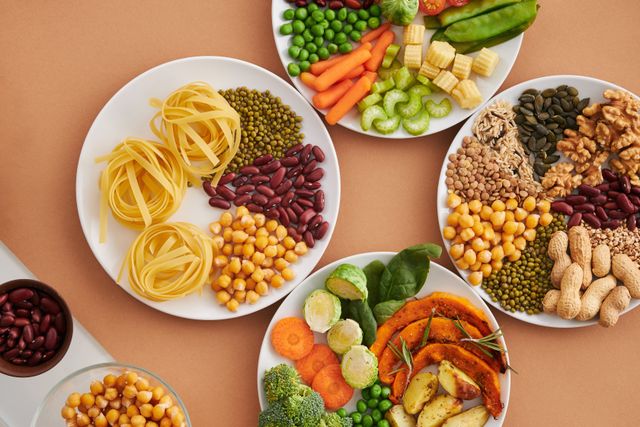
Food digestion is often described as a process in which the body breaks down carbohydrates, proteins and fats into smaller molecules that can be absorbed and utilised. However, digestion involves much more than the chemical breakdown of nutrients. When food enters the gastrointestinal tract, its different components undergo continuous physical transformations. Water, fats, proteins, carbohydrates, minerals and other substances interact with digestive fluids, separate into different phases, form temporary structures and move through the digestive system at different rates.
For example, when a person consumes a meal containing rice, vegetables, cooking oil and plant-based protein, these components do not necessarily remain uniformly distributed throughout digestion. Some substances dissolve in the aqueous environment, while others form droplets, aggregates, gels or suspended particles. Fats may form emulsions, proteins may change their structural organisation, and carbohydrates may create viscous networks that influence the movement of other nutrients. These transformations affect how quickly nutrients become available for digestion and absorption.
Understanding these interactions is becoming increasingly important in food science, nutritional research and the development of functional foods. Traditional nutritional analysis generally focuses on the quantity of nutrients present in a food product. However, two foods containing similar amounts of protein, carbohydrates and fats may behave differently during digestion because their ingredients have different physical structures and molecular interactions.
Nutritional Phase Separation Intelligence introduces a new approach to understanding these processes through artificial intelligence, computational modelling and food chemistry. By analysing how different food components separate, interact and reorganise under gastrointestinal conditions, AI systems could help predict nutrient availability, digestive behaviour and the structural transformations that occur after eating.
Understanding Nutritional Phase Separation
Nutritional phase separation refers to the physical organisation and separation of different components within a food system when environmental conditions change. In food science, a phase describes a region of material with relatively uniform physical and chemical characteristics. Different phases may contain varying concentrations of water, fats, proteins, carbohydrates and other substances.
Food products are frequently complex mixtures rather than completely uniform substances. Milk, plant-based beverages, soups, sauces, protein shakes and emulsified foods contain multiple components that interact with one another. Their structures may remain relatively stable during storage and consumption but change when exposed to digestive fluids, temperature variations, acidity and enzymes.
When food enters the stomach, the environment changes considerably. Gastric fluids introduce water, hydrochloric acid, digestive enzymes and mechanical mixing. These conditions can destabilise existing food structures and cause different components to reorganise.
For instance, an oil-in-water emulsion may contain small fat droplets distributed throughout an aqueous phase. During digestion, these droplets interact with gastric fluids and proteins. Depending on their composition and surface properties, they may remain dispersed, combine into larger droplets or form more complex structures.
Similarly, proteins may become denatured under acidic conditions, changing their solubility and interaction with other nutrients. Certain carbohydrates absorb water and develop viscous structures, potentially influencing the movement of digestive enzymes.
Nutritional phase separation intelligence aims to investigate these transformations systematically. Rather than examining nutrients as isolated substances, it studies their physical organisation and behaviour within changing digestive environments.
Why Different Food Components Separate During Digestion
The separation of food components during digestion is influenced by several interconnected physical and chemical mechanisms. These include differences in solubility, density, molecular structure, electrical charge, surface properties and interactions with digestive fluids.
Water-soluble compounds generally interact differently with the gastrointestinal environment compared with hydrophobic substances such as many dietary fats. Some nutrients dissolve into the surrounding aqueous phase, while others remain associated with lipid droplets or solid food particles.
The acidity of the stomach also influences molecular interactions. Many proteins change their structural organisation when exposed to low pH conditions. These changes may cause proteins to unfold, aggregate or become less soluble, depending on their molecular characteristics.
Digestive enzymes further modify the system by breaking down specific food components. Proteases act on proteins, lipases break down fats, and carbohydrate-digesting enzymes transform complex carbohydrates into smaller molecules.
The products generated through these reactions may have different solubility and physical characteristics from their original structures. Consequently, digestion continuously changes the distribution of substances across different phases.
The process is also affected by food processing. Cooking, fermentation, grinding, homogenisation and drying can alter the initial structure of food, influencing how it behaves during digestion.
AI-based modelling can investigate these interconnected factors and estimate how different food formulations may reorganise under gastrointestinal conditions.
The Role of Fat Phase Separation in Nutrient Digestion
Dietary fats are particularly important when studying nutritional phase separation because they are largely insoluble in water. When fat-containing foods enter the digestive system, they undergo emulsification, droplet restructuring and enzymatic breakdown.
An emulsion consists of droplets of one liquid dispersed within another liquid. Many foods, including plant-based milk alternatives, mayonnaise, dressings and nutritional beverages, contain oil droplets distributed throughout an aqueous environment.
During digestion, mechanical mixing and digestive substances influence the stability of these droplets. In the stomach, some emulsions remain relatively stable, while others experience droplet aggregation or structural changes. The outcome depends on the type of emulsifier, protein composition, fat characteristics and surrounding conditions.
When the partially digested food reaches the small intestine, bile salts help disperse dietary fats into smaller structures. Pancreatic lipase then breaks down triglycerides into smaller lipid components, including fatty acids and monoacylglycerols.
These products can participate in the formation of mixed micelles, which help transport lipids and certain fat-soluble nutrients towards the intestinal surface.
AI systems could help predict how the original fat droplet size, emulsifier composition and food matrix influence these transformations. For example, a model could compare two plant-based beverages containing identical quantities of oil but different protein and stabiliser systems.
Although their nutritional labels may appear similar, their physical behaviour during digestion could differ considerably. Predictive modelling could help researchers understand these differences and develop formulations with more controlled digestive characteristics.
Protein Phase Behaviour and Digestive Transformation
Proteins are another major component involved in phase separation during digestion. Their behaviour depends on amino acid composition, molecular structure, solubility, surface charge and interactions with other food ingredients.
When proteins enter the stomach, exposure to acidic conditions and pepsin can change their structural organisation. Some proteins unfold and become more accessible to digestive enzymes, while others form aggregates or curd-like structures.
These changes influence how quickly enzymes can access specific regions of protein molecules. A compact protein structure may behave differently from an unfolded or aggregated structure during digestion.
Dairy proteins provide a familiar example because milk proteins can form curd-like structures under gastric conditions. The physical characteristics of these structures influence the breakdown and movement of protein-containing material.
Plant proteins can display different behaviours depending on their source and processing history. Soy, pea, lentil and chickpea proteins may differ in their solubility, aggregation tendencies and interactions with carbohydrates and fats.
AI-based protein phase prediction could combine molecular information with experimental digestion data to estimate how different protein formulations behave under changing pH and enzyme concentrations.
This may support the development of plant-based protein foods with improved functional properties and more predictable digestive characteristics.
Carbohydrate Structures and Their Influence on Nutritional Separation
Carbohydrates contribute significantly to the physical organisation of food during digestion. Starches, dietary fibres, resistant starches and soluble polysaccharides interact with water and other ingredients in different ways.
Some carbohydrates dissolve or disperse in digestive fluids, while others absorb water, swell or form gel-like structures. These physical changes can influence the movement of enzymes and other nutrients through the food matrix.
For example, certain soluble fibres increase the viscosity of digestive contents. A more viscous environment may influence the movement of nutrients and digestive enzymes, although the effects depend on the specific fibre, its concentration and the surrounding food structure.
Starch also undergoes important structural transformations. Cooking can cause starch gelatinisation, in which starch granules absorb water and lose some of their original organisation. During cooling, some starch molecules may reorganise through retrogradation, potentially increasing the resistant starch fraction.
These transformations can affect how readily digestive enzymes access starch.
AI models could examine the relationships between starch structure, water absorption, viscosity, temperature history and enzymatic breakdown. Such systems may help food scientists predict how different processing methods influence carbohydrate availability during digestion.
How AI Can Predict Nutritional Phase Separation
Artificial intelligence can bring together information from food chemistry, physical properties, molecular structures and experimental digestion studies. The objective is to develop computational models capable of predicting how food components reorganise under changing gastrointestinal conditions.
Machine learning algorithms can be trained using datasets containing measurements of particle size, droplet distribution, pH, viscosity, nutrient concentration, enzyme activity and phase composition.
Supervised learning models can identify relationships between initial food properties and observed digestive outcomes. For example, regression algorithms may estimate changes in fat droplet size or protein solubility under particular digestive conditions.
Classification models can identify whether a food formulation is more likely to produce a stable emulsion, protein aggregation, phase separation or gel formation under specified experimental conditions.
Deep learning models can provide additional capabilities when the available data represent a sequence of digestive events. Digestion is not a single transformation but a continuous process involving changes in temperature, acidity, enzyme activity and physical structure.
A sequence-learning model could analyse how the phase distribution of a food changes from the mouth to the stomach and subsequently through the small intestine.
However, reliable prediction requires experimental validation. AI can identify patterns in available data, but the accuracy of its predictions depends on the quality of the underlying measurements and the ability of the model to represent complex biological environments.
Computational Fluid Dynamics and Gastrointestinal Modelling
Computational fluid dynamics offers another important approach to understanding nutritional phase separation. It is used to simulate how fluids move, mix and interact within complex physical environments.
The gastrointestinal tract contains changing fluid conditions, mechanical movements and interactions between food particles and digestive secretions. These factors influence the distribution and movement of different food components.
Computational models can simulate aspects of gastric mixing, fluid movement and particle transport. When combined with AI, they may help estimate how different food structures respond to mechanical and chemical conditions.
For example, researchers could simulate how a high-viscosity vegetable soup behaves under different mixing conditions. They could investigate whether larger food particles remain suspended, settle or move differently compared with smaller particles.
Similarly, researchers developing plant-based nutritional beverages could use computational simulations to study the stability of fat droplets and protein particles under different conditions.
AI can help accelerate these simulations by learning from previously generated results and predicting outcomes for new formulations. This approach may reduce the computational resources required for repeated experiments.
Nevertheless, the gastrointestinal system is biologically complex. Computational models are approximations and must be validated against experimental evidence rather than treated as exact representations of human digestion.
The Importance of Food Matrix Intelligence
The food matrix describes the physical and chemical structure in which nutrients are embedded. It is one of the most important factors influencing nutritional phase separation.
Two foods may contain identical quantities of carbohydrates, proteins and fats but have different digestive characteristics because their nutrients are organised differently.
For example, whole legumes contain proteins and starches within complex cellular structures. When legumes are cooked and blended, their physical organisation changes. This can influence how digestive enzymes access their nutrients.
Similarly, whole nuts and finely ground nut products may have different structural characteristics. Grinding changes particle size and exposes more internal material to the surrounding digestive environment.
Food matrix intelligence aims to understand these structural relationships and predict their influence on nutrient release and digestion.
AI models could analyse microscopy images, particle-size measurements, molecular composition and digestion data to develop a more complete understanding of food structure.
Computer vision may also help identify structural changes during simulated digestion. Microscopic images of food samples collected at different digestive stages could be analysed to estimate droplet distribution, aggregation and particle breakdown.
This could make it easier to compare food formulations and investigate how processing methods influence their behaviour.
Applications in Functional Foods and Plant-Based Nutrition
Nutritional phase separation intelligence has considerable potential in the development of functional foods. These products are designed to provide specific nutritional or physiological benefits beyond basic nourishment.
Manufacturers frequently combine proteins, fibres, oils, minerals and bioactive ingredients to create products with particular nutritional characteristics. However, combining multiple ingredients can produce unexpected structural interactions.
For example, a high-protein plant-based beverage may contain pea protein, vegetable oil, soluble fibre and mineral fortification. These ingredients may interact during storage and digestion, influencing emulsion stability, protein aggregation and nutrient distribution.
AI-based prediction could help researchers evaluate different ingredient combinations before manufacturing large product batches.
The technology could also support the development of functional snacks, fortified beverages, meal replacements and specialised nutritional formulations.
In vegetarian food innovation, it may be particularly useful for examining how legume proteins, cereal starches, vegetable oils and dietary fibres behave together during digestion.
Researchers could compare different formulations to identify which combinations maintain desirable physical properties during processing while producing predictable digestive transformations.
However, improved phase stability or a particular separation pattern should not automatically be interpreted as improved nutritional outcomes. The nutritional significance of each transformation requires independent evaluation through appropriate digestion studies and, where necessary, human research.
AI-Powered In Vitro Digestion Experiments
In vitro digestion models reproduce selected stages of human digestion under controlled laboratory conditions. They commonly simulate oral, gastric and intestinal phases using digestive fluids, enzymes, pH adjustments and mechanical mixing.
These experiments provide valuable information about nutrient breakdown and physical transformations without requiring every formulation to be tested directly in human participants.
AI can improve the interpretation of these experiments by analysing large collections of measurements collected throughout the digestive process.
For instance, researchers could measure changes in particle size, protein solubility, lipid droplet distribution and carbohydrate breakdown at multiple time points.
A machine learning model could identify relationships between these measurements and predict which food structures are more likely to undergo particular transformations.
Researchers may also use AI to compare different formulations under similar simulated digestive conditions. This could help identify the influence of individual ingredients and processing methods.
Standardised digestion protocols, including the INFOGEST static in vitro digestion method, provide an important foundation for generating comparable experimental data. Combining standardised laboratory procedures with computational analysis could make nutritional phase separation research more consistent and reproducible.
Challenges in Developing Reliable Nutritional Phase Separation Intelligence
Despite its potential, developing accurate AI models for nutritional phase separation involves several challenges.
The first challenge is the complexity of real food systems. Foods contain numerous ingredients that interact through physical, chemical and biochemical mechanisms. A model trained on a simple oil-and-water system may not accurately predict the behaviour of a complex meal containing proteins, fibres, starches and minerals.
The second challenge involves the differences between simulated and human digestion. In vitro experiments can reproduce selected digestive conditions, but they cannot fully represent every physiological process. Gastric emptying, intestinal movement, individual enzyme activity and variations in digestive secretions may influence actual outcomes.
Another challenge is the lack of comprehensive datasets. Food researchers may measure different parameters using different instruments and experimental protocols. These differences can make it difficult to combine data across laboratories.
Model interpretability is equally important. Researchers need to understand why an algorithm predicts protein aggregation or fat droplet separation rather than simply receiving an output without a scientific explanation.
Furthermore, nutritional phase separation should not be confused with nutrient absorption. A component becoming more dispersed or soluble does not necessarily mean that the body will absorb it more efficiently. Digestion, bioaccessibility, intestinal transport and metabolism are related but distinct processes.
Future systems must therefore combine physical modelling, biochemical knowledge, standardised experimental data and appropriate biological validation.
The Future of AI-Driven Nutritional Phase Prediction
The future of nutritional phase separation intelligence may involve creating digital models of food products that simulate their behaviour throughout digestion.
These models could contain information about molecular composition, particle size, ingredient interactions, processing history and digestive transformations. Food developers could use them to evaluate how a formulation may behave before manufacturing physical samples.
For example, a researcher developing a fortified plant-based beverage could digitally compare different protein sources, oil concentrations and fibre combinations. The system might predict changes in emulsion stability, protein aggregation and nutrient distribution under simulated gastric and intestinal conditions.
Another promising direction involves integrating AI with advanced microscopy, spectroscopy and automated digestion systems. These technologies could continuously collect information about structural changes, allowing machine learning algorithms to update their predictions using experimental measurements.
In the longer term, researchers may also investigate how individual differences in digestion influence phase separation patterns. Such research could contribute to more personalised nutritional product development, although individualised predictions would require extensive biological validation.
The broader opportunity is to move beyond static nutritional composition towards dynamic nutritional intelligence. Instead of asking only how much protein, fat or carbohydrate a food contains, researchers could investigate how those components are organised, transformed and made available during digestion.
Conclusion
Nutritional phase separation intelligence represents an emerging area of research that connects food chemistry, digestive science, computational modelling and artificial intelligence. It focuses on understanding how different food components separate, interact and reorganise as they encounter digestive fluids, enzymes, acidity and mechanical movement.
Fats may form emulsions and mixed micelles, proteins may unfold or aggregate, and carbohydrates may absorb water or create gel-like structures. These transformations influence the physical environment in which nutrients are digested and become available for absorption.
AI can help researchers analyse these processes by combining molecular descriptors, machine learning, computational fluid dynamics, microscopy and in vitro digestion data. Its applications may extend to plant-based nutrition, functional foods, fortified beverages and personalised food formulation.
Although significant challenges remain in data availability, biological complexity and experimental validation, this technology offers a valuable direction for future food research. By predicting how nutrients behave rather than examining only their initial composition, AI could help scientists develop a deeper understanding of the relationship between food structure, digestion and nutritional functionality.