 Anshika Jain
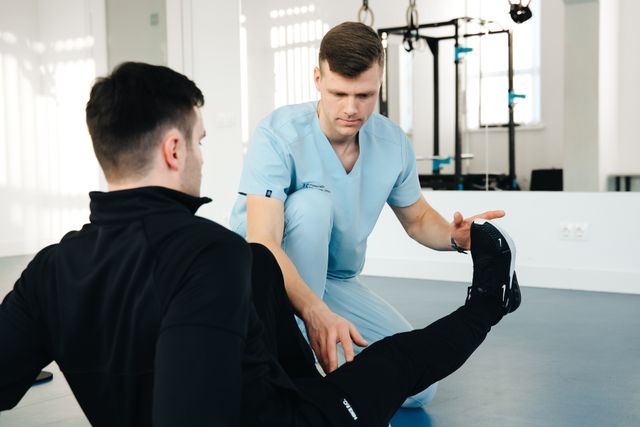
Recovering the ability to perform everyday movements is one of the most important goals of physical rehabilitation. After a stroke, spinal cord injury, surgery, neurological condition or serious musculoskeletal injury, activities that once seemed automatic can become difficult. Walking across a room, reaching for a glass, standing up from a chair, buttoning a shirt or climbing stairs may require considerable effort, repeated practice and professional guidance. Rehabilitation is therefore not simply about restoring muscle strength. It is also about helping the nervous system, muscles and joints relearn how to coordinate movements safely and effectively.
Traditionally, rehabilitation progress is assessed through clinical observations, functional tests, patient feedback and measurements recorded during therapy sessions. These methods provide valuable information, but they may not capture every detail of how a person moves between appointments. A patient might perform an exercise successfully in a clinic but struggle to repeat it at home. Another may complete a movement independently while using an inefficient strategy, compensating with a different muscle group or shifting weight in a way that is difficult to notice through a brief assessment.
Artificial intelligence (AI) is creating opportunities to examine rehabilitation as a continuous process of movement learning. By analysing video recordings, wearable sensor measurements, motion data and therapy records, AI systems may help reconstruct how a patient gradually develops the ability to perform everyday activities. This emerging approach can be described as Digital Rehabilitation Intelligence: the use of computational methods to understand movement performance, identify changes in motor control and support the personalisation of rehabilitation.
The central question is whether AI can move beyond measuring how far a patient can walk or how many repetitions they can complete and begin explaining how that person is learning to move again. The answer is promising, but it requires careful interpretation. AI can identify patterns and estimate movement characteristics; it cannot independently understand every neurological process involved in recovery or replace the judgement of rehabilitation professionals.
Understanding Digital Rehabilitation Intelligence
Digital Rehabilitation Intelligence is an emerging concept that combines movement science, rehabilitation technology, artificial intelligence and longitudinal patient monitoring. Its purpose is to create a more detailed picture of how people regain functional abilities over time. Rather than treating each therapy session as an isolated event, the system examines movement performance across multiple sessions and everyday environments.
Conventional rehabilitation assessments often focus on measurable outcomes, such as walking speed, joint range of motion, balance, muscle strength and the time required to complete a functional task. These indicators are important, but they do not always reveal the strategy used to achieve a movement. Two patients may complete the same task in an identical amount of time while demonstrating very different movement patterns. One may use balanced coordination, while another may rely heavily on the stronger side of the body.
Digital rehabilitation analysis can examine these differences. It may investigate how a patient initiates movement, distributes weight, controls joint angles, maintains balance and adjusts their posture during an activity. When measurements are collected repeatedly, AI can help identify whether movement is becoming more consistent, whether compensatory patterns are changing and which parts of a task remain difficult.
The concept also introduces an important distinction between movement completion and movement learning. Completing an activity demonstrates that a task was achieved at a particular moment. Learning involves developing the ability to perform it more reliably, adapt to changing conditions and retain the skill beyond the immediate therapy session. A useful digital rehabilitation system should therefore assess not only performance but also consistency, adaptability and progress over time.
How AI Can Reconstruct Everyday Human Movements
Reconstructing movement means estimating how different parts of the body change position and coordinate with one another during an activity. AI can support this process through computer vision, wearable sensors and motion-analysis systems. Each technology captures a different aspect of movement, and combining them may provide a more complete picture than relying on a single measurement.
Computer Vision and Markerless Motion Tracking
Computer vision allows AI systems to analyse images or video recordings and estimate the positions of body landmarks. Depending on the technology, these landmarks may include the shoulders, elbows, wrists, hips, knees and ankles. The system uses the estimated positions to construct a representation of the person’s posture and movement across time.
For example, when a patient practises sitting down and standing up, a camera-based system may estimate how far the trunk leans forward, how the knees bend and whether the body weight shifts evenly. During walking, it may analyse step timing, stride characteristics, joint movement and differences between the left and right sides.
Markerless motion tracking is particularly interesting because it can reduce the need for reflective markers or specialised motion-capture suits. A camera may be sufficient for certain tasks in a controlled environment. However, camera-based estimates can be affected by lighting, clothing, camera position, body occlusion and differences in physical appearance. They should not automatically be treated as equivalent to laboratory-grade motion capture or clinical measurements.
Wearable Sensors and Movement Signals
Wearable sensors can provide information that a camera may miss. Accelerometers measure changes in acceleration, gyroscopes estimate rotational movement and other sensor technologies can help measure orientation or muscle activity. These devices may be placed on the wrist, waist, chest, leg or foot, depending on the rehabilitation task.
During walking rehabilitation, sensors may help estimate step frequency, movement symmetry, walking duration and changes in acceleration. In upper-limb rehabilitation, wrist and arm sensors may record how frequently a patient reaches, lifts or rotates an object. Repeated measurements can reveal whether movement is becoming smoother or whether a patient continues to depend on a restricted range of motion.
AI can process these sensor signals to identify movement events and recognise patterns associated with particular activities. When combined with clinical observations, this information may help therapists understand whether improvements seen during supervised exercises are also occurring during everyday activities.
Combining Video, Sensors and Clinical Records
A more comprehensive system could combine video-based movement estimates, wearable sensor data, rehabilitation exercise records and patient-reported information. For example, a therapist may record that a patient can reach a shelf but experiences difficulty controlling the final part of the movement. Video analysis could estimate shoulder and elbow coordination, while wearable sensors could capture movement speed and repetition patterns.
Clinical records provide additional context, including the patient’s diagnosis, treatment stage, functional goals and relevant medical restrictions. Patient feedback can help explain whether a movement feels painful, tiring, unstable or easier than before. Combining these sources may allow AI to create a richer representation of progress than any single data stream could provide.
However, data integration requires careful design. Different devices may record measurements at different frequencies, use different coordinate systems or produce inconsistent timestamps. Before AI can draw meaningful conclusions, the information must be synchronised, checked for errors and interpreted in relation to the patient’s clinical circumstances.
How AI Can Understand the Process of Motor Learning
The most important feature of Digital Rehabilitation Intelligence is its potential to analyse how movement changes as a patient practises. Motor learning is the process through which the nervous system develops or modifies the ability to perform an action through experience and practice. It involves more than repeating a movement. The brain and body must coordinate sensory information, muscle activation, balance, timing and adjustments based on feedback.
During rehabilitation, patients may initially perform an activity slowly, with visible effort and frequent corrections. With practice, the movement may become more coordinated and require less conscious attention. AI could help identify these changes by comparing movement patterns across sessions and examining how consistently a patient performs the same task.
Measuring Movement Consistency and Coordination
A patient recovering from a neurological injury may perform a movement differently each time. For example, reaching towards a cup may involve excessive shoulder elevation during one attempt, trunk leaning during another and limited elbow extension during a third. These differences may indicate that the patient has not yet developed a stable movement strategy.
AI models can examine repeated movement sequences to estimate variability, timing and coordination. They may identify whether the patient is gradually producing more consistent movements or continuing to rely on irregular compensatory strategies. This information can help rehabilitation professionals understand whether improvement is occurring across the complete movement or only in selected parts of the task.
Consistency, however, should not be confused with perfect repetition. Everyday movement requires flexibility. A person must be able to reach objects at different heights, walk across different surfaces and adjust posture when carrying something. Therefore, rehabilitation should develop both reliable movement and the ability to adapt to changing conditions.
Recognising Compensatory Movement Patterns
Compensation occurs when a person uses an alternative movement strategy to complete an activity despite a limitation in the intended movement. After a stroke, for example, a patient with reduced arm control may lean the trunk forward or rotate the shoulder excessively to reach an object. Someone with weakness in one leg may shift more weight towards the stronger side when standing.
Compensation is not always harmful. In some circumstances, it allows a patient to remain independent while recovery continues. However, excessive or poorly controlled compensation may limit the development of other movement abilities or create additional physical demands.
AI-based movement analysis could identify repeated patterns that may be difficult to quantify through visual observation alone. A system might estimate whether trunk movement increases when a patient reaches above shoulder height or whether weight distribution remains uneven during sit-to-stand exercises. These findings could help therapists decide whether a task should be modified, whether additional support is required or whether a movement strategy needs further assessment.
Research into AI-supported robotic rehabilitation has also examined the detection of compensatory movements and the prediction of movement trajectories. Such approaches suggest that AI can contribute to more detailed movement assessment, although their clinical usefulness depends on the accuracy of the sensors, the task being measured and validation in real patient populations.
Understanding Adaptation and Retention
Motor learning involves both immediate performance improvement and the ability to retain a skill after practice. A patient may perform an exercise more successfully when a therapist provides continuous guidance, but the same improvement may not remain when the guidance is removed. This distinction is important because everyday independence depends on the ability to perform activities outside structured therapy sessions.
AI could compare performance during guided exercises with performance during later independent attempts. It may also examine whether a patient can adapt a movement when the task changes slightly, such as reaching for an object placed at a different height or walking at a different speed. These observations could help researchers distinguish temporary assistance from more durable improvements in functional ability.
Nevertheless, movement data alone cannot fully establish that a patient has learned a skill. Clinical assessments, follow-up testing and observation in real-world activities remain necessary. AI can provide additional evidence about patterns of improvement, but the interpretation of learning requires an understanding of the patient’s functional goals and clinical condition.
Reconstructing Everyday Activities Instead of Isolated Exercises
Rehabilitation is most meaningful when improvements transfer into everyday life. A patient may develop better knee movement during a supervised exercise but still struggle to climb stairs at home. Another may improve arm strength yet find it difficult to prepare a meal because reaching, gripping and coordinating both hands remain challenging.
Digital Rehabilitation Intelligence could help bridge this gap by analysing functional activities rather than focusing exclusively on isolated movements. AI systems may recognise patterns associated with sitting, standing, walking, reaching, lifting, turning and object handling. When collected over time, these observations could help build a picture of how a patient manages routine activities.
Consider a person recovering from a stroke who is learning to prepare a cup of tea. The activity involves several coordinated actions: standing safely, reaching for a cup, gripping it, lifting it, moving it to another surface and maintaining balance while handling objects. A movement-analysis system could examine posture, hand control, weight transfer and task timing. The therapist could then identify which part of the activity presents the greatest difficulty.
A similar approach could be used for dressing, household tasks and mobility around the home. Instead of treating rehabilitation as a collection of unrelated exercises, AI could help researchers understand how improvements in individual movements contribute to more complex activities. This is particularly relevant to occupational therapy, where the objective is often to restore independence in meaningful daily tasks.
Personalising Rehabilitation Through AI-Based Feedback
Rehabilitation programmes are generally adjusted according to a patient’s condition, progress, tolerance and goals. However, the amount of information available between appointments can be limited. AI-supported systems may help provide a more continuous view of movement performance, allowing clinicians to make better-informed decisions about exercise progression.
For example, a patient practising arm movements at home may use a camera-based application that estimates whether the movement is being performed within an appropriate range. A wearable device could record repetitions and movement duration. The system might identify that the patient consistently completes the first part of an exercise but struggles with the final stage. A therapist could use this information to review the exercise and determine whether it should be adjusted.
AI may also support adaptive feedback. A system could provide a simple visual indication when a movement differs from the target pattern or recommend that the patient pause when signs of fatigue appear. More advanced rehabilitation technologies may adjust the level of assistance provided by a robotic device according to the patient’s movement capability. These approaches could make practice more responsive, although feedback must be designed carefully to avoid encouraging unsafe or incorrect movement.
A 2025 review of AI in stroke rehabilitation describes applications involving robotics, exoskeletons, virtual and augmented reality, wearable monitoring and machine-learning models for recovery prediction. These technologies are being explored across different stages of recovery, from clinical assessment to home-based rehabilitation. Their effectiveness and suitability still depend on the patient’s needs, the intervention and the quality of supporting clinical evidence.
The Role of Digital Twins in Rehabilitation
An emerging possibility is the development of a patient-specific digital representation of movement. Sometimes described as a digital twin, this type of model could combine a person’s physical characteristics, movement measurements, functional abilities and rehabilitation history to create an evolving computational representation.
In rehabilitation, such a model might represent how a patient’s walking pattern changes over several weeks or how shoulder movement responds to different exercise conditions. Researchers could use it to explore how changes in assistance, task difficulty or movement targets might influence performance. It may also help clinicians compare the patient’s current abilities with earlier assessments.
A digital representation would not be a complete copy of the human body or nervous system. It would be a model based on selected measurements and assumptions. Its usefulness would depend on whether those measurements accurately represent the patient’s functional condition and whether the model can predict outcomes beyond the data used to create it.
The most realistic near-term application may be a focused movement model rather than a comprehensive digital replica of an individual. For example, a system could model gait characteristics or upper-limb movement during a specific task. Over time, validated models could become part of a wider rehabilitation platform that integrates clinical observations, home-based monitoring and therapy planning.
Applications Across Different Rehabilitation Conditions
Digital Rehabilitation Intelligence may be relevant to several areas of physical and neurological rehabilitation, although the technology required and the outcomes measured will differ according to the condition.
Stroke and Neurological Rehabilitation
Stroke can affect movement, coordination, balance and the ability to perform everyday activities. Recovery may involve relearning how to use an affected arm or leg, improving walking ability and developing strategies for greater independence. AI can support the analysis of gait, upper-limb movement, balance and task performance. Wearable sensors and computer vision may help track changes between therapy sessions, while machine-learning models are being investigated for predicting functional recovery.
A 2024 scoping review of AI applications in adult stroke recovery examined 704 studies and identified research themes involving motor impairment, assisted interventions, prediction, imaging and neuroscience. It also described the use of machine learning, deep learning and inertial measurement units for upper-limb and functional movement analysis. This demonstrates the breadth of research activity, but it should not be interpreted as proof that all these technologies are already established in routine clinical practice.
Orthopaedic and Post-Surgical Rehabilitation
People recovering from joint replacement, fractures, ligament injuries or other orthopaedic procedures may need to restore strength, joint mobility, balance and confidence in movement. AI-supported motion tracking could help monitor joint angles, walking symmetry and the quality of prescribed exercises. It may also help identify whether a patient is progressing towards functional goals, such as climbing stairs or walking longer distances.
The system would need to account for clinical restrictions, pain and the stage of healing. A movement that appears mechanically possible may not be appropriate during a particular stage of recovery. AI recommendations must therefore remain within a rehabilitation plan established by qualified professionals.
Parkinson’s Disease and Age-Related Mobility Changes
Parkinson’s disease can affect movement speed, balance, posture and the ability to initiate or coordinate actions. Some patients experience changes in walking patterns, including shorter steps or freezing episodes. Wearable sensors and AI-based gait analysis may help researchers monitor these changes over time and investigate how movement varies across different daily conditions.
Older adults recovering from illness or experiencing age-related mobility limitations may also benefit from movement monitoring. AI could help identify changes in walking stability, sit-to-stand performance or daily activity patterns. However, any system used to estimate fall risk or recommend exercise adjustments would require clinical validation and safeguards against inaccurate alerts.
Challenges That Must Be Addressed Before Clinical Adoption
Despite the growing research interest, several challenges prevent Digital Rehabilitation Intelligence from becoming a universal system for monitoring and directing patient recovery.
The first challenge is measurement accuracy. Camera-based systems may misinterpret joint positions when body parts are hidden, the camera angle changes or lighting conditions are poor. Wearable devices can shift position, lose contact or produce inconsistent readings. A model may also confuse movements that look similar but have different functional meanings. Clinical use therefore requires comparison with appropriate reference measurements and validation across different tasks and patient groups.
The second challenge is individual variation. A movement pattern that is suitable for one patient may be inappropriate for another. Age, injury severity, neurological impairment, pain, fatigue, physical characteristics and previous movement habits all influence rehabilitation. AI systems trained on a narrow dataset may produce unreliable assessments for patients whose characteristics differ from those represented in the training data.
Another major concern is the difference between laboratory performance and everyday use. A system may perform well in a controlled room but become less accurate in a crowded home, where lighting, furniture, clothing and camera placement vary. A 2025 living systematic mapping review of AI in rehabilitation identified limited external validation and scarce explainability among the included research. It also found that multimodal inputs were relatively uncommon. These limitations highlight the need for stronger real-world testing before AI-based assessments can be relied upon in routine care.
There is also the risk of confusing movement quantity with movement quality. Completing more repetitions does not necessarily mean that a patient is moving more effectively. An AI system that rewards speed or repetition count without understanding posture, control and safety could encourage unsuitable exercise performance. Rehabilitation metrics must reflect the patient’s actual functional goals rather than prioritising easily measured numbers.
Privacy and data security are equally important. Video recordings can reveal a patient’s identity, home environment and daily routines. Wearable devices may collect sensitive information about mobility, activity and health. Systems should use informed consent, secure storage, access controls and data-minimisation practices. Where possible, video processing should avoid retaining unnecessary identifiable footage.
Finally, AI must not replace professional supervision. Rehabilitation involves clinical reasoning, communication, encouragement and adjustments based on symptoms that may not be visible in movement data. A therapist can recognise pain, fear, confusion or changes in medical condition that an automated system may miss. AI should therefore support professional decisions rather than independently prescribe or modify treatment.
The Future of Digital Rehabilitation Intelligence
The future of rehabilitation technology may involve systems that connect clinical assessment, supervised therapy and home-based practice into a continuous information process. A patient could complete an exercise in a clinic, practise a related activity at home and return for a follow-up assessment. AI could help organise the resulting movement information into a longitudinal record that shows how performance has changed across different environments.
Multimodal AI may become especially important. Combining motion tracking with wearable sensors, muscle activity measurements, patient feedback and clinical records could provide a more complete understanding of functional progress. Researchers may also investigate how rehabilitation systems can distinguish between fatigue-related movement changes and improvements in motor control. This would require carefully designed studies and clinically meaningful definitions of progress.
Remote rehabilitation is another promising area. AI-supported applications could provide therapists with structured information about home exercise performance, potentially improving continuity for patients who face travel difficulties or limited access to rehabilitation facilities. Nevertheless, remote systems must be designed for different levels of digital access, device availability and technical ability. They should also preserve regular communication between patients and clinicians.
Future research should prioritise larger and more diverse clinical studies, independent validation, transparent algorithms and clear evidence that AI-supported assessment improves patient outcomes. A 2026 scoping review of markerless motion analysis in neurological telerehabilitation found that the available evidence remained early-stage and heterogeneous, reinforcing the need for stronger validation before these platforms can be widely adopted.
Conclusion
Digital Rehabilitation Intelligence offers a new way to understand how patients regain the ability to perform everyday movements. By combining computer vision, wearable sensors, movement analysis and clinical information, AI may help reconstruct how coordination, balance, movement consistency and functional performance change throughout rehabilitation. Its potential lies not only in measuring whether a patient can complete an activity, but also in identifying how the movement is performed and how that ability develops through practice.
The approach could support more personalised rehabilitation for people recovering from stroke, neurological conditions, injuries and surgery. It may also help connect supervised therapy with everyday activities, giving clinicians a more detailed view of progress outside the rehabilitation centre. However, accurate movement reconstruction does not automatically prove that motor learning has occurred, and digital measurements cannot replace clinical assessment.
For Digital Rehabilitation Intelligence to become genuinely useful, AI systems must demonstrate reliability across different patients, environments and movement tasks. They must also protect patient privacy, explain their assessments and remain under professional supervision. If these requirements are addressed, AI could become an important tool in understanding not just how patients move, but how they gradually relearn the movements that support independence in daily life.