 Anshika Jain
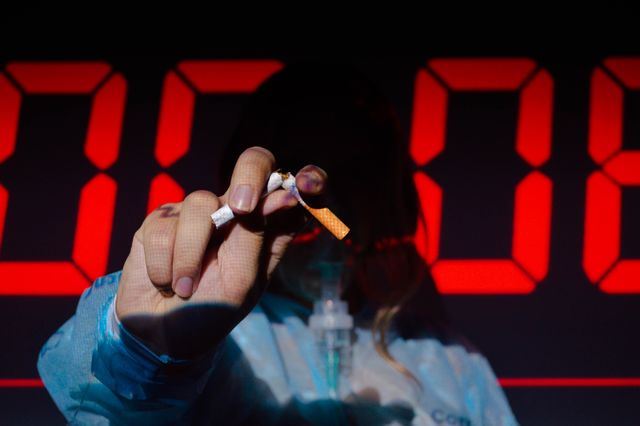
What would happen if a person slept for an extra hour every night, walked for twenty minutes after lunch, reduced their sugary drink consumption or stopped using a phone immediately before bedtime? These questions appear simple, but their answers depend on a complex interaction between biology, behaviour, environment and individual circumstances. A habit that improves one person’s well-being may produce a different result for someone with another medical history, daily routine or set of responsibilities.
Traditional health advice often relies on population-level research. Studies may show that particular behaviours are associated with better sleep, improved cardiovascular health or a lower risk of certain diseases. However, individuals frequently want to understand something more personal: what might happen to my health if I changed this one habit while keeping the rest of my routine as similar as possible?
This is where the concept of the Counterfactual Human becomes relevant. It describes a potential AI-driven approach to estimating how an individual’s health might change under an alternative behaviour or circumstance. Instead of merely predicting what is likely to happen based on current habits, a system would compare possible future scenarios, such as continuing an existing routine versus introducing a specific change.
The underlying scientific idea is known as counterfactual reasoning, which is widely studied in causal inference. AI systems could combine personal health records, wearable measurements, behavioural information and evidence from clinical research to estimate these alternative outcomes. The goal would not be to claim certainty about an individual’s future, but to provide evidence-based estimates that help people understand possible consequences before making a change.
What Is a Counterfactual Human?
A counterfactual is a description of what might have happened under circumstances different from those that actually occurred. In everyday life, people use counterfactual thinking when they ask whether an earlier bedtime might have improved their energy, whether regular exercise could have changed their fitness or whether a different meal pattern might have affected their concentration.
In healthcare, counterfactual reasoning asks a more structured question: how would an outcome differ if the same person experienced one intervention rather than another? For example, researchers might want to estimate the difference in blood pressure for an individual who begins a regular walking routine compared with the blood pressure that would have occurred if the person had continued their existing activity pattern.
The challenge is that only one of these pathways can be observed in the same person at the same time. Once an individual changes a habit, researchers can observe what happens afterwards, but they cannot directly observe the alternative future in which the person did not make that change. The unobserved outcome is the counterfactual.
A Counterfactual Human model would attempt to estimate that missing comparison using available evidence. It might use an individual’s previous measurements, similar cases, controlled research and established relationships between behaviours and health outcomes. In principle, this could create personalised scenario comparisons rather than relying entirely on general statements about what is healthy.
However, the term Counterfactual Human is a conceptual label for this proposed application, not an established medical technology or recognised clinical diagnosis. Its credibility would depend on whether the underlying models produce reliable estimates and whether those estimates are useful for real health decisions.
Why Predicting Health Is Different from Estimating the Effect of a Habit
Many AI health systems are designed to predict future events. They might estimate the probability that someone will develop a particular condition, experience a hospital admission or require additional monitoring. Such predictions can be valuable, but they do not automatically explain what would happen if a person changed a behaviour.
Suppose an AI model identifies that people who sleep longer tend to report better daytime energy. A conventional predictive system might estimate an individual’s likely energy level from their current sleep pattern and other available information. A counterfactual system would ask a different question: how might that person’s energy change if they consistently slept for an additional hour?
This distinction matters because association does not necessarily establish causation. People who sleep longer may also have less demanding work schedules, better health, different stress levels or more regular routines. These other factors could partly explain the observed relationship. Simply changing the sleep variable in a predictive model would not necessarily produce a reliable estimate of the effect of additional sleep.
Causal inference methods attempt to address this challenge by defining the intervention, identifying relevant confounding factors and estimating the outcomes that would occur under alternative conditions. The quality of the estimate depends on the quality of the evidence, the assumptions of the model and whether the available data adequately represent the individual and the proposed change.
A useful Counterfactual Human system would therefore need to do more than identify correlations. It would need to estimate plausible differences between clearly defined behavioural scenarios and explain the uncertainty surrounding those estimates.
How AI Could Build a Personal Health Counterfactual
A potential system would begin by developing a baseline picture of the individual’s current routine and health. This might include sleep patterns, physical activity, meal timing, self-reported stress, relevant medical history and measurements from wearable devices. Where appropriate and authorised, the model could also use clinical test results and information about medication.
The system would then define a specific change. Instead of modelling a vague goal such as becoming healthier, it might compare a person’s current routine with a scenario in which they walk for fifteen minutes after lunch on five days each week. The definition matters because different versions of the same habit can produce different results. Walking slowly indoors is not identical to brisk outdoor walking, and a change made once is not equivalent to one maintained over several months.
The AI would use suitable research evidence and statistical models to estimate the likely outcomes under both scenarios. Depending on the question, the outcomes might include changes in sleep regularity, physical activity, perceived energy, blood pressure or another measurable indicator. The system would also consider relevant influences, such as the person’s baseline health, existing activity levels and practical ability to maintain the new routine.
The result could be presented as a range of possible outcomes rather than a single guaranteed figure. The system might explain that the available evidence supports a potential benefit, that the size of the effect is uncertain and that the estimate assumes the habit is maintained under specified conditions.
Crucially, the model would need to distinguish between evidence directly supported by clinical research and estimates generated through extrapolation. If the evidence is weak for a particular person or intervention, the system should say so rather than creating a precise-looking prediction from insufficient information.
Example One: What If Someone Changed Their Sleep Habit?
Sleep offers a useful example because it is influenced by many everyday behaviours and affects several aspects of health. Imagine an individual who regularly sleeps for six hours and wants to know what might happen if they allowed themselves an additional hour in bed.
A counterfactual model could compare the person’s current sleep pattern with a scenario involving a consistent opportunity for seven hours of sleep. It might examine outcomes such as daytime sleepiness, sleep regularity and self-reported concentration. If the individual uses a wearable device, the model could also analyse changes in recorded sleep patterns, while acknowledging that consumer devices do not measure every aspect of sleep with the accuracy of clinical testing.
The model would need to consider why the person currently sleeps for six hours. If the main reason is a late bedtime caused by unnecessary evening screen use, changing the evening routine might help create more sleep opportunity. If the person has insomnia, shift-work demands or an untreated sleep disorder, simply extending the time in bed may not produce the expected improvement.
The counterfactual estimate would therefore depend on the proposed intervention and the individual’s circumstances. It could help compare possible approaches, but it should not promise a specific improvement in concentration or claim that a particular sleep duration is suitable for everyone.
Example Two: What If Someone Added a Daily Walk?
Physical activity is another area in which personalised counterfactual modelling could support behaviour change. Consider a person who spends most of the working day sitting and wants to understand the potential effect of adding a short daily walk.
The system could compare the person’s current activity pattern with a defined scenario involving a regular walk after lunch. It might estimate changes in total movement, sedentary time and selected health indicators over a specified period. If the individual already exercises regularly, the model might estimate a different additional benefit than it would for someone whose activity levels are very low.
The model could also account for practical circumstances. A person who works from home may find it easier to maintain a walking routine than someone with a long commute and caregiving responsibilities. Weather, mobility limitations, access to safe walking areas and existing medical conditions may influence whether the habit is realistic and appropriate.
A responsible system would avoid presenting a precise long-term reduction in disease risk unless that estimate were supported by a validated model for the relevant population and intervention. It could instead explain that regular physical activity is associated with established health benefits and help the user track whether the intended behaviour becomes part of their routine.
Example Three: What If Someone Changed One Eating Habit?
Nutrition involves complex interactions between food choices, total energy intake, metabolic health, cultural practices and individual needs. This makes it an important but challenging application for counterfactual AI.
Imagine a person who regularly drinks sugar-sweetened beverages and wants to understand the possible effect of replacing one daily serving with water. A model could define the current behaviour, estimate the change in beverage intake and investigate likely effects using relevant nutrition research. If the person’s other eating habits remain broadly similar, the model might estimate how the substitution could affect overall dietary intake.
However, real behaviour rarely changes in isolation. Some individuals may compensate by consuming different foods or drinks, while others may find that the replacement habit is difficult to sustain. The model would need to distinguish the expected effect of the substitution itself from the effect of maintaining it consistently over time.
Personal context would matter as well. Nutritional needs differ according to age, activity, medical conditions and other factors. A general model should not recommend restrictive diets or predict clinical outcomes without appropriate evidence. Its role would be to support informed decisions, not replace individualised dietary advice when that advice is medically necessary.
The Science of Causal AI
Counterfactual health modelling draws on several related fields, including causal inference, statistical modelling, machine learning and longitudinal data analysis. Each contributes a different capability to the problem.
Causal inference provides methods for estimating the effect of an intervention while accounting for factors that may influence both behaviour and outcomes. Depending on the available data, researchers may use randomised controlled trials, carefully designed observational studies, propensity-score methods, causal graphs or other statistical techniques. No single method automatically eliminates uncertainty, and each relies on assumptions that must be examined.
Machine learning can help identify complex relationships across large datasets and estimate outcomes for people with different characteristics. Yet a model that predicts outcomes accurately may still estimate intervention effects poorly. Predictive accuracy and causal validity are related but distinct objectives. A high-performing model is not automatically capable of answering what would happen if one specific habit changed.
Longitudinal data can add another layer by tracking behaviour and health measurements over time. These records may help researchers examine whether a change consistently precedes an outcome, how long an effect takes to emerge and whether the effect persists. Wearables and digital health platforms could contribute useful observations, although their measurements may be incomplete or noisy.
For a Counterfactual Human system to be credible, these methods must work together within a clearly defined framework. Researchers would need to specify the intervention, identify potential confounders, test assumptions and validate the estimates against independent evidence.
Can AI Predict an Individual’s Future with Precision?
Personalised health prediction is appealing because people naturally want direct answers about their own futures. However, an individual outcome is affected by many influences that cannot be measured completely or predicted with certainty.
A model might estimate that a habit is likely to improve a particular health indicator on average, while remaining uncertain about the magnitude of change for one person. Individual responses vary, and the same behaviour can have different effects depending on baseline health, genetics, environmental conditions, medication and other factors.
The distinction between a probability and a guarantee is particularly important. If an AI system estimates a higher likelihood of an improvement under one scenario, that does not mean the improvement will necessarily occur. The estimate represents a comparison based on evidence and assumptions, not a direct observation of an alternative future.
A responsible system would communicate this uncertainty in clear language. It might present a range of plausible outcomes, explain which assumptions matter most and identify the factors that could make the estimate less reliable. It should avoid excessive decimal precision or confident statements that imply the future is already known.
In some cases, the most useful answer may be that the available evidence is insufficient to produce a trustworthy personal estimate. A system that recognises its limits would be more valuable than one that generates a numerical answer for every question.
The Problem of Changing Only One Habit
The idea of changing one variable while keeping everything else constant is useful for scientific reasoning, but real life rarely follows such a controlled pattern. A person who begins exercising may also sleep better, experience changes in mood or spend less time sitting. These changes may reinforce one another and influence the final outcome.
This creates a challenge for counterfactual modelling. Researchers must distinguish the direct effect of the intended habit from the broader effects that follow naturally from the change. The answer also depends on how the intervention is defined. Does adding a daily walk mean replacing sitting time, reducing time spent sleeping or changing the route taken to work? Each version represents a different scenario.
There is also the question of adherence. A model may estimate the effect of maintaining a new habit for twelve weeks, but the individual may follow it for only ten days. The difference between the expected benefit under sustained adherence and the actual outcome under inconsistent behaviour should be made explicit.
AI could help by modelling several realistic scenarios, such as occasional adherence, consistent adherence and a gradual increase in the habit. However, these estimates would still require reliable evidence and appropriate assumptions. More detailed scenarios do not automatically produce more accurate predictions.
Privacy, Ethics and Responsible Health Advice
A personalised counterfactual system may require access to sensitive information, including medical history, activity patterns, sleep records and dietary behaviour. Protecting these data would be essential. Users should understand what information is collected, how it is processed, how long it is retained and whether it is shared with third parties.
There is also a risk that people may interpret estimated outcomes as medical instructions. If a model predicts that changing a habit could improve a health marker, the result should not be treated as a diagnosis or a substitute for professional care. This is especially important for individuals with chronic conditions, pregnancy-related needs, mobility limitations or medications that affect how they should approach lifestyle changes.
Another concern is unequal performance. Models trained on narrow datasets may provide less reliable estimates for people whose circumstances differ from those represented in the training data. Differences in age, socioeconomic conditions, disability, occupation and access to healthcare may affect both the feasibility of a behaviour change and its likely consequences.
Responsible design would require transparency, independent validation and appropriate clinical oversight. It should support user autonomy rather than pressure people into constant self-monitoring or make them feel personally responsible for outcomes shaped by wider social and environmental conditions.
The Future of the Counterfactual Human
The next generation of AI health tools may move beyond describing current patterns towards comparing realistic options for future behaviour. A user might explore the potential consequences of changing bedtime, increasing daily movement or establishing a more consistent meal routine. The model could then help track what actually happens and compare the observed results with the original estimate.
This creates an opportunity for a more adaptive approach to health guidance. Rather than treating a recommendation as a fixed instruction, the system could use new observations to refine its understanding of how a person responds. Such feedback would need careful interpretation because changes in health may reflect several simultaneous influences, not only the habit being monitored.
Research would also need to determine whether these systems improve meaningful outcomes. A model that produces engaging scenario comparisons is not necessarily helping users make better decisions. Clinical trials and real-world evaluations could investigate whether counterfactual guidance improves sustained behaviour change, health outcomes, patient understanding or the efficiency of preventive care.
The most useful systems will likely combine scientific evidence with transparent uncertainty and practical advice. They will explain what is known, what remains uncertain and which aspects of a proposed change can realistically be evaluated. They will also recognise when professional assessment is more appropriate than automated guidance.
Conclusion
The Counterfactual Human represents a promising concept for personalised preventive health. By combining causal inference, machine learning, longitudinal health records and behavioural data, AI could help estimate how a person’s health might differ under alternative everyday habits.
Its most important contribution would be the ability to compare possible choices rather than merely describe existing risk. Instead of offering only general guidance, a system could examine a clearly defined change, estimate plausible outcomes and explain the evidence and assumptions behind the prediction.
However, estimating an alternative future is fundamentally different from observing what will happen. Individual responses vary, behaviours interact and the quality of a counterfactual estimate depends on reliable data and defensible causal assumptions. AI cannot guarantee that a person will experience a particular result simply because a model predicts it.
If developed responsibly, Counterfactual Human systems could help people make more informed decisions about sleep, physical activity, nutrition and other everyday habits. Their value will ultimately depend not on how confidently they simulate the future, but on whether their estimates are trustworthy, understandable and useful in improving real-world health decisions.