 Anshika Jain
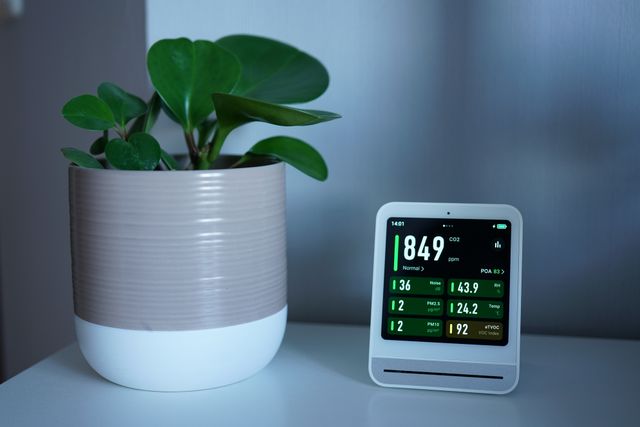
People spend a significant part of their lives indoors, whether at home, in offices, schools, hospitals, shopping centres or public transport facilities. Although indoor environments may appear protected from outdoor pollution, the air inside buildings can contain a complex mixture of chemical compounds, particles and biological contaminants. Cooking fumes, cleaning products, furniture materials, paints, building adhesives, fragrances, tobacco smoke and outdoor pollutants entering through windows or ventilation systems can all influence indoor air quality. Some of these substances may contribute to respiratory irritation, coughing, throat discomfort, sneezing, wheezing or a feeling of breathlessness, particularly among people with existing respiratory sensitivities.
One of the difficulties in understanding indoor air-related discomfort is that symptoms do not always appear immediately after exposure. A person may experience a blocked nose while working in an office, develop throat irritation after cleaning a room or notice coughing after spending several hours in a poorly ventilated space. These experiences may be connected to indoor air conditions, but identifying the responsible factor is not straightforward. Several pollutants can be present simultaneously, their concentrations may change throughout the day, and individual responses can vary considerably.
Artificial intelligence (AI) could help researchers investigate these relationships by combining indoor air measurements with information about building conditions, daily activities and respiratory symptoms. Instead of relying on a single air-quality reading, AI systems may analyse how chemical compounds fluctuate over time and whether particular exposure patterns coincide with recurring discomfort. This approach could make indoor air assessment more detailed and help identify environmental conditions that deserve further investigation.
However, AI cannot automatically determine that a particular chemical caused someone’s symptoms. Respiratory discomfort may also be influenced by infections, allergies, asthma, humidity, temperature, outdoor pollution and personal health conditions. The real opportunity lies in using AI to identify patterns, generate testable hypotheses and support better indoor environmental management.
Understanding Indoor Air Chemistry
Indoor air chemistry refers to the mixture of gases, vapours, particles and chemical reactions that occur within enclosed or partially enclosed spaces. Unlike outdoor air, which is influenced by large-scale atmospheric conditions, indoor air is strongly affected by building materials, household activities, ventilation, occupancy and the movement of pollutants between indoor and outdoor environments.
A major category of indoor air pollutants is volatile organic compounds (VOCs). These chemicals evaporate relatively easily at room temperature and may be released by paints, adhesives, cleaning agents, air fresheners, furniture, flooring, personal-care products and other household materials. Formaldehyde is one commonly studied indoor VOC and may be emitted by certain pressed-wood products, furniture and building materials. Other compounds, such as benzene and toluene, can enter indoor environments through combustion sources, products and outdoor air infiltration.
Indoor environments may also contain nitrogen dioxide, carbon monoxide, ozone and particulate matter. Nitrogen dioxide can be produced by gas stoves and other combustion activities, while carbon monoxide is associated with incomplete combustion and can be dangerous at elevated concentrations. Ozone may enter from outdoors or be generated by certain electronic devices and air-cleaning products. Particulate matter includes fine particles from cooking, candles, tobacco smoke, dust and outdoor pollution.
Indoor air chemistry is not limited to the presence of individual substances. Chemicals can react with one another and with surfaces, producing secondary pollutants. For example, ozone can react with certain indoor VOCs, including compounds released by fragranced products, to form other substances such as aldehydes and secondary organic aerosols. These reactions can change the composition of indoor air even when the original sources are no longer actively releasing pollutants.
Humidity, temperature, sunlight, ventilation and surface materials influence these processes. Consequently, two rooms containing similar furniture and cleaning products may have different air chemistry because their ventilation and environmental conditions differ. Understanding this dynamic environment is essential when investigating respiratory discomfort.
How Indoor Air Conditions May Influence Respiratory Discomfort
Respiratory discomfort can involve several symptoms, including coughing, throat irritation, nasal congestion, sneezing, wheezing and irritation of the eyes or airways. These symptoms do not always indicate a serious medical condition, but recurring discomfort may affect concentration, sleep, productivity and quality of life. Indoor environmental exposures are among the factors that researchers investigate when examining these experiences.
Some airborne substances can irritate the eyes, nose and respiratory tract. The effects depend on the substance, concentration, duration of exposure and individual susceptibility. People with asthma, allergies or other respiratory conditions may be more sensitive to certain environmental triggers. Children, older adults and people with particular health vulnerabilities may also require additional consideration.
Fine particulate matter can penetrate deeply into the respiratory system, depending on particle size. Exposure to particulate pollution has been associated with respiratory and cardiovascular health effects. Indoor sources such as cooking, smoking and combustion can contribute to particle concentrations, while outdoor pollution may enter through doors, windows and ventilation systems.
Humidity can also influence respiratory comfort. Excessive moisture can encourage mould growth and dust-mite populations, while very dry indoor air may contribute to dryness or irritation of the nose and throat. Damp buildings may expose occupants to mould spores, fragments and other microbial material. These biological factors are not chemical pollutants in the narrow sense, but they form part of the wider indoor environmental mixture that can affect respiratory health.
It is important to distinguish irritation from allergic and infectious symptoms. A person may cough because of a viral infection, react to pollen entering through a window or experience symptoms associated with an existing respiratory condition. An indoor air-quality system can identify environmental patterns, but it cannot establish the medical cause of symptoms without appropriate clinical evaluation.
Why Traditional Indoor Air Monitoring May Miss Important Relationships
Conventional indoor air-quality monitoring measures selected pollutants at particular locations and times. Common measurements include particulate matter, carbon dioxide, temperature, relative humidity and, in some systems, total volatile organic compounds. These measurements are useful for identifying ventilation problems and detecting changes in indoor conditions. However, they do not always explain the complete chemical environment or its relationship with respiratory symptoms.
A total VOC reading, for example, represents an aggregate sensor response rather than a precise identification of every chemical present. Two rooms may produce similar readings while containing different mixtures of compounds. One may have emissions from cleaning products, while another may contain substances released by new furniture or building materials. Because individual compounds have different properties, a combined reading cannot establish which substance is responsible for a particular symptom.
The timing of measurements is another limitation. Indoor pollutant concentrations can rise sharply during cooking, cleaning, painting, printing or the use of fragranced products. They may then decline as ventilation removes or dilutes the pollutants. A measurement taken several hours later could fail to capture the exposure peak that coincided with respiratory discomfort.
Indoor chemistry also creates a measurement challenge because the original chemicals released by a product are not necessarily the only substances to which occupants are exposed. Ozone can react with certain VOCs, producing secondary compounds and particles. A 2026 review of indoor ozone and its reaction products highlights the importance of these chemical transformations while also noting that epidemiological evidence about the health effects of the resulting mixtures remains limited.
AI could help address these gaps by examining multiple measurements together, recognising recurring patterns and identifying relationships that might otherwise remain unnoticed. It would not eliminate the need for accurate chemical analysis, but it could help researchers decide when, where and which pollutants require closer investigation.
How AI Can Identify Relationships Between Indoor Chemistry and Respiratory Symptoms
The first requirement for an AI-based system is a sufficiently detailed picture of indoor environmental conditions. This could be developed through a combination of indoor air sensors, targeted chemical sampling, building information and occupant-reported symptoms. The goal would be to understand how air composition changes throughout the day and whether those changes consistently coincide with respiratory discomfort.
Combining Multiple Indoor Air Sensors
Low-cost sensors can monitor environmental indicators such as particulate matter, carbon dioxide, temperature and humidity. Some devices also estimate total VOC concentrations or detect selected gases. These measurements can provide continuous information about changing indoor conditions, although sensor accuracy varies and many low-cost devices cannot identify individual chemical compounds.
More specialised instruments can measure particular pollutants or analyse a broader chemical mixture. For example, gas chromatography combined with mass spectrometry can help identify and quantify VOCs in collected air samples. Other analytical techniques can investigate airborne particles and chemical reaction products. Although these methods are more resource-intensive than ordinary consumer sensors, they can provide reference measurements for training and validating AI models.
Combining continuous sensor readings with periodic laboratory analysis could create a more useful dataset. AI may then identify when a rise in particulate matter, a change in humidity or a particular VOC pattern occurs alongside reported symptoms. This is especially valuable when a room’s air composition changes rapidly in response to everyday activities.
Learning From Time-Series Environmental Data
Indoor air conditions are dynamic, which makes time-series analysis particularly important. Instead of examining isolated readings, machine-learning models can investigate how measurements evolve over minutes, hours, days and weeks. They may identify recurring increases in pollutants after cooking, cleaning or the use of particular products.
For example, an AI system could detect that a room repeatedly experiences increased particle concentrations during meal preparation. It could then compare those periods with reports of coughing or throat irritation from occupants. Another pattern might involve a rise in certain VOC measurements after cleaning, followed by complaints of nasal discomfort later in the day.
The system could also examine delayed relationships. A respiratory symptom may not appear at exactly the moment a pollutant concentration increases. Some reactions may occur during exposure, while others may become noticeable after a period of time. Time-series models can investigate different exposure windows and estimate whether patterns are consistent across repeated observations. These relationships would still need scientific and clinical evaluation before being interpreted as evidence of a cause.
Connecting Environmental Data With Symptom Records
Environmental measurements alone cannot explain how occupants feel. A more informative research system would include structured symptom records, allowing participants to report experiences such as coughing, wheezing, nasal irritation, throat dryness or breathing discomfort. These records could include the time symptoms began, their duration and the indoor location where they occurred.
AI could compare these reports with the environmental measurements recorded around the same time. If a particular pattern repeatedly appears before or during symptoms, the system could flag it for further investigation. It may also compare different rooms or periods to determine whether discomfort is more frequent under particular environmental conditions.
The quality of symptom information matters. Vague reports, missing entries and inaccurate timestamps can reduce model reliability. Researchers would need clear reporting methods and appropriate privacy protections. They would also need to distinguish respiratory discomfort from other experiences, such as eye irritation, headaches or general dissatisfaction with indoor conditions.
The Importance of Chemical Interactions Rather Than Individual Pollutants
One of the most interesting possibilities for AI is its ability to examine chemical mixtures and interactions. Indoor air is not simply a collection of unrelated substances. Chemicals can react in the air, interact with surfaces and change according to temperature, humidity, ventilation and occupancy. Consequently, identifying one pollutant may not be sufficient to understand the exposure experienced by occupants.
Ozone provides a useful example. Much indoor ozone enters from outdoor air, although some equipment can also generate it. Once indoors, ozone may react with unsaturated organic compounds, including terpenes found in some fragranced cleaning and personal-care products. These reactions can generate aldehydes, other oxygenated compounds and secondary particles. Research on terpene reaction products has investigated how such chemistry may affect the airways, while emphasising that the significance of particular reaction products depends on exposure conditions.
AI could help researchers identify combinations of environmental conditions associated with changes in chemical composition. For example, a model might investigate whether the relationship between a fragranced product and measured air-quality changes differs when ozone levels or ventilation rates are higher. It could also examine whether pollutant patterns vary between occupied and unoccupied rooms.
This approach is more complex than predicting the concentration of a single gas. It requires measurements of relevant chemical precursors, reaction products and environmental conditions. Without adequate chemical data, an algorithm may identify statistical associations but fail to explain the underlying chemistry. AI should therefore work alongside environmental chemistry rather than serve as a substitute for it.
Developing a Personalised Indoor Respiratory Exposure Profile
Indoor environments affect people differently. An individual with asthma may respond to certain triggers that do not cause noticeable discomfort in another occupant. A person with seasonal allergies may experience symptoms when pollen enters through open windows, while someone else may be more sensitive to cleaning-product emissions or cooking fumes. Building conditions and daily routines further influence the amount of exposure each person receives.
AI could help researchers develop personalised indoor respiratory exposure profiles by connecting environmental measurements with individual symptom histories. Such a profile might reveal that a particular occupant repeatedly experiences discomfort in one room, during specific activities or at certain times of day. It could also help distinguish between exposure patterns shared by all occupants and those associated with individual responses.
For instance, two employees in the same office may experience different symptoms even though they share the same general environment. One may sit close to a printer or ventilation outlet, while another works near a window. Their time spent in the room, sensitivity to pollutants and underlying health conditions may also differ. A model that considers location and personal exposure patterns may provide more useful information than a building-wide average.
However, personalised prediction must not become automated diagnosis. An AI-generated profile cannot determine whether a person has asthma, allergic rhinitis or another respiratory condition. Its role would be to highlight environmental patterns that could be discussed with building managers, occupational-health teams or healthcare professionals. Medical assessment remains essential when symptoms are persistent, severe or unexplained.
Applications in Homes, Schools, Offices and Healthcare Buildings
AI-supported indoor air analysis could be useful in homes, where cooking, cleaning, bathing, heating and household products produce changing environmental conditions. A monitoring system could help identify recurring periods of poor ventilation or increased pollutant levels. If a household reports respiratory discomfort during particular activities, the combined data may help identify which conditions deserve further assessment.
Schools are another important setting because children spend substantial periods inside classrooms. Indoor air quality can be influenced by occupancy, cleaning routines, building materials, outdoor pollution and ventilation. A 2026 systematic review of AI applications for indoor air-quality monitoring in educational settings examined how machine learning and deep learning can support pollutant forecasting, sensor improvement and ventilation management. Such technologies may help schools respond proactively to changing conditions, although predicting respiratory symptoms requires additional health-related data and validation.
In offices, AI could support the investigation of recurring complaints involving throat irritation, coughing or nasal discomfort. It may help identify whether certain rooms, work schedules or activities coincide with changes in indoor air conditions. This could support building maintenance, ventilation adjustments and reviews of cleaning or product-use practices. It should not be used to dismiss employee symptoms simply because a sensor reading appears normal.
Healthcare buildings require particular care because patients may be more vulnerable to environmental exposures. AI could support monitoring of ventilation performance and selected pollutants, while helping facilities teams identify unusual changes. However, infection control, clinical ventilation standards and patient safety requirements must take priority. An AI recommendation should never override established engineering controls or healthcare protocols.
Challenges in Building Reliable AI-Based Indoor Air Analysis
Despite its potential, AI-based indoor respiratory analysis faces important scientific and technical challenges. The first is the accuracy of environmental measurements. Low-cost sensors are useful for identifying broad changes, but they may respond to several compounds at once, drift over time or perform differently under changing temperature and humidity. A model trained on inaccurate measurements may produce misleading conclusions. Calibration against reliable reference instruments and regular sensor maintenance are therefore essential.
The second challenge is identifying which exposure actually matters. Indoor environments contain mixtures of gases, particles, biological material and chemical reaction products. A person may experience discomfort after several activities have occurred in the same room. AI may identify that symptoms repeatedly coincide with a particular combination of conditions, but it cannot automatically determine which component is responsible. Laboratory analysis, controlled exposure research and carefully designed epidemiological studies are needed to investigate possible mechanisms.
Confounding factors create another difficulty. Respiratory symptoms may be influenced by viral infections, pollen, outdoor air pollution, smoking, medication, exercise, existing health conditions and seasonal changes. If a person experiences coughing on days when indoor VOC readings are elevated, the relationship may be coincidental or partly explained by another exposure. Researchers must account for these factors before interpreting model predictions.
There is also a significant gap between detecting an environmental pattern and predicting a health outcome. An algorithm might forecast an increase in particulate matter with reasonable accuracy, but that does not mean it can reliably predict whether a particular occupant will develop respiratory discomfort. Health-related prediction requires representative participant data, repeated symptom observations and independent clinical validation.
Privacy is equally important. Indoor monitoring may reveal when people are present, which activities they perform and how they use different rooms. Audio or video monitoring would introduce additional privacy concerns and should not be necessary for most indoor air-quality applications. Systems should prioritise environmental sensors, collect only essential information, use informed consent and protect any health-related records. In workplaces and schools, occupants should understand what is being measured and how the information will be used.
The Role of AI in Improving Indoor Air Management
The immediate practical value of AI may be its ability to help building managers understand changing indoor conditions and respond before problems become persistent. A predictive system could estimate when ventilation is likely to become insufficient based on occupancy, carbon dioxide trends, temperature and other environmental indicators. It could also identify recurring pollutant peaks associated with cooking, cleaning or specific equipment.
AI may support ventilation systems that adjust airflow according to occupancy and measured environmental conditions. However, ventilation decisions need to consider outdoor air quality, energy consumption, humidity and the building’s design. Increasing outdoor air intake is not always beneficial when outdoor pollution is high. A well-designed system must balance pollutant removal, filtration and appropriate ventilation rather than relying on one sensor reading.
Chemical-source identification could also become more sophisticated. If a room repeatedly shows elevated pollutant measurements after a particular activity, building managers could investigate the products or equipment involved. They may then consider lower-emission alternatives, improved local exhaust ventilation, changes in cleaning schedules or adjustments to product storage. These decisions should be based on verified measurements and relevant safety guidance, not solely on an AI-generated alert.
In India, this area has particular relevance because indoor environments vary widely across residential buildings, schools, offices and commercial spaces. Cooking practices, ventilation design, building density, outdoor pollution and seasonal weather can all influence indoor exposure. Research based on locally collected data would be important because a model trained in a different climate or building environment may not accurately represent Indian conditions. AI could help organise these complex measurements, but practical improvements will still depend on affordable monitoring, suitable building design and effective maintenance.
The Future of AI-Powered Indoor Respiratory Research
Future research may move towards integrated indoor environmental intelligence systems that combine chemical measurements, particulate monitoring, ventilation data, building information and voluntary symptom records. Instead of reporting only whether air quality is good or poor, these systems could explain how indoor conditions change, identify recurring exposure patterns and show which environmental factors deserve further investigation.
One promising direction is the use of chemical fingerprinting. Advanced analytical instruments can generate detailed profiles of compounds present in an air sample. Machine-learning models could compare these profiles across rooms, buildings and activities to identify recurring chemical patterns. Over time, researchers may be able to distinguish common indoor emission sources more effectively and investigate how different mixtures change under different ventilation and occupancy conditions.
Another opportunity involves predictive building models. AI could combine information about room dimensions, ventilation rates, occupancy and pollutant measurements to estimate how environmental conditions may change under different scenarios. Building managers might compare the expected effects of improving ventilation, changing a cleaning schedule or replacing a high-emission product. Such predictions would need to be tested against real measurements before they could guide important health-related decisions.
The most meaningful development, however, will come from connecting environmental science with clinical research. Longitudinal studies involving repeated air measurements and carefully recorded respiratory symptoms could help researchers understand which exposure patterns are consistently associated with discomfort. Independent validation across different populations, building types and climates would be essential. The aim should not be to create an algorithm that labels every room as safe or unsafe, but to develop systems that make indoor exposure easier to understand and manage.
Conclusion
AI could help identify relationships between indoor air chemistry and everyday respiratory discomfort by analysing chemical measurements, particulate levels, ventilation conditions and symptom patterns over time. Its ability to combine different data sources may reveal exposure patterns that conventional monitoring systems overlook, particularly when pollutant concentrations fluctuate or when chemical reactions produce substances beyond the original emissions.
The most important opportunity lies in moving from isolated air-quality readings towards a more complete understanding of indoor exposure. AI may help identify recurring conditions associated with coughing, nasal irritation, wheezing or throat discomfort, support investigations into chemical mixtures and guide improvements in homes, schools, workplaces and healthcare buildings.
However, identifying an association does not prove that a particular pollutant caused a symptom. Sensor limitations, chemical complexity, individual sensitivity and other health influences must all be considered. AI-based systems should therefore complement reliable environmental measurements and professional medical assessment rather than replace them.
As indoor monitoring technology develops, AI may become a valuable part of healthier building management and respiratory research. By connecting the chemistry of indoor spaces with the experiences of the people who occupy them, Digital Indoor Air Intelligence could help transform indoor air quality from a general environmental measurement into a more detailed field of exposure research and preventive health planning.