 Anshika Jain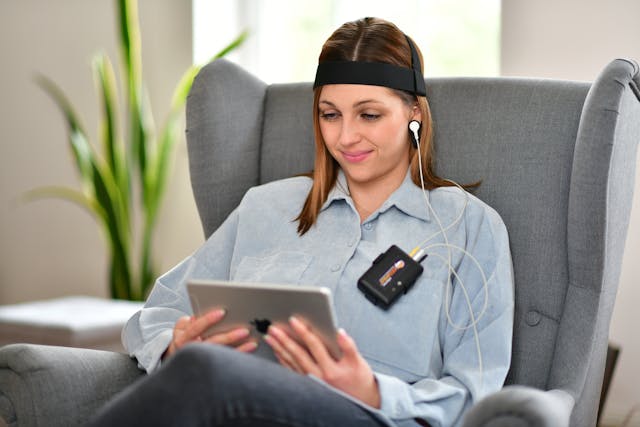
The fitness industry has undergone a major transformation in recent years with the integration of advanced technology into everyday training routines. From wearable fitness trackers and smartwatches to AI-driven coaching platforms, modern exercise has become increasingly data-driven. One of the most impactful innovations in this space is biofeedback technology, which allows individuals to monitor real-time physiological signals during workouts and adjust their performance accordingly.
Biofeedback technology in workouts refers to systems that measure internal bodily functions such as heart rate, breathing patterns, muscle activity, skin temperature, oxygen levels, and stress responses. These measurements are then fed back to the user through visual, auditory, or tactile signals. The purpose is to help individuals understand how their body is responding to physical exertion and learn how to regulate effort, recovery, and intensity more effectively.
Unlike traditional fitness approaches that rely mainly on perceived effort or external coaching, biofeedback creates a direct connection between the body and the mind. It helps individuals train more intelligently rather than just harder. This approach has gained popularity among athletes, fitness enthusiasts, rehabilitation patients, and even beginners who want more structured guidance in their exercise routines.
As wearable devices and smart fitness systems continue to evolve, biofeedback is becoming more accessible and integrated into daily workouts. Understanding how this technology works and how it influences performance, safety, and motivation is essential for anyone interested in modern fitness practices.
Understanding Biofeedback Technology
Biofeedback is a process that involves measuring physiological signals and providing real-time feedback to the user. The goal is to increase awareness and control over bodily functions that are usually automatic, such as heart rate, breathing, and muscle tension.
In fitness and exercise settings, biofeedback systems typically use sensors embedded in wearable devices, chest straps, smart clothing, or specialized equipment. These sensors collect data and transmit it to apps or display screens where users can interpret their performance.
Common physiological metrics tracked through biofeedback include heart rate variability, respiratory rate, muscle activation patterns, oxygen saturation, and stress indicators such as skin conductivity.
Physiological Signals→Real-Time Feedback→Behavior Adjustment in Workouts
This feedback loop allows individuals to modify their intensity, posture, breathing, or recovery strategy during exercise instead of after the workout is completed.
How Biofeedback Works in Workouts
During a workout, the body produces continuous signals that reflect its internal state. Biofeedback technology captures these signals using sensors placed on the body or integrated into clothing and devices.
For example, a heart rate monitor tracks how fast the heart is beating during cardio exercises. If the heart rate becomes too high or too low relative to the target zone, the system alerts the user. Similarly, muscle sensors can detect activation levels during strength training, helping individuals understand whether they are engaging the correct muscles.
The collected data is processed by software that translates raw physiological information into easy-to-understand feedback. This feedback may be displayed as numbers, graphs, color changes, vibrations, or audio cues. Over time, users learn to associate internal physical sensations with external feedback, improving body awareness and exercise control.
Biofeedback essentially bridges the gap between subjective perception and objective data, making workouts more precise and personalized.
Types of Biofeedback Used in Fitness
Different forms of biofeedback are used in modern workouts depending on the goals and technology available.
Heart rate variability monitoring is one of the most common forms. It measures variations in time between heartbeats and provides insights into recovery, stress levels, and training readiness.
Muscle activity monitoring, often done through electromyography sensors, tracks how strongly specific muscles are activated during movement. This is particularly useful in strength training and rehabilitation settings.
Respiratory biofeedback focuses on breathing rate and patterns. It helps individuals optimize oxygen intake during endurance exercises and maintain calm breathing under stress. Temperature-based biofeedback tracks skin or body temperature changes, which can reflect exertion levels and recovery status. Some advanced systems also measure oxygen saturation in the blood, providing insight into aerobic efficiency and endurance capacity.
Role of Heart Rate Biofeedback
Heart rate monitoring is one of the most widely used applications of biofeedback in workouts. It provides real-time insight into cardiovascular effort and intensity levels.
Training within specific heart rate zones allows individuals to target different fitness goals such as fat burning, endurance improvement, or high-intensity performance.
Heart rate biofeedback helps prevent overtraining by alerting users when intensity exceeds safe levels. It also helps ensure that workouts are effective by maintaining effort within optimal ranges.
Target Heart Rate Zone→Optimized Cardiovascular Training and Recovery
By using heart rate data, individuals can better understand how their body responds to different types of exercise and adjust intensity accordingly.
Muscle Biofeedback and Strength Training
Muscle-based biofeedback is especially useful in strength training and rehabilitation programs.
Electromyography sensors measure electrical activity produced by muscles during contraction. This information helps users determine whether they are activating the correct muscle groups during exercises.
For example, during a squat, muscle biofeedback can show whether the glutes, quadriceps, or lower back muscles are being engaged effectively. This feedback improves exercise technique, reduces injury risk, and enhances training efficiency. In rehabilitation settings, muscle biofeedback is used to retrain weakened or injured muscles by providing visual or auditory cues that guide proper activation patterns.
Respiratory Biofeedback and Endurance
Breathing plays a crucial role in physical performance, especially during endurance-based workouts such as running, cycling, or swimming.
Respiratory biofeedback helps individuals monitor and regulate their breathing patterns during exercise. Shallow or irregular breathing can reduce oxygen efficiency and increase fatigue, while controlled breathing improves endurance and focus.
By receiving real-time feedback on breathing rate, individuals can learn to maintain steady and efficient respiratory patterns even under physical stress. This form of biofeedback is also widely used in stress management and mindfulness-based fitness programs.
Benefits of Biofeedback in Workouts
Biofeedback technology offers several advantages for fitness and health.
One of the most significant benefits is improved body awareness. Users become more conscious of how their body responds to different levels of exertion. It also enhances training efficiency by ensuring workouts are performed at appropriate intensity levels.
Another important benefit is injury prevention. By monitoring physiological stress signals, individuals can avoid overtraining and excessive strain. Biofeedback also supports motivation by providing measurable progress and real-time feedback during workouts.
For beginners, it offers guidance and structure, while for advanced athletes, it provides detailed performance optimization data.
Biofeedback and Personalized Fitness
One of the key strengths of biofeedback technology is its ability to personalize workouts.
Every individual has a unique physiological response to exercise based on genetics, fitness level, age, and health status. Biofeedback allows training programs to adapt dynamically based on real-time data rather than fixed assumptions.
This personalization leads to more effective workouts and better long-term results. Instead of following generic fitness plans, individuals can adjust intensity, duration, and recovery based on how their body is actually performing.
Mental Focus and Mind-Body Connection
Biofeedback training strengthens the connection between mind and body.
By observing physiological signals, individuals become more aware of how thoughts, emotions, and stress levels influence physical performance. This awareness can improve focus, concentration, and emotional regulation during workouts.
For example, noticing elevated heart rate due to stress rather than physical exertion can help individuals adjust breathing and mental state.
Mind Awareness+Physiological Feedback→Improved Exercise Control
Over time, this leads to better self-regulation and improved athletic performance.
Biofeedback in Recovery and Rest
Recovery is a critical component of fitness, and biofeedback plays an important role in optimizing it. Metrics such as heart rate variability and resting heart rate can indicate how well the body is recovering after exercise.
Low variability or elevated resting heart rate may signal fatigue, stress, or insufficient recovery. By monitoring these signals, individuals can adjust training intensity, rest days, and sleep habits. This helps prevent overtraining and supports long-term fitness progress.
Limitations of Biofeedback Technology
While biofeedback offers many advantages, it also has limitations. Device accuracy may vary depending on quality, placement, and environmental conditions. Some users may become overly dependent on data and ignore natural body sensations.
Misinterpretation of data can also lead to unnecessary stress or incorrect training decisions.
Additionally, not all physiological signals can be measured perfectly in real-time, and some metrics are only estimates rather than exact values.
Therefore, biofeedback should be used as a supportive tool rather than the sole decision-making factor in fitness.
Biofeedback and Wearable Technology
Wearable technology has made biofeedback widely accessible to the general public. Smartwatches, fitness bands, chest straps, and smart clothing now provide continuous monitoring of physiological data. Many devices also integrate with mobile apps that analyze trends over time and provide personalized recommendations.
This integration has made biofeedback an essential part of modern fitness ecosystems. As technology advances, future systems may become even more accurate, predictive, and adaptive.
The Future of Biofeedback in Fitness
The future of biofeedback technology is likely to include more advanced sensors, artificial intelligence integration, and real-time coaching systems. AI-driven fitness platforms may use biofeedback data to automatically adjust workouts based on fatigue, performance, and recovery status.
Virtual reality and augmented reality fitness systems may also incorporate biofeedback to create immersive training environments. These advancements will likely make fitness training more personalized, efficient, and scientifically guided.
Conclusion
Biofeedback technology in workouts represents a major advancement in modern fitness by combining physiological monitoring with real-time feedback systems. It allows individuals to better understand their bodies, optimize training intensity, improve performance, and reduce injury risk.
By tracking signals such as heart rate, muscle activity, breathing patterns, and recovery indicators, biofeedback provides a more scientific and personalized approach to exercise.
Although it has limitations and should not replace natural body awareness, it serves as a powerful tool for enhancing fitness outcomes when used correctly.
As wearable technology continues to evolve, biofeedback is expected to play an even greater role in shaping the future of personalized training and health optimization.
Ultimately, biofeedback empowers individuals to train smarter, recover better, and develop a deeper connection between mind and body during physical activity.