 Anshika Jain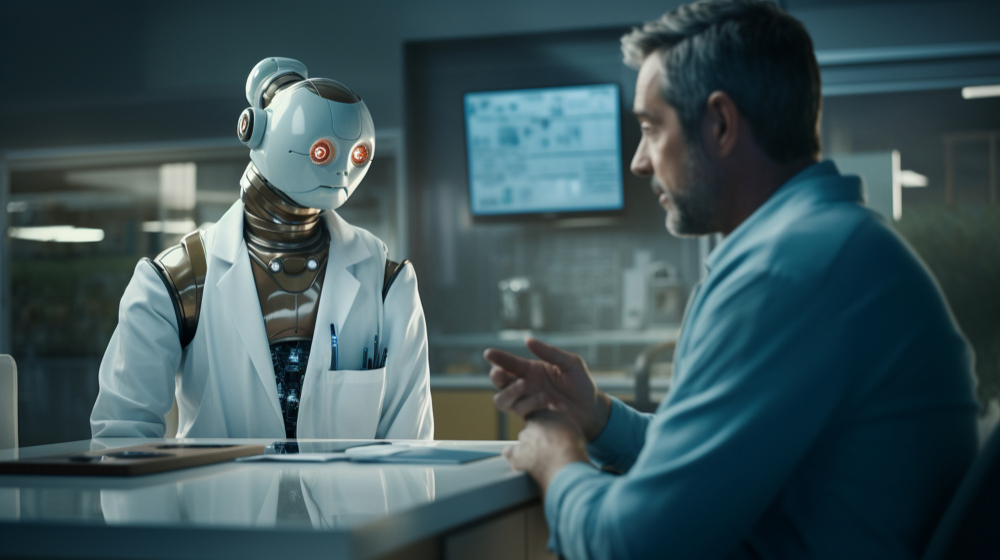
Artificial Intelligence (AI) is transforming nearly every industry, and healthcare is no exception. From faster disease detection to personalized treatment plans, AI-driven technologies are reshaping how medical professionals diagnose, monitor, and treat patients. As machine learning systems become more sophisticated, a critical question arises: Can AI replace doctors in the future?
While AI is undoubtedly revolutionizing medical practice, the idea of replacing human doctors entirely remains complex. Medicine involves not only scientific analysis but also empathy, ethical judgment, and human interaction—elements that technology still struggles to replicate. This article explores the evolving role of AI in healthcare, its capabilities, limitations, and the future relationship between doctors and intelligent machines.
The Rise of Artificial Intelligence in Healthcare
Artificial Intelligence refers to computer systems capable of performing tasks that typically require human intelligence, such as learning, problem-solving, pattern recognition, and decision-making. In healthcare, AI uses vast datasets—medical records, imaging scans, genomic data, and clinical research—to support clinical decisions.
Over the past decade, advances in machine learning, data processing, and computing power have accelerated AI adoption in medicine. Hospitals, research institutions, and healthcare startups are investing heavily in AI-based solutions to improve efficiency and accuracy in medical practice.
Today, AI tools are being used for:
-
Disease diagnosis
-
Medical imaging analysis
-
Drug discovery
-
Predictive healthcare analytics
-
Robotic surgeries
-
Virtual health assistants
These technologies are not replacing doctors but rather enhancing their capabilities and helping them make faster, more informed decisions.
How AI Is Transforming Medical Diagnosis
One of the most impactful applications of AI in healthcare is medical diagnosis. AI algorithms can analyze enormous datasets within seconds, identifying patterns that may be difficult for humans to detect.
Key Areas Where AI Assists Diagnosis
-
Medical Imaging:
AI systems can examine X-rays, CT scans, and MRIs to detect abnormalities such as tumors, fractures, or internal bleeding. -
Early Disease Detection:
AI models can predict diseases like diabetes, heart disease, or cancer by analyzing patient history and biomarkers. -
Pathology Analysis:
AI can analyze microscopic tissue samples to identify cancer cells or infections. -
Predictive Health Monitoring:
Wearable devices powered by AI monitor vital signs and alert doctors to potential health risks.
These capabilities significantly improve diagnostic accuracy and speed, enabling earlier treatment and better patient outcomes.
Advantages of AI in Healthcare
AI brings several advantages to the healthcare sector, many of which support doctors in their daily practice.
1. Faster Diagnosis
AI systems can process thousands of medical records and imaging scans in seconds. This rapid analysis helps doctors diagnose conditions more quickly, especially in emergency situations.
2. Improved Accuracy
Machine learning algorithms trained on large datasets can sometimes identify patterns that humans might overlook. In areas like radiology and pathology, AI has demonstrated diagnostic accuracy comparable to experienced specialists.
3. Personalized Treatment Plans
AI enables precision medicine, where treatment is tailored to an individual’s genetic profile, lifestyle, and medical history. This approach improves treatment effectiveness and reduces side effects.
4. Reduced Administrative Burden
Doctors spend a significant amount of time on paperwork and documentation. AI-powered systems can automate tasks such as:
-
Medical record management
-
Appointment scheduling
-
Insurance processing
-
Clinical documentation
Reducing administrative workload allows doctors to focus more on patient care.
5. Continuous Monitoring
AI-powered wearable devices and remote monitoring systems track patients’ vital signs in real time. This helps detect potential health problems early and reduces hospital readmissions.
Can AI Replace Doctors Completely?
Despite its impressive capabilities, AI is unlikely to replace doctors entirely in the foreseeable future. Medicine involves complex decision-making, emotional intelligence, and ethical considerations that machines cannot fully replicate.
Key Reasons AI Cannot Replace Doctors
1. Lack of Human Empathy
Healthcare is not just about diagnosis and treatment—it is also about compassion and emotional support. Patients often rely on doctors for reassurance during difficult medical situations.
AI systems cannot genuinely understand emotions, fear, or pain the way humans can.
2. Complex Medical Decision-Making
Medical cases often involve uncertainty and require nuanced judgment. Doctors consider:
-
Patient history
-
Lifestyle factors
-
Psychological conditions
-
Ethical implications
AI may provide recommendations, but final decisions require human expertise.
3. Ethical and Legal Responsibility
Medical decisions carry significant ethical and legal responsibilities. If an AI system makes a mistake, determining accountability becomes complicated. Human doctors are essential for responsible decision-making.
4. Limited Contextual Understanding
AI systems rely heavily on data. However, not all patient information can be quantified or digitized. Subtle symptoms, emotional cues, and contextual details often require human interpretation.
Areas Where AI May Replace Certain Medical Tasks
Although AI cannot fully replace doctors, it may automate specific tasks within the healthcare system.
Potential Areas of Automation
-
Radiology image analysis
-
Routine diagnostic screenings
-
Medical transcription and documentation
-
Drug discovery research
-
Administrative hospital operations
In these areas, AI can significantly improve efficiency and reduce human workload.
However, doctors will still oversee these processes and validate AI-generated insights.
The Role of Doctors in an AI-Driven Healthcare System
Rather than replacing doctors, AI is expected to transform their roles.
Future Responsibilities of Doctors
Doctors in the AI era may focus more on:
-
Interpreting AI-generated insights
-
Providing patient-centered care
-
Handling complex cases
-
Ethical decision-making
-
Communicating medical information clearly
AI will act as a powerful assistant, enabling doctors to deliver higher-quality care.
In this partnership, machines handle data-heavy tasks while humans provide empathy, judgment, and experience.
Challenges and Risks of AI in Healthcare
While AI offers many benefits, its integration into healthcare also presents several challenges.
1. Data Privacy and Security
Medical data is extremely sensitive. AI systems require vast datasets, raising concerns about:
-
Patient privacy
-
Data breaches
-
Unauthorized access
Strong data protection regulations are essential.
2. Algorithm Bias
If AI systems are trained on biased datasets, they may produce inaccurate or unfair results for certain populations.
Ensuring diverse and representative data is crucial for reliable AI systems.
3. Overreliance on Technology
Doctors must avoid blindly trusting AI recommendations. Human oversight remains critical to prevent medical errors.
4. High Implementation Costs
Developing and implementing AI technologies can be expensive, especially for smaller healthcare institutions.
Real-World Examples of AI in Medicine
AI is already making a tangible impact in healthcare worldwide.
Examples Include:
-
AI-assisted radiology tools that detect cancer in medical scans.
-
AI chatbots that provide preliminary medical guidance.
-
Robotic surgical systems that assist surgeons with precise movements.
-
AI-powered drug discovery platforms that accelerate pharmaceutical research.
These technologies demonstrate how AI can enhance medical capabilities without replacing healthcare professionals.
The Future of Medical Intelligence
The future of healthcare will likely be defined by collaboration between humans and intelligent machines. AI will continue to improve diagnostic accuracy, reduce workload, and enable personalized treatments.
Experts predict that the healthcare system will shift toward a hybrid model, where AI supports doctors rather than replacing them.
Key future developments may include:
-
Advanced predictive healthcare models
-
AI-powered virtual hospitals
-
Personalized medicine based on genetic analysis
-
Real-time health monitoring using smart devices
These innovations could make healthcare more accessible, affordable, and efficient.
Conclusion
Artificial Intelligence is rapidly transforming the healthcare industry, offering powerful tools for diagnosis, treatment planning, and medical research. While AI can analyze vast amounts of data and assist doctors in making more accurate decisions, it cannot replace the human qualities that are essential to medical care.
Empathy, ethical reasoning, patient trust, and complex decision-making remain uniquely human strengths. Instead of replacing doctors, AI will most likely become an indispensable partner in modern medicine.
The future of healthcare lies not in machines replacing humans, but in humans and AI working together to deliver safer, faster, and more personalized medical care. By embracing this collaboration, the medical field can unlock new possibilities and significantly improve patient outcomes around the world.