 Anshika Jain
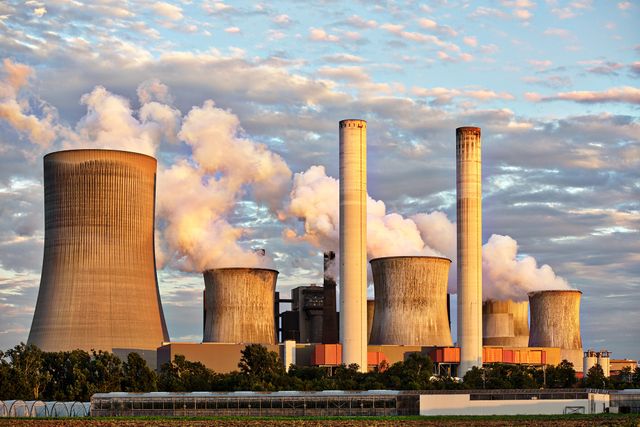
People encounter a wide range of chemical substances through everyday activities. Food consumption, drinking water, indoor and outdoor air, personal-care products, cleaning materials and household furnishings can all contribute to environmental chemical exposure. Some substances occur naturally, while others enter the environment through agriculture, industrial production, manufacturing, transportation and domestic activities. Although individual exposure levels may be relatively low, people can encounter multiple chemicals through several routes simultaneously. Understanding where these exposures originate is therefore an important challenge for environmental science and public-health research.
Environmental Chemical Exposure Attribution is an approach that attempts to identify the possible sources and pathways responsible for chemical exposure. Instead of measuring a chemical in isolation, researchers investigate how it may have entered the human environment, how people encounter it and which sources could explain the observed exposure patterns. Artificial intelligence could strengthen this process by combining information from environmental monitoring, food testing, water-quality assessments, air measurements and household product analysis.
Traditional exposure assessments often examine specific environmental sources separately. A study may investigate contaminants in drinking water, pesticide residues in food or pollutants in indoor air. However, people do not experience these sources independently. The same chemical or related substances may be present in different environmental compartments, making it difficult to determine the relative contribution of each source.
AI-supported exposure attribution could help researchers connect these different datasets, recognise chemical patterns and estimate the possible contribution of different exposure pathways. It could also help identify situations where several sources contribute to the same overall exposure. The objective is not simply to detect chemicals but to understand how environmental conditions and everyday activities combine to influence human exposure.
Understanding Multiple Environmental Exposure Pathways
Chemical exposure occurs when a person comes into contact with a substance through a particular route. The major routes include ingestion, inhalation and dermal absorption. These pathways connect people with different environmental sources and can operate simultaneously.
Food is an important pathway because agricultural production, processing, packaging and storage can influence the chemical substances present in products. Pesticide residues, environmental contaminants, certain food-contact chemicals and naturally occurring compounds may be detected in different foods. Their presence and concentration depend on factors such as agricultural practices, environmental conditions, processing methods and regulatory controls.
Drinking water provides another possible pathway. Water can contain naturally occurring minerals, disinfection by-products, agricultural contaminants, industrial chemicals or substances entering through ageing infrastructure. The actual composition varies according to the water source, treatment process, distribution system and local environmental conditions.
Air exposure can occur indoors and outdoors. Traffic emissions, industrial activities, construction, cooking, tobacco smoke, cleaning products and building materials can contribute to airborne pollutants. Some substances remain suspended as particles, while others occur as gases or vapours. People may inhale these substances during everyday activities without recognising their presence.
Household products represent another complex source category. Cleaning agents, paints, adhesives, fragrances, personal-care products, furniture materials and some electronic equipment may release chemicals into indoor environments. Certain substances can be inhaled, absorbed through the skin or transferred indirectly to food, dust and surfaces.
These pathways are interconnected. A chemical released into the air may settle on soil or water, enter agricultural production and eventually appear in food. Similarly, substances used in household products may accumulate in indoor dust or contribute to indoor air pollution. Understanding these relationships requires an approach that considers the wider environmental system.
Why Identifying the Original Source of Exposure Is Difficult
One of the biggest challenges in environmental exposure research is distinguishing between the place where a chemical is detected and the source responsible for its presence. Finding a substance in a person’s biological sample does not automatically reveal whether it came from food, drinking water, air or household products.
Many chemicals can enter the body through more than one pathway. A substance may be present in food and indoor dust, while related compounds may also occur in drinking water. If researchers measure only the final biological concentration, identifying the original source becomes difficult.
Chemical transformation introduces additional complexity. Some substances break down into metabolites after entering the body or undergoing environmental processes. A metabolite may indicate exposure to a chemical family without identifying the exact product or environmental source responsible. Researchers therefore need information about chemical properties, environmental persistence and biological metabolism.
Timing is equally important. Exposure measurements may vary according to meals, workplace activities, household cleaning, weather conditions and seasonal changes. A single water or air sample may not represent a person’s long-term exposure. Similarly, a urine sample may reflect relatively recent exposure for some substances, while other biomarkers can provide information over longer periods.
People also have different exposure patterns. Someone living near a major road may experience different air pollution conditions from someone living in a rural area. Occupational activities, dietary habits, housing materials and household product use can create further differences. These overlapping influences make environmental chemical exposure attribution a complex scientific problem.
How AI Can Integrate Data from Food, Water, Air and Household Products
AI can help researchers analyse exposure information collected from multiple environmental sources. Instead of examining each dataset separately, machine-learning systems can identify relationships between measurements from food samples, water-quality reports, air-monitoring stations, household product inventories and biological monitoring studies.
Food-related information may include laboratory measurements of chemical residues, food composition records, agricultural data and product consumption surveys. Water datasets can provide details about contaminant concentrations, treatment conditions and seasonal changes. Air-quality measurements can contribute information about particulate matter, volatile compounds and other pollutants. Household product records may provide ingredient information, chemical classifications and potential emission characteristics.
Natural language processing can assist in extracting chemical information from product labels, safety data sheets, scientific publications and regulatory documents. Chemical databases can help standardise substance names and connect different identifiers used by laboratories and manufacturers. This is particularly useful because the same chemical may appear under several names, abbreviations or product classifications.
Machine-learning models can then examine patterns across these sources. For example, researchers may investigate whether a particular chemical detected in biological samples is associated with certain food-consumption patterns, drinking-water measurements or indoor environmental conditions. The model can help identify plausible relationships that deserve further investigation.
However, data integration must be carefully designed. Measurements collected at different times, locations and detection limits cannot simply be combined without adjustment. Researchers need to account for missing values, laboratory differences, measurement uncertainty and variations in sampling methods. AI is only as reliable as the evidence and assumptions supporting its analysis.
Using Chemical Fingerprints to Identify Possible Exposure Sources
One promising area of environmental exposure attribution involves chemical fingerprinting. Different sources may contain distinctive combinations of chemical substances, impurities, transformation products or relative concentrations. These patterns can help researchers investigate where an exposure may have originated.
For example, a particular industrial process may release a characteristic combination of chemical compounds. Certain agricultural activities may produce different residue patterns from those associated with household cleaning products. Water-treatment processes may also create identifiable chemical profiles under specific conditions.
AI can analyse these combinations using clustering, classification and pattern-recognition methods. Rather than relying on one chemical measurement, a model can examine several related substances and identify patterns that resemble known source profiles.
This approach is useful when the same chemical occurs in multiple places. A single measurement may be insufficient to distinguish between possible sources, but a wider chemical profile could provide additional evidence. Researchers may also compare environmental samples with product formulations, manufacturing records or known emission signatures.
Nevertheless, chemical fingerprints are not always unique. Different sources can produce similar profiles, and environmental transformation may change the original chemical composition. Some chemicals may degrade, react with other substances or move between environmental compartments. For this reason, AI-based fingerprinting should be treated as a tool for identifying plausible source patterns rather than automatically establishing definitive origins.
The Role of Biomonitoring in Exposure Attribution
Environmental measurements indicate which chemicals are present in a person’s surroundings, but they do not necessarily show how much enters the body. Biomonitoring helps address this gap by measuring chemicals or their metabolites in biological samples such as blood, urine or other appropriate specimens.
These measurements can provide evidence of internal exposure. When combined with environmental monitoring and lifestyle information, they can help researchers investigate possible exposure pathways.
AI could integrate biomonitoring results with information about diet, water consumption, indoor air, occupational conditions and household product use. Statistical models may identify which environmental variables are most strongly associated with observed biomarker concentrations. Researchers can then examine whether these relationships are consistent with known absorption, distribution, metabolism and elimination processes.
For example, a study may observe higher concentrations of a particular biomarker among participants who consume certain foods frequently. However, this association alone does not prove that the food is the source. Drinking water, occupational exposure or other environmental factors may also contribute. A more complete analysis would compare these alternative explanations and account for differences in exposure timing.
Biomonitoring also has important limitations. Some biomarkers are specific to a chemical, while others may indicate exposure to several related substances. Different chemicals remain in the body for different periods, meaning that sampling schedules must be appropriate to the substance being studied.
AI can help organise and interpret complex biomonitoring data, but the biological meaning of each measurement must be established through toxicological and clinical knowledge.
Distinguishing Food-Related Chemical Exposure
Food can contain chemicals that originate from agricultural inputs, environmental contamination, processing, packaging or storage. Understanding these contributions is important because food consumption patterns vary widely across populations.
AI systems can help researchers combine food testing results with agricultural records, product composition databases and dietary surveys. For example, pesticide residue measurements could be compared with crop types, production regions and consumption patterns. Researchers could investigate whether particular dietary patterns are associated with higher estimated exposure to specific compounds.
Food packaging and processing materials create another research area. Certain chemicals may migrate from packaging into food under particular conditions. Temperature, storage duration, food composition and packaging material can influence migration. AI could help analyse experimental data and identify combinations of conditions that deserve additional testing.
Researchers can also investigate the contribution of food processing to exposure. Some processing methods may reduce certain contaminants, while others may introduce or increase the presence of particular substances. The effect depends on the chemical, food matrix and processing conditions.
It is important to distinguish the detection of a chemical from evidence of harm. A measurable residue does not automatically indicate that a food presents an unacceptable health risk. Exposure assessment must consider concentration, consumption amount, frequency, duration and relevant toxicological evidence. AI can support these calculations, but risk interpretation must follow established scientific and regulatory methods.
Investigating Drinking Water as a Source of Chemical Exposure
Drinking-water quality can vary across geographical locations, water sources and treatment systems. Groundwater may naturally contain certain elements, while surface water can receive contaminants from agricultural runoff, industrial discharge and urban activities. Treatment processes can remove many unwanted substances, but they may also influence the chemical composition of the final water.
AI can help analyse water-quality measurements collected from treatment plants, monitoring stations and household sampling programmes. By combining these records with rainfall, land-use information, industrial activity and infrastructure data, researchers may identify patterns associated with changes in contaminant levels.
For example, a model could investigate whether agricultural activity near a water source is associated with seasonal changes in certain chemical measurements. Another analysis might examine whether ageing distribution infrastructure contributes to variations in water quality between neighbourhoods.
Household water filters and storage systems may also influence exposure. Their performance depends on the type of filtration technology, maintenance, water composition and usage conditions. AI models could help researchers compare monitoring records and identify situations where additional testing is necessary.
However, water-source attribution requires careful geographical and temporal analysis. A contaminant detected in household water may originate from the source, treatment process, distribution network or household plumbing. Identifying the most likely contribution requires samples collected at appropriate stages of the supply system.
Understanding Air and Household Product Contributions
Indoor and outdoor air represent important exposure environments because people spend substantial amounts of time in buildings, workplaces, vehicles and other enclosed spaces. Airborne chemicals can originate from traffic, industrial emissions, construction materials, cooking, heating, cleaning activities and household products.
AI can support air-exposure research by combining monitoring data with information about weather, building characteristics, ventilation, occupancy and everyday activities. Time-series models may help researchers identify when indoor pollutant levels increase and which activities are associated with those changes.
Household products require particular attention because they can release substances into indoor air or onto surfaces. Cleaning agents, fragrances, paints, adhesives and personal-care products may contain chemicals with different volatility and persistence characteristics. Their contribution depends on product formulation, frequency of use, ventilation and environmental conditions.
A useful research approach would combine household product inventories with indoor air measurements and activity records. AI could identify patterns between product use and changes in airborne chemical concentrations. Researchers could also compare these findings with biomonitoring data to investigate whether indoor exposure patterns are reflected in biological measurements.
However, identifying a direct relationship requires more than observing that a chemical concentration rises after a product is used. Other activities may occur at the same time, and pollutants can enter buildings from outdoor sources. Controlled experiments and repeated measurements may be needed to distinguish these possibilities.
Building Causal Models to Estimate Source Contributions
AI-based exposure attribution becomes more meaningful when it is combined with causal modelling. The purpose is to investigate not only which variables are associated with exposure but also how different sources may contribute to the observed result.
A causal model can represent relationships between environmental sources, exposure pathways, personal activities and biological measurements. For instance, agricultural practices may influence chemical residues in food, which may contribute to dietary intake. Similarly, household product use may influence indoor air concentrations, which may contribute to inhalation exposure.
Researchers can use these pathways to estimate the possible contribution of different sources while considering factors that may influence several pathways simultaneously. Household income, occupation, location, age and lifestyle may affect both exposure opportunities and the types of environments people experience.
AI can support this process through feature selection, statistical modelling and the investigation of complex interactions. Source-apportionment methods may also help estimate the relative contribution of different sources when suitable measurement data and chemical profiles are available.
Uncertainty must remain central to the analysis. If two sources produce similar chemical signatures, the model may not be able to distinguish them reliably. If monitoring data are incomplete, the estimated contribution of each pathway may be inaccurate. Researchers should therefore report uncertainty ranges and explain the assumptions used in their models.
Applications in Public Health and Environmental Policy
Environmental Chemical Exposure Attribution could support several areas of public-health research. One application is identifying communities where multiple exposure pathways may overlap. A neighbourhood near industrial facilities may also experience traffic-related air pollution and have particular water-quality challenges. Understanding the combined environmental conditions could help authorities prioritise monitoring and prevention.
Another application involves evaluating environmental regulations. Researchers could compare exposure measurements before and after changes in agricultural practices, industrial emissions or household product standards. AI may help identify whether chemical concentrations change across different environmental compartments and whether improvements are distributed equally among communities.
The approach could also support food-safety research. By connecting agricultural records, food testing and dietary information, researchers may identify where additional monitoring or improved production practices could reduce exposure.
Public-health agencies may use these models to improve environmental surveillance and identify emerging concerns. Instead of waiting for isolated monitoring reports, integrated systems could help detect unusual patterns across air, water and food datasets. Such systems would still require laboratory confirmation and expert assessment before public warnings or regulatory action.
Environmental justice is another important consideration. Some communities may experience greater exposure because of housing conditions, occupational risks, industrial location or limited access to clean water and safe food. AI-supported attribution could help make these overlapping inequalities more visible, provided that the underlying data adequately represent affected populations.
Challenges and Limitations of AI-Based Exposure Attribution
Despite its potential, AI-based environmental exposure attribution faces significant scientific and technical challenges. The first is the availability of reliable data. Food testing, water monitoring, air sampling and household product records are often collected by different institutions using different methods. Some locations have extensive monitoring infrastructure, while others have limited or irregular measurements.
Another challenge is exposure variability. Chemical concentrations can change across seasons, locations and daily activities. A single measurement may not represent long-term exposure, and models trained on limited samples may fail to capture important variations.
Chemical identification also presents difficulties. Similar compounds may have overlapping analytical signatures, while environmental degradation can produce metabolites or transformation products that complicate source identification. Models must be supported by accurate chemical databases and appropriate laboratory measurements.
AI systems may also reproduce existing monitoring inequalities. If certain communities are underrepresented, their exposure conditions may be underestimated. This could lead to poor resource allocation and reinforce environmental health disparities.
Privacy and governance are equally important. Combining household activity records, location information and biological measurements can create sensitive datasets. Research institutions must establish clear consent procedures, data security practices and limits on how individual-level information can be used.
Finally, exposure attribution is not the same as health-risk assessment. Identifying a possible source does not establish that a particular exposure caused a disease. Determining health effects requires additional toxicological, epidemiological and clinical evidence. AI should support these investigations without overstating what the available data can demonstrate.
The Future of AI-Driven Environmental Exposure Research
The future of environmental exposure research may involve integrated digital systems that connect environmental monitoring with chemical databases, product information and population-level biomonitoring. Such systems could help researchers investigate exposure patterns across geographical regions and identify where additional measurements are needed.
Advances in low-cost sensors, laboratory analytics and environmental data platforms may improve the availability of information. AI could help process these growing datasets and identify unusual changes in chemical concentrations. More sophisticated models may also examine how chemicals move between air, water, soil, food and indoor environments.
Another promising direction is the development of personalised exposure assessment tools for research purposes. These systems could combine environmental measurements with carefully collected information about daily activities and location patterns. However, such tools would require strong privacy protections and scientific validation before being used for individual health guidance.
Future models may also incorporate climate and land-use information. Rising temperatures, changing rainfall patterns and urban development can influence chemical movement, environmental persistence and human exposure opportunities. Connecting these factors could help researchers understand how environmental change affects chemical exposure over longer periods.
For students and professionals interested in AI, environmental science, toxicology, data science and public health, this field offers important interdisciplinary opportunities. It demonstrates how computational methods can help investigate complex environmental problems that cannot be understood through one dataset or scientific discipline alone.
Conclusion: Can AI Help Distinguish the Sources of Environmental Chemical Exposure?
Environmental Chemical Exposure Attribution addresses an important scientific challenge: understanding how food, drinking water, air and household products contribute to the chemicals people encounter in everyday life. Because these sources are interconnected, examining them independently may provide an incomplete picture of total exposure.
AI can help researchers integrate environmental monitoring, food testing, product information, lifestyle data and biomonitoring results. Through chemical fingerprinting, pattern recognition and causal modelling, it may become easier to identify plausible exposure pathways and estimate the relative contribution of different sources. These capabilities could strengthen environmental surveillance, improve public-health research and support more targeted prevention policies.
However, reliable attribution depends on accurate measurements, appropriate sampling, transparent causal assumptions and careful interpretation. AI cannot automatically identify the original source of every chemical or establish that an observed exposure has caused a particular health outcome. Laboratory validation and expert scientific assessment remain essential.
For platforms such as EasyShiksha, this subject highlights the growing importance of interdisciplinary education connecting artificial intelligence, environmental science, toxicology and public health. Students who understand how data-driven methods can investigate real-world environmental challenges may contribute to the development of more effective monitoring systems and evidence-based policies.
Ultimately, understanding chemical exposure requires looking beyond individual products or environmental samples. It requires examining the connected pathways through which chemicals move and people encounter them. AI-supported exposure attribution could help researchers build this broader picture and develop more informed approaches to protecting environmental and population health.