 Anshika Jain
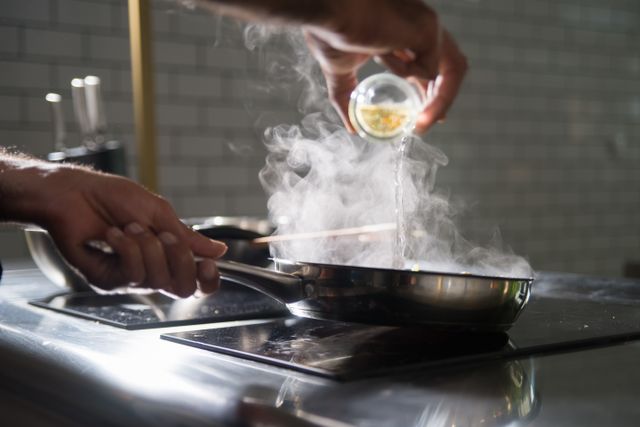
The golden crust of freshly baked bread, the roasted aroma of coffee, the rich colour of caramelised onions, and the savoury flavour of grilled vegetables are all examples of how cooking transforms food at a molecular level. Heat does more than soften ingredients or evaporate moisture. It initiates chemical reactions that change the structure of proteins, sugars, fats, and other compounds, producing new colours, aromas, textures, and flavours. Among these processes, glycation plays an important role in understanding how certain food molecules interact during heating and storage.
Glycation is a chemical process in which a sugar or another reactive carbonyl compound reacts with a molecule containing an amino group, such as a protein or amino acid, without requiring an enzyme. In food science, the term is closely associated with the Maillard reaction, a complex network of reactions responsible for many of the characteristic colours and flavours of cooked foods. Although the Maillard reaction is often discussed as a single process, it actually involves multiple chemical stages that can produce hundreds of different compounds.
The chemistry becomes especially active when foods containing reducing sugars and amino compounds are exposed to suitable combinations of temperature, moisture, acidity, and time. These conditions occur during baking, roasting, frying, grilling, and other cooking methods. The resulting compounds can create desirable sensory qualities, but some reaction pathways can also produce substances that manufacturers and food scientists monitor carefully.
Understanding the glycation chemistry of cooking reveals why foods develop distinct flavours under different heating conditions, why browning is not simply a visual change, and how food processing can be adjusted to balance taste, quality, and safety.
Understanding Glycation and the Maillard Reaction
Glycation refers to the non-enzymatic attachment of sugar-derived compounds to molecules such as proteins and amino acids. In food systems, the process commonly begins when a reducing sugar reacts with an amino group. Reducing sugars, including glucose and fructose, can participate in these reactions because of their chemical structures. Lactose and maltose can also contribute under appropriate conditions.
The Maillard reaction is the broader network of chemical transformations that develops from reactions between reducing sugars and amino compounds. These amino compounds may be present in proteins, peptides, or free amino acids. The reaction can begin at relatively moderate temperatures and continue during storage, but heating generally accelerates it considerably.
The first stages involve the formation of relatively unstable intermediates, which may rearrange into more stable compounds. Subsequent reactions can generate reactive carbonyl molecules, aroma compounds, coloured polymers, and other products. The exact pathway depends on the starting ingredients and environmental conditions.
It is important to distinguish glycation from caramelisation. Caramelisation involves the thermal decomposition and transformation of sugars without requiring amino compounds. The Maillard reaction, by contrast, involves interactions between reducing sugars and amino-containing molecules. Both processes can occur during cooking, sometimes at the same time, and both contribute to the colour and flavour of foods.
This distinction explains why two foods exposed to similar temperatures may develop different sensory characteristics. A sugar-rich preparation with little protein may undergo substantial caramelisation, while a protein-containing food with available reducing sugars may develop pronounced Maillard browning.
The Initial Stage: When Sugars Meet Amino Groups
The early stage of the Maillard reaction begins when a reducing sugar reacts with an amino group from an amino acid, peptide, or protein. This reaction can produce a compound known as a Schiff base, which may then undergo rearrangement to form more stable intermediates. When glucose participates, an Amadori product can form; reactions involving certain ketose sugars can produce related Heyns products.
These early reactions are important because they establish the chemical pathways that lead to later flavour and colour development. However, the initial products are not necessarily responsible for the strong roasted aromas associated with fully cooked foods. Instead, they provide starting materials for more extensive chemical transformations.
The rate of these reactions depends on several factors. The concentration and type of reducing sugar matter because different sugars have different chemical reactivities. The availability of amino groups also influences the process. Free amino acids may react differently from amino groups embedded within proteins, where molecular structure can affect their accessibility.
Acidity plays a role as well. The pH of a food influences the chemical state of amino groups and the reactivity of different intermediates. In many food systems, a higher pH encourages faster Maillard browning, although the precise effect depends on the ingredients and reaction pathway.
Moisture creates another important variable. Water is needed for molecular movement, but excessive moisture can dilute reactants and keep the food temperature close to the boiling point of water while evaporation continues. As the surface dries, its temperature can rise further, allowing browning reactions to proceed more rapidly.
These interactions show why glycation cannot be predicted from temperature alone. The chemistry depends on the complete environment in which sugars and amino compounds interact.
Intermediate Reactions: Building Flavour and Aroma
After the initial stages, Maillard reaction intermediates undergo further chemical transformations. These may include fragmentation, dehydration, oxidation, and reactions that produce smaller, highly reactive molecules. Some pathways generate compounds that later combine to form larger coloured substances.
One important group of reactions involves the formation of dicarbonyl compounds. These reactive molecules can interact with amino acids and other food components, producing a wide range of flavour-related substances. Depending on the amino acid involved, the reaction may generate compounds with roasted, nutty, toasted, meaty, or malty characteristics.
For example, certain reactions involving amino acids can produce pyrazines, a group of compounds associated with roasted and nut-like aromas. Other pathways can produce aldehydes, ketones, and sulfur-containing compounds that contribute to the distinctive smells of baked bread, roasted meat, and cooked savoury foods.
The flavour profile depends on the relative abundance of these compounds and their individual sensory thresholds. Some aroma molecules can influence perception at very low concentrations, while others must be present at higher levels to become noticeable. The interaction among compounds also matters because food aroma is experienced as a mixture rather than as a single isolated chemical.
This is why the Maillard reaction can create dramatically different flavours in different foods. Bread, coffee, cocoa, roasted nuts, and grilled meat contain different combinations of sugars, amino compounds, lipids, minerals, and other constituents. Their chemical starting points guide the reaction towards different combinations of products.
The intermediate stages therefore represent a major source of culinary diversity. By controlling ingredients and cooking conditions, food producers and cooks can influence the development of characteristic aromas without relying on added flavourings alone.
Advanced Glycation and the Formation of Brown Pigments
As the reaction progresses, some intermediates participate in further condensation and polymerisation reactions. These processes can produce complex, often nitrogen-containing compounds collectively associated with melanoidins, which contribute to the brown colour of many cooked foods.
Melanoidins are not a single chemical substance. Their composition and structure vary according to the food matrix and processing conditions. They are found in products such as bread crust, roasted coffee, cocoa, and other foods that undergo substantial Maillard browning.
The development of brown colour often indicates that multiple chemical reactions have occurred, but colour alone cannot reveal the exact composition of the final product. A darker food may contain different mixtures of compounds from a lighter food, even when both were cooked using similar methods.
The formation of melanoidins also demonstrates that browning is more than a superficial visual effect. The reactions responsible for colour can occur alongside changes in aroma, taste, and the availability of certain nutrients. Some products may contribute desirable sensory characteristics, while others may be associated with quality deterioration under particular processing conditions.
In nutrition and biomedical research, the term advanced glycation end products, commonly abbreviated as AGEs, describes a broad group of compounds formed through reactions involving sugars or reactive carbonyl species and biological molecules. Some AGEs can form in food during processing, while others form within the human body through endogenous reactions. These categories overlap chemically but should not be treated as identical in their biological effects.
Food scientists investigate the formation of particular AGEs because their concentrations can vary substantially between products and preparation methods. However, the presence of brown pigments or a strong roasted flavour does not automatically indicate a high concentration of any specific AGE. Different chemical pathways produce different products, and accurate measurement requires appropriate analytical methods.
How Heat Intensity Changes Food Chemistry
Temperature is one of the most important factors influencing the speed of glycation and Maillard reactions. As temperature increases, many chemical reactions proceed more rapidly. This is why high-temperature methods such as roasting, grilling, frying, and baking can generate pronounced browning and complex aromas over relatively short periods.
However, heat intensity must be considered alongside cooking time and moisture. A food cooked at a moderate temperature for a long period may develop substantial flavour changes, while a food exposed briefly to very high heat may develop a different pattern of browning. The resulting chemical profile depends on how quickly the surface heats, how much water remains, and how long the reactants are exposed to favourable conditions.
Surface and interior temperatures also differ. During cooking, the wet interior of a food often remains relatively cool because water absorbs heat and evaporates. The surface may become much hotter once moisture has been reduced. Consequently, the crust of bread or the exterior of a roasted vegetable can undergo extensive browning while the interior remains soft and moist.
Dry-heat cooking generally favours visible Maillard browning because surface temperatures can rise above the boiling point of water after sufficient moisture evaporates. Boiling and steaming often produce less browning because the food surface remains wet and its temperature is constrained by the surrounding water or steam under typical conditions.
This does not mean that low-temperature cooking prevents all glycation. Reactions can occur slowly during extended heating and storage. Rather, the balance of reaction pathways changes with the temperature and moisture conditions.
Moisture, Water Activity, and the Browning Process
Water plays a complex role in the Maillard reaction. It enables molecules to move and interact, but the amount of available water can also influence reactant concentration and reaction speed. Food scientists often use the concept of water activity to describe how available water is for chemical reactions and microbial growth.
In very wet foods, reactants may be diluted, and evaporation can limit the temperature reached at the surface. As water is removed, sugars and amino compounds can become more concentrated, and the surface temperature may increase. These changes often encourage browning.
However, the relationship between moisture and reaction speed is not linear. If a food becomes extremely dry, molecular movement can become restricted, slowing some reactions even when the temperature is high. The most favourable water activity depends on the food matrix and the specific chemical process being studied.
This helps explain why a moist dough and a dry cracker behave differently in an oven. A dough initially contains considerable water, and much of its early heating involves moisture redistribution and evaporation. As the surface dries, browning becomes more prominent. A cracker, with much less available moisture, can undergo different reactions depending on its composition and baking conditions.
Water activity is also important during storage. Even after cooking, certain foods can continue to undergo slow Maillard reactions if their moisture conditions and composition permit molecular interactions. Changes in colour, aroma, and flavour may therefore develop during the product’s shelf life.
Ingredient Composition and Its Influence on Glycation
The chemical composition of a food strongly influences its browning behaviour. Different reducing sugars react at different rates, and the amino-acid composition of proteins determines which reaction products can form. Foods with high concentrations of available reducing sugars and amino compounds may develop strong Maillard characteristics when heated under suitable conditions.
The type of sugar is particularly important. Glucose and fructose can participate in Maillard reactions, while sucrose is a non-reducing sugar and generally must first be broken down or otherwise transformed before it can contribute directly through its constituent sugars. The presence of acids, enzymes, and other ingredients can influence these transformations.
Proteins also differ in their amino-acid composition and the accessibility of reactive groups. The amino acid lysine is particularly relevant because its side-chain amino group can participate in glycation. When lysine residues react with sugars, the availability of this essential amino acid may decrease, depending on the reaction extent and food matrix.
This is one reason why intense heat treatment can affect nutritional quality. The overall protein content of a food may remain similar while the availability of certain amino acids changes. The nutritional impact depends on the extent of processing, the ingredients, and the contribution of the food to the overall diet.
Fats, minerals, acids, and other compounds can also influence reaction pathways. Lipids may generate oxidation products that interact with Maillard intermediates, while minerals and pH conditions can affect reaction rates. Food chemistry therefore involves interconnected systems rather than isolated reactions between two ingredients.
Nutritional Consequences of Glycation During Cooking
The Maillard reaction can improve the sensory quality of food, but it may also alter certain nutritional properties. One important example is the reduction in the availability of lysine, an essential amino acid, when it participates in glycation. This effect is especially relevant in foods where protein quality is nutritionally important and processing conditions are severe.
The extent of nutritional change depends on several factors, including temperature, duration, moisture, and the composition of the food. Ordinary cooking can improve the safety and digestibility of many foods, so the presence of Maillard products should not be interpreted as evidence that cooked food is inherently less nutritious. The overall nutritional effect reflects both beneficial and potentially undesirable changes.
The formation of some advanced glycation end products during food processing has also attracted scientific attention. Certain cooking methods, particularly those involving high temperatures and relatively dry conditions, can increase the formation of specific AGEs in some foods. However, concentrations vary widely, and the biological significance of dietary AGEs is still an active area of research.
It is important to avoid interpreting these findings as proof that all browned foods are harmful. The chemistry of food is complex, and the health implications of particular compounds depend on their identity, quantity, absorption, metabolism, and the wider dietary context. The evidence does not support treating every Maillard product as equally undesirable.
A balanced approach focuses on varied preparation methods, appropriate cooking temperatures, and avoiding excessive charring rather than eliminating browning entirely. The aim is to preserve desirable flavour and food safety while managing unnecessary exposure to products associated with excessive processing.
Managing Glycation in Modern Food Manufacturing
Food manufacturers use knowledge of glycation chemistry to improve flavour, appearance, consistency, and shelf life. Baking companies, coffee roasters, cereal manufacturers, and snack producers carefully manage temperature, time, moisture, and ingredient composition to create products with predictable sensory characteristics.
One strategy involves selecting ingredients that provide the desired balance of reducing sugars and amino compounds. Manufacturers may also adjust pH, moisture, and heating conditions to influence browning. For example, changes in dough formulation can affect the colour and flavour of bread crust, while adjustments to roasting profiles can produce different aroma characteristics in coffee.
Industrial food processing often requires a balance between product quality and nutritional considerations. Excessive heating may cause unwanted darkening, bitter flavours, nutrient loss, or the formation of undesirable contaminants. Conversely, insufficient heating may produce a pale product with weak flavour development or inadequate processing for the intended application.
Food scientists can use analytical instruments to monitor colour, volatile aroma compounds, and selected reaction products. These measurements help connect processing conditions with the chemistry responsible for consumer-perceived quality. Sensory evaluation remains important because chemical measurements alone cannot fully predict how people will experience a product.
Modern manufacturing increasingly combines process monitoring with predictive models to improve consistency. Such tools can help estimate how changes in temperature, moisture, and formulation influence browning. However, the models must be validated for the specific food because complex ingredients and changing process conditions can alter the reaction pathways.
Conclusion: The Chemistry That Makes Cooking Transformative
Glycation chemistry explains how heat transforms simple ingredients into foods with distinctive colours, aromas, and flavours. Through the Maillard reaction, reducing sugars interact with amino compounds and produce a complex network of intermediates, aroma molecules, and brown pigments. These transformations contribute to the sensory identity of bread crust, roasted coffee, grilled foods, and many other familiar products.
The reaction is influenced by temperature, time, moisture, pH, and ingredient composition. Its effects extend beyond flavour, influencing texture, colour, and the availability of certain nutrients. Although some reaction products deserve careful monitoring, browning itself is not automatically harmful, and the Maillard reaction remains an essential part of many valued cooking processes.
A scientific understanding of glycation allows cooks and manufacturers to manage heat more deliberately. By adjusting preparation methods and processing conditions, it is possible to develop desirable flavours while limiting excessive browning and maintaining nutritional quality.
Ultimately, the chemistry of cooking demonstrates that food is not a static collection of ingredients. It is a dynamic system in which heat creates new molecular structures and sensory experiences. Glycation is one of the central processes that makes this transformation possible, connecting the science of molecules with the everyday pleasure of eating.