 Anshika Jain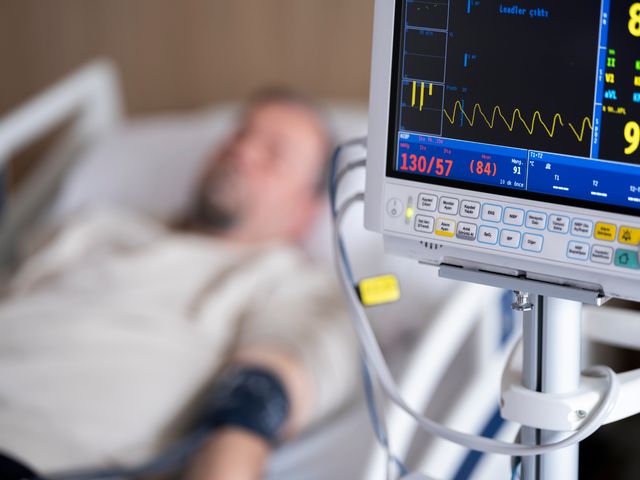
For decades, healthcare has largely operated around a simple sequence: a person develops symptoms, seeks medical attention, undergoes tests, receives a diagnosis, and then begins treatment. Modern medicine has become exceptionally capable at detecting diseases, identifying abnormalities and managing established conditions, but an important transformation is now taking place. Advances in artificial intelligence, electronic health records, wearable sensors, genomics, medical imaging and continuous monitoring are creating the possibility of moving healthcare further upstream—from detecting disease after it becomes visible to forecasting health risks before they become clinically obvious.
This emerging model can be described as predictive healthcare. Instead of asking only what is happening to a patient now, predictive systems attempt to estimate what may happen next. The question could involve whether a patient is at increased risk of developing a disease, whether an existing condition is likely to worsen, whether a hospital complication may occur, or how an individual’s physiological state could change over the coming hours, days or years.
The distinction between prediction and diagnosis is important. A diagnostic system may examine an X-ray and identify an existing abnormality. A predictive system may analyse a patient’s longitudinal records and estimate the probability of a future event. These functions can complement one another, but they require different kinds of data, modelling techniques and clinical workflows.
Recent research illustrates how rapidly this field is developing. A 2026 report in Nature Biotechnology described an AI system capable of using health information to predict risks associated with more than 1,000 diseases years before they occur, highlighting the possibility of a broader transition toward predictive and preventive medicine.
The emerging architecture of healthcare is therefore not simply about adding AI to hospitals. It involves creating systems capable of continuously understanding health trajectories, recognising changes, estimating future risks and supporting timely human decisions.
From Diagnosis to Prediction
Traditional diagnosis generally focuses on the present. A doctor evaluates symptoms, medical history, examination findings, laboratory results and imaging to determine what condition may be affecting a patient.
Prediction introduces a temporal dimension. Instead of asking only whether a condition exists, predictive healthcare asks how a patient’s health may evolve.
This difference may appear subtle, but it changes the architecture of medical information systems. A diagnostic model can sometimes operate on a single image, laboratory result or clinical encounter. A forecasting model may require years of electronic health records, medication histories, laboratory trends, physiological measurements, demographic information and previous diagnoses.
Longitudinal data becomes particularly valuable because many diseases do not emerge suddenly. Risk can develop gradually through subtle changes in blood pressure, glucose levels, weight, kidney function, cardiovascular measurements, medication patterns or other physiological indicators.
Artificial intelligence can potentially identify relationships within these changing measurements that are difficult to recognise when individual observations are considered separately.
A patient therefore begins to be represented not simply as a collection of medical records but as a changing health trajectory.
The Rise of Longitudinal Health Models
One of the most important developments in predictive healthcare is the growing emphasis on longitudinal modelling.
Healthcare records contain information collected at different moments. A laboratory test from five years ago, a diagnosis from last year, a medication change from several months ago and a current clinical measurement may collectively contain more information about future risk than any single observation.
Modern AI models are increasingly being designed to understand this temporal structure.
A 2026 study published in npj Digital Medicine introduced RETFound Plus, a foundation model designed to incorporate temporal information from repeated retinal photographs rather than treating each image as an isolated observation. The researchers reported improvements in five-year risk prediction for several systemic and ocular diseases, including stroke, myocardial infarction, diabetes and hypertension.
The significance of this type of research extends beyond ophthalmology. It demonstrates a broader principle: medical AI can potentially move from recognising what a patient’s condition looks like today toward understanding how that condition changes over time.
This creates an important architectural shift. Future healthcare systems may increasingly combine current measurements with historical trajectories, enabling models to reason about direction and rate of change rather than relying only on static values.
The Data Layer of Predictive Healthcare
Predictive healthcare depends fundamentally on data. The quality, diversity, continuity and accessibility of that data determine what forecasting systems can realistically accomplish.
Electronic health records provide one major source. They may contain diagnoses, laboratory tests, prescriptions, clinical notes, procedures and hospitalisation histories. Medical imaging contributes another layer, including radiology, pathology and ophthalmology images. Wearable devices can add continuous measurements such as heart rate, activity and sleep-related signals.
Genomic information can provide another dimension by identifying biological variations associated with disease susceptibility. Environmental and population-level information can also become relevant, particularly for infectious diseases and public-health forecasting.
The challenge is that these sources were not originally designed as a single integrated predictive system. Data may exist in separate hospital departments, incompatible software systems, different formats and different time scales.
The future architecture of predictive healthcare therefore requires more than sophisticated algorithms. It requires infrastructure capable of bringing multiple data streams together while maintaining privacy, security, interoperability and clinical context.
Continuous Monitoring Changes the Healthcare Timeline
Traditional healthcare often relies on episodic measurements. A person visits a doctor, undergoes a test and receives a result. The next measurement may not occur for weeks or months.
Wearable sensors and connected medical devices can change this model by generating health information continuously or at much shorter intervals.
This creates the possibility of detecting trends between clinical visits. A change that would previously have remained invisible until the next appointment could potentially become part of a continuously updated health profile.
The concept becomes particularly important in chronic disease management and high-acuity medical environments. Instead of waiting for a major deterioration, predictive systems could monitor trajectories and identify patterns that warrant human attention.
Recent research illustrates how this architecture can work at the individual level. A study published in October 2026 in npj Metabolic Health and Disease described a digital-twin framework that used continuous glucose measurements to forecast glucose levels in septic patients in intensive-care settings. The system was designed to adapt to new patient data and generate rolling, near-term predictions.
This represents an important evolution from static clinical prediction toward dynamic forecasting.
Digital Twins and the Predictive Patient Model
The concept of a digital twin has traditionally been associated with engineering and manufacturing. A digital representation of a physical system can be continuously updated using real-world measurements and used to simulate possible future states.
Healthcare researchers are increasingly exploring a similar concept for patients.
A medical digital twin could combine information about a person’s physiology, medical history, medications, laboratory results, imaging, wearable measurements and treatment responses. As new data arrives, the representation could be updated.
The objective would not necessarily be to create a perfect digital copy of a human being. Instead, it would provide a computational model capable of estimating how a particular health state might evolve.
The ICU glucose forecasting research published in 2026 provides an example of this direction. Its digital-twin framework combined time-series modelling with patient-specific adaptation, allowing the forecasting system to update as new measurements became available.
Such systems could eventually become more sophisticated by integrating multiple physiological signals. However, moving from a single-variable forecast to a comprehensive patient model introduces major scientific and clinical challenges.
Human physiology is interconnected. A change in one system can influence another, and treatment itself changes the trajectory being predicted. A useful digital twin therefore needs to account for both biological complexity and clinical intervention.
Disease Forecasting Before Symptoms Become Obvious
One of the most ambitious goals of predictive healthcare is identifying disease risk before symptoms become clinically significant.
This does not mean that an AI system can definitively tell an individual that they will develop a particular disease. Medical prediction is probabilistic, and risk estimates always contain uncertainty.
Instead, predictive models can potentially identify populations or individuals whose patterns resemble trajectories associated with future disease.
The 2026 Nature Biotechnology report on AI-based prediction across more than 1,000 diseases illustrates the scale of this ambition. The underlying idea is that clinical records and current health information may contain signals that precede disease diagnosis by substantial periods.
Cancer research provides another example. A 2026 npj Precision Oncology study evaluated electronic-health-record-based predictive models for identifying people at higher risk across multiple cancers. The researchers reported that longitudinal EHR information could capture prediagnostic signals that may be useful for identifying high-risk groups.
The practical implication is that future healthcare could increasingly contain a risk-assessment layer operating before conventional diagnosis.
From Individual Prediction to Population Forecasting
Predictive healthcare is not limited to individual patients. A similar transformation is taking place in public-health surveillance.
Disease surveillance has traditionally involved collecting and analysing information about infections, outbreaks and population health. The World Health Organization describes surveillance as a continuous process that can serve as an early-warning mechanism for outbreaks and support public-health decision-making.
Artificial intelligence can potentially expand this capability by analysing multiple information sources simultaneously.
A September 2026 review in npj Digital Medicine examined 20 AI-enabled infectious-disease surveillance platforms and identified three broad categories: early-warning networks, situational-awareness platforms and integrated surveillance platforms.
This demonstrates how predictive healthcare operates at different scales. At one level, a system may forecast an individual’s health trajectory. At another, it may identify patterns suggesting increased disease activity across a population.
The underlying architecture is similar: collect signals, analyse patterns, detect changes, estimate risk and support human action.
Early Warning Systems and the Value of Time
Prediction is valuable largely because time matters in healthcare.
If a deteriorating patient can be identified earlier, clinicians may have more opportunity to investigate the cause, adjust treatment or increase monitoring. If an outbreak can be recognised before it spreads widely, public-health authorities may have more time to investigate and respond.
The World Health Organization’s Western Pacific Region highlighted this principle in September 2026 while describing regional efforts to strengthen multi-source surveillance and early-warning systems. The initiative brings together different sources of information, technical tools and national capabilities to improve the speed of detecting emerging health threats.
Predictive healthcare therefore changes the value of information. A measurement is no longer useful only because it describes what is happening. Its value may also come from what it suggests about what could happen next.
This creates a new concept of clinical time: the interval between a predictive signal and a possible future event.
The Human Clinician Remains Central
The emergence of predictive systems does not eliminate the need for doctors, nurses, radiologists, researchers or public-health professionals.
A prediction is not the same as a clinical decision.
A model may estimate that a patient has an increased risk of a complication, but a clinician still needs to determine whether the prediction is clinically meaningful, whether additional tests are appropriate and what action should be taken.
This distinction is particularly important because predictive systems can produce false positives and false negatives. An overly sensitive system may generate too many alerts, while an insufficiently sensitive system may miss important events.
Recent research into continuous clinical quality observability has similarly emphasised human supervision. A September 2026 npj Health Systems perspective described AI systems that could continuously examine evolving clinical records for safety signals while producing evidence-linked information for human review rather than making autonomous decisions.
The emerging model is therefore better understood as human-guided predictive healthcare rather than fully automated medicine.
The Problem of Bias and Unequal Data
Predictive healthcare also introduces difficult questions about fairness.
AI models learn from historical data. If the data does not adequately represent certain populations, the resulting predictions may be less reliable for those groups.
Healthcare data can also reflect differences in access to medical services, diagnostic practices, socioeconomic conditions and documentation quality. A model may inadvertently learn these patterns rather than purely biological signals.
This makes external validation and continuous monitoring essential. A model that performs well in one hospital or population may not perform identically in another.
The 2026 RETFound Plus study is notable in this context because researchers evaluated the model across multiple international datasets, including data from the United Kingdom, United States, Singapore, Hong Kong and Denmark.
Broader validation is essential if predictive systems are to move from research environments into diverse healthcare settings.
Privacy Becomes More Important as Prediction Improves
Predictive healthcare requires increasingly detailed information about individuals. The more data a system can access, the more sophisticated its predictions may potentially become.
But greater data access also creates greater privacy responsibilities.
Health records, genomic information, wearable measurements and behavioural patterns can reveal highly sensitive information. A predictive system might identify a health risk that a person does not yet know about, creating questions about who should have access to that prediction and how it should be communicated.
Cybersecurity therefore becomes part of predictive medicine. Protecting data is not simply an information-technology requirement; it is necessary for maintaining patient trust.
Governance must also address transparency. Patients and clinicians need to understand what predictive systems are designed to do, what information they use and how uncertain their predictions may be.
The World Health Organization has warned that AI deployment in health is moving faster than governance in some settings. In July 2026, WHO/Europe reported that only a small proportion of countries in its region had health-specific AI strategies, while many were already deploying AI in diagnostics and other health applications.
The Architecture of Future Predictive Healthcare
The emerging healthcare architecture can therefore be understood as a connected system rather than a single AI model.
At its foundation is a data layer containing electronic records, imaging, laboratory results, genomics, wearable information and population-level signals. Above this sits an analytical layer capable of identifying patterns and modelling risk. A temporal layer interprets how those signals change over time. Personalisation mechanisms then adapt predictions to individual patients.
On top of these components is the clinical decision-support layer, where predictions are converted into information that healthcare professionals can interpret. Finally, a feedback layer can compare predictions with real outcomes and use those results to improve future models.
This architecture is fundamentally different from a conventional diagnostic software tool. It is designed as a continuously updating system.
The patient is not represented by one scan or one laboratory result. The system attempts to understand an evolving trajectory.
From Reactive Medicine to Preventive Intelligence
The long-term significance of predictive healthcare is its potential to change the timing of medical intervention.
Traditional healthcare often becomes highly active after disease becomes clinically visible. Preventive medicine already attempts to move earlier through screening, vaccination, lifestyle interventions and risk assessment.
Predictive healthcare could extend this principle by using large-scale longitudinal data to identify subtle patterns associated with future outcomes.
The goal is not to replace established prevention or diagnosis. Instead, prediction could become another layer connecting them.
A patient might receive routine screening, while predictive systems continuously estimate changing risk. If the estimated risk changes significantly, the healthcare system could potentially recommend closer monitoring or earlier evaluation.
Such a model would make healthcare more dynamic. Instead of treating every appointment as an isolated event, the system could maintain a continuously updated understanding of health.
Conclusion
Healthcare is gradually moving from a model centred primarily on disease detection toward one that also considers disease forecasting and health trajectories. Artificial intelligence, longitudinal electronic health records, medical imaging, wearable sensors, genomics, digital twins and public-health surveillance are contributing to this transformation.
Recent research in 2026 demonstrates the breadth of the movement. AI models are being studied for long-term disease-risk prediction, temporal foundation models are being developed to understand progression, digital twins are being tested for real-time physiological forecasting, and AI-enabled surveillance platforms are expanding the ability to detect emerging infectious-disease signals.
Yet predictive healthcare is not simply a story about increasingly powerful algorithms. Its success will depend on data quality, clinical validation, privacy protection, interoperability, responsible governance and human oversight. A prediction is useful only when it can be interpreted appropriately and connected to meaningful healthcare action.
The most important shift may therefore be conceptual. Healthcare is beginning to treat time itself as a source of medical information. Instead of asking only what disease a patient has today, emerging systems are increasingly asking how that patient’s health is changing and what might happen next.
If this architecture develops responsibly, the healthcare system of the future could become more continuous, anticipatory and personalised. Disease detection would remain essential, but it would become one component of a broader system designed not only to understand illness after it appears, but also to recognise risk, monitor trajectories and support earlier intervention.