 Anshika Jain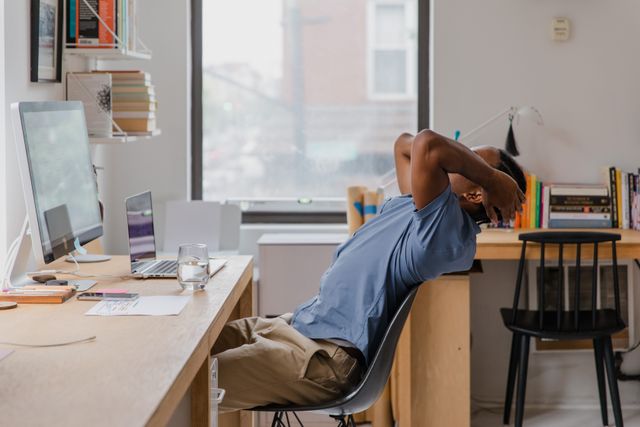
For decades, conversations about health have focused primarily on exercise. People have been encouraged to join gyms, run, cycle, practise yoga, play sports and follow structured workout programmes. While regular physical activity remains an important part of a healthy lifestyle, health research is increasingly drawing attention to another part of everyday life: the many hours people spend sitting.
Modern routines have made prolonged sitting remarkably easy. People may sit while travelling to work, spend several hours at a desk, sit through meetings, return home by car or public transport and then spend the evening watching television or using a smartphone. Even people who exercise regularly can spend much of the remaining day sitting. This has led to greater interest in sedentary behaviour and the idea that health is influenced not only by how much exercise a person gets, but also by how much time they spend being inactive.
The growing “anti-sitting movement” is not about declaring chairs unhealthy or suggesting that people should never sit. Sitting is a normal and necessary part of daily life. The concern is prolonged, uninterrupted sedentary behaviour and the increasingly inactive environments in which people work, study, travel and relax.
The World Health Organization defines sedentary behaviour as waking activity involving very low energy expenditure while sitting, reclining or lying down. Its guidelines recommend that adults limit sedentary time and replace some sedentary time with physical activity of any intensity, including light-intensity movement.
Why Sitting Has Become Such a Modern Habit
Human beings have always rested and sat, but the amount of sitting required by modern lifestyles has changed considerably. Many occupations that once involved physical movement have become desk-based. Education increasingly takes place through computers and digital devices, while transportation has reduced the amount of walking required for everyday travel.
Technology has brought enormous benefits, but it has also reduced the need to move during many ordinary activities. A person can work, communicate, shop, study, entertain themselves and even exercise through digital platforms without moving very far from a chair.
This does not mean technology itself is responsible for poor health. The issue is how modern environments shape behaviour. When sitting is the easiest option for work, transportation and entertainment, people may remain inactive without consciously choosing to do so.
The World Health Organization reported in 2024 that nearly one-third of adults globally, around 1.8 billion people, were not meeting recommended levels of physical activity based on 2022 estimates. It also noted that increasing use of technology for work and recreation, together with changes in transportation and other aspects of modern life, contributes to increasingly sedentary lifestyles.
Sitting and Physical Inactivity Are Not Exactly the Same
One important distinction in the conversation about sitting is the difference between sedentary behaviour and physical inactivity. They are related but not identical.
A person can meet recommended levels of moderate or vigorous physical activity and still spend many hours sitting during the rest of the day. For example, someone might complete a morning workout and then spend eight hours working at a desk, followed by several hours sitting during their commute and evening.
This is why experts increasingly consider both sides of the movement equation. Exercise is important, but it does not necessarily erase every consequence of spending most of the day inactive.
The World Health Organization recommends that adults undertake regular physical activity and also limit sedentary time. Its guidelines state that replacing sedentary time with physical activity of any intensity can provide health benefits.
This changes the conversation from “Did you exercise today?” to a broader question: “How much of your day involves movement?”
Why Everyday Movement Matters
Physical activity does not have to mean a formal workout. Walking to a nearby shop, taking the stairs, doing household chores, gardening, cycling for transportation or standing up and moving around during the workday all contribute to overall movement.
The World Health Organization describes physical activity as all movement produced by the body’s muscles that requires energy. It includes activities associated with work, transportation, recreation, sport and everyday life.
This broader definition is important because many people assume that health improvement requires a gym membership or a dedicated exercise programme. While structured exercise can be valuable, increasing ordinary movement can also be a practical way to reduce sedentary time.
The anti-sitting movement therefore focuses partly on redesigning ordinary routines so that movement becomes a natural part of the day rather than something that only happens during a scheduled workout.
What Happens During Long Periods of Sitting?
When someone remains seated for a prolonged period, large muscle groups are relatively inactive. The body is in a low-energy state compared with walking or other forms of movement.
Research has associated higher amounts of sedentary behaviour with several adverse health outcomes. The World Health Organization identifies associations between greater sedentary behaviour in adults and increased risks of all-cause mortality, cardiovascular disease mortality, cancer mortality and the incidence of cardiovascular disease, cancer and type 2 diabetes.
These findings do not mean that every period of sitting is dangerous or that sitting directly causes a specific disease in an individual. Health outcomes are influenced by many factors, including physical activity, diet, sleep, age, genetics, environment and existing health conditions.
The important public-health message is that consistently spending large amounts of waking time sedentary is a behaviour worth addressing.
The Office Is Becoming a Major Focus
The workplace is one of the clearest examples of prolonged sitting. Employees may spend hours looking at monitors, attending online meetings, writing documents and communicating through digital platforms.
Remote and hybrid work can sometimes make this even easier because the boundaries between working and resting environments become less distinct. A person may move only a few steps between their desk, kitchen and sofa throughout an entire workday.
This has encouraged workplaces to reconsider how work environments can support movement. Standing meetings, walking during phone calls, adjustable desks, movement reminders and short activity breaks are examples of approaches that can interrupt long periods of sitting.
The objective is not to turn every working hour into exercise. Instead, it is to make movement easier within an otherwise sedentary routine.
Why Breaking Up Sitting May Matter
An important development in sedentary-behaviour research is the growing interest in interrupting long periods of sitting rather than focusing only on total daily sitting time.
Recent research has examined what happens when prolonged sitting is interrupted with short periods of movement. A 2024 systematic review and meta-analysis of randomized crossover trials found that activity breaks during prolonged sitting could improve post-meal glucose and insulin responses compared with uninterrupted sitting, although the research involved controlled short-term experiments and should not be interpreted as a universal prescription for everyone.
Another 2024 systematic review examined the frequency of interruptions and reported evidence suggesting that more frequent interruptions may have advantages for glucose control, while also noting that the quality of evidence was low for the outcomes studied.
These findings help explain why experts are interested in small movement breaks. The objective is not necessarily to replace exercise but to avoid treating the entire workday as one uninterrupted period of inactivity.
The Rise of the “Movement Break”
The movement break has become a simple concept within modern workplace wellness. Instead of waiting until the end of the workday to exercise, people can incorporate brief periods of movement throughout the day.
A movement break could involve walking around the room, standing while taking a phone call, stretching, climbing a few stairs or simply changing position and moving for a short period.
There is no universal rule that everyone must move at exactly the same interval. Individual needs, occupations and health conditions differ. Research is still developing regarding the optimal frequency and type of sedentary interruptions.
The broader principle, however, is straightforward: long periods of inactivity can be interrupted with movement whenever practical.
Walking Is Becoming More Important Again
Walking may be one of the simplest tools in the anti-sitting movement because it requires little equipment and can be incorporated into ordinary routines.
A short walk after a meal, walking while speaking on the phone or choosing to walk for part of a commute can add movement without requiring a separate exercise session.
Walking also has an important psychological advantage: it can feel less demanding than formal exercise. People who dislike gyms or structured workouts may still find ways to include walking in their daily routines.
The goal is not necessarily to transform every walk into a fitness challenge. Sometimes the value lies simply in replacing sitting with movement.
The Role of Smartwatches and Health Technology
Technology that contributed to sedentary lifestyles can also help people become more aware of their movement. Smartwatches and fitness trackers can monitor steps, activity periods and sedentary time. Some devices provide reminders when users have remained inactive for extended periods.
The World Health Organization has been examining wearable sensor technology as part of efforts to improve the measurement and monitoring of physical activity in adults.
However, technology should be used as a support tool rather than a source of constant pressure. A movement reminder is useful when it encourages someone to get up and move. It becomes less useful if the user becomes obsessed with hitting arbitrary numerical targets.
The most effective use of technology may therefore be simple: notice inactivity, receive a prompt and then put the device aside while moving.
Students Face the Same Challenge
The anti-sitting conversation is not limited to office workers. Students can also spend long periods sitting while attending classes, studying, completing assignments, watching educational videos and preparing for examinations.
Digital education has expanded access to learning, but online learning can also increase the amount of time students spend seated in front of screens.
This does not mean that online education is unhealthy. Digital learning can provide flexibility, accessibility and opportunities for students who may not have access to traditional educational environments. The important consideration is how learning routines are organised.
Students can benefit from changing positions, walking during appropriate breaks and separating study sessions with periods of physical movement. Learning does not always have to mean remaining physically still.
The Anti-Sitting Movement Is Not Anti-Chair
It is important to avoid taking the idea too far. Sitting is not inherently harmful. People need to sit for studying, eating, travelling, resting, socialising and many other activities.
The goal is not to eliminate chairs from homes or workplaces. It is to reduce unnecessary prolonged sedentary periods and create more opportunities for movement.
A balanced approach recognises that the human body needs both activity and rest. The problem occurs when sitting becomes the default position for nearly every waking activity.
This distinction also makes the movement more practical. People do not need to completely redesign their lives. They can look for small opportunities where movement can replace unnecessary sitting.
Small Changes Can Transform Daily Movement
One reason the anti-sitting movement is gaining attention is that movement does not always have to come from major lifestyle changes.
Taking stairs instead of an elevator when appropriate, walking short distances, standing during some activities, moving around during breaks or doing household tasks can gradually increase everyday activity.
The World Health Organization emphasises that any amount of physical activity is better than none and that all physical activity counts. For adults, it recommends at least 150 to 300 minutes of moderate-intensity aerobic activity per week, or an equivalent amount of vigorous activity, alongside muscle-strengthening activities on at least two days each week.
These recommendations should be understood alongside the advice to reduce sedentary time. The two goals can work together.
Why the Conversation Matters for Public Health
Sedentary behaviour is not simply an individual lifestyle issue. The environments people live and work in strongly influence how much they move.
Cities designed primarily around cars may make walking difficult. Workplaces built around permanent desks may discourage movement. Schools with long periods of sitting may provide limited opportunities for activity. Digital entertainment can make remaining indoors and stationary extremely convenient.
This means that addressing sedentary behaviour may require changes beyond individual motivation. Walkable neighbourhoods, accessible public spaces, active transportation, workplace design and opportunities for movement during education can all influence everyday activity.
The World Health Organization’s global action framework similarly treats physical activity as a broader societal issue involving areas such as transport, urban design, health, sport and other sectors.
A More Practical Definition of an Active Lifestyle
The traditional image of an active person often involves running, lifting weights or participating in sports. The anti-sitting movement expands this definition.
An active lifestyle can include formal exercise, but it can also involve frequent everyday movement. Someone who walks to work, takes movement breaks, does household tasks and participates in recreational activities may accumulate considerable movement even without spending hours in a gym.
This perspective can make physical activity feel more achievable. Instead of thinking that exercise requires a large block of free time, people can begin viewing movement as something that can be distributed throughout the day.
The Future May Focus on Movement-Rich Environments
As work, education and entertainment continue to become more digital, reducing sedentary behaviour may require a deliberate effort to preserve movement in daily life.
Future workplaces may increasingly incorporate flexible workstations and spaces that make changing position easier. Schools may look for ways to combine digital learning with physical breaks. Wearable technology may become better at identifying prolonged inactivity without overwhelming users with notifications.
Urban planning may also play a role. Safe sidewalks, cycling infrastructure, parks and accessible public spaces can make movement part of everyday transportation and recreation rather than something that requires a special facility.
The future of health may therefore depend not only on encouraging people to exercise, but also on designing environments that make ordinary movement easier.
Conclusion
The anti-sitting movement reflects a broader shift in how experts think about physical activity. Health is not determined only by whether someone completes a workout. It is also influenced by what happens during the many hours between workouts.
Modern lifestyles have made prolonged sitting easy, particularly through desk-based work, digital education, motorised transportation and screen-based entertainment. Research and public-health guidance increasingly emphasise the importance of limiting sedentary behaviour and replacing some sedentary time with movement.
The answer does not have to be extreme. People do not need to eliminate chairs, exercise all day or turn every movement into a fitness goal. Instead, the focus can be on building more movement into ordinary life.
A short walk, a brief movement break, an active commute or simply standing up after a long period of sitting may seem insignificant on its own. But when these behaviours become part of a daily routine, they can change the way a person experiences the entire day.
The anti-sitting movement is ultimately not about sitting less for the sake of sitting less. It is about recognising that the human body was designed to move and finding practical ways to give that movement a place in modern life.