 Anshika Jain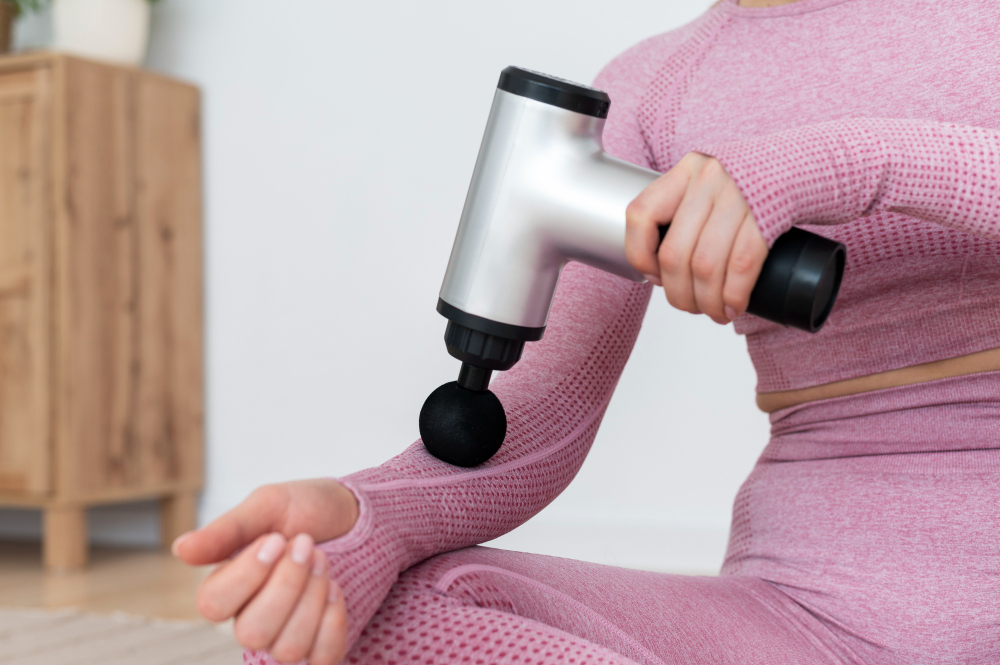
In modern fitness culture, recovery has become just as important as training itself. Athletes, gym-goers, runners, and even casual exercisers now understand that progress does not only depend on how hard one trains, but also on how effectively the body recovers afterward. This shift has led to the rise of various recovery tools, with recovery boots and massage guns becoming two of the most popular devices in recent years.
These tools are widely marketed as solutions for faster muscle recovery, reduced soreness, improved circulation, and enhanced athletic performance. Social media influencers, professional athletes, and fitness brands often showcase them as essential parts of a recovery routine. However, this popularity also raises an important question: are recovery boots and massage guns truly effective, or are they mostly hype driven by marketing trends?
To answer this, it is important to understand how these devices work, what scientific evidence suggests, and how they compare to traditional recovery methods such as sleep, nutrition, hydration, and active rest.
Understanding Muscle Recovery
Muscle recovery is the process through which the body repairs muscle fibers after exercise-induced stress. During workouts, especially resistance training or high-intensity exercise, small microtears occur in muscle tissue. The body responds by repairing and strengthening these fibers, which leads to muscle growth, adaptation, and improved performance over time.
Recovery also involves restoring energy stores, reducing inflammation, clearing metabolic byproducts, and normalizing nervous system activity. This process is influenced by multiple factors including sleep quality, nutrition, hydration, training intensity, and overall lifestyle habits.
Training Stress→Muscle Damage→Recovery and Adaptation
Recovery tools like boots and massage guns aim to support certain aspects of this process, primarily circulation, muscle relaxation, and perceived soreness reduction.
What Are Recovery Boots?
Recovery boots, also known as pneumatic compression boots, are wearable devices designed to improve blood flow and reduce muscle soreness after exercise. They typically consist of inflatable sleeves that wrap around the legs and use air pressure to apply rhythmic compression.
The compression sequence usually starts from the feet and moves upward toward the thighs, mimicking natural muscle pumping action that occurs during movement. This process is intended to help improve venous return, reduce fluid buildup, and support recovery after intense physical activity.
Recovery boots are commonly used by athletes after long training sessions, endurance events, or competitions that place heavy stress on the lower body.
What Are Massage Guns?
Massage guns are handheld devices that deliver rapid percussive therapy to muscles. They use repetitive, high-frequency vibrations to apply pressure to soft tissue, similar to a form of deep tissue massage.
The goal of massage guns is to reduce muscle stiffness, improve blood circulation, and temporarily relieve soreness or tightness.
These devices come with different attachment heads and speed settings, allowing users to target specific muscle groups with varying intensity levels. Massage guns are often used after workouts, during warm-ups, or on rest days as part of recovery routines.
How Recovery Boots Work
Recovery boots operate through sequential pneumatic compression. When activated, air chambers inside the boots inflate and deflate in a controlled pattern.This compression helps move blood and lymphatic fluid from the lower extremities back toward the central circulation system.
The process is believed to assist in reducing swelling, improving circulation, and potentially accelerating removal of metabolic waste products such as lactate.
Compression Therapy→Improved Venous Return and Fluid Movement
While recovery boots may enhance temporary blood flow and relaxation, their long-term impact on muscle repair and performance improvement is still debated in scientific literature.
How Massage Guns Work
Massage guns use percussive therapy, which involves applying rapid bursts of pressure into muscle tissue.
This mechanical stimulation is thought to help relax tight muscles, improve local blood flow, and stimulate sensory receptors in the skin and muscles.
The vibrations may temporarily reduce the perception of soreness by influencing the nervous system’s pain signaling pathways.Massage guns are often used on specific muscle groups such as calves, hamstrings, quadriceps, back, and shoulders.They can be particularly helpful for short-term relief of muscle tightness and stiffness after exercise.
Claimed Benefits of Recovery Boots and Massage Guns
Both recovery boots and massage guns are marketed with several potential benefits. These include:
- Reduced muscle soreness
- Improved circulation
- Faster recovery between workouts
- Decreased muscle stiffness
- Enhanced athletic performance
- Improved flexibility and mobility
- Reduced fatigue after exercise
While some of these benefits may occur to varying degrees, the strength and consistency of scientific evidence supporting them differ.It is important to distinguish between short-term sensations of relief and long-term physiological recovery improvements.
What the Research Says
Scientific research on recovery boots and massage guns is still developing. While some studies suggest modest benefits, results are often mixed and context-dependent.
Compression therapy devices like recovery boots have shown potential in improving subjective feelings of recovery and reducing perceived muscle soreness in some individuals. However, evidence for significant performance enhancement is limited.
Massage therapy in general has been associated with reduced muscle soreness and improved relaxation, but its effects on actual muscle repair and strength recovery are less clear.
Percussive therapy from massage guns is relatively new, and while early studies suggest improvements in range of motion and short-term soreness relief, long-term performance benefits are not strongly established.Many researchers emphasize that these tools should be viewed as complementary rather than essential recovery methods.
The Role of Blood Flow and Lactate
One of the most common claims is that recovery boots and massage guns help remove lactic acid from muscles more quickly.
However, modern exercise science shows that lactate is not a waste product that causes soreness in the way it was once believed. It is actually used by the body as an energy source and is cleared naturally through metabolic processes.
While increased blood flow may help reduce perceived fatigue, it does not necessarily accelerate muscle repair significantly beyond what normal recovery processes already accomplish.
Lactate Clearance≠Primary Driver of Muscle Recovery This means that while these devices may feel beneficial, their role in biochemical recovery is often overstated in marketing claims.
Perceived Recovery vs Actual Recovery
One of the most important distinctions in evaluating these tools is the difference between perceived recovery and actual physiological recovery.
Perceived recovery refers to how recovered a person feels, including reduced soreness, relaxation, and improved comfort.Actual recovery refers to measurable physiological processes such as muscle repair, strength restoration, and performance readiness.
Recovery boots and massage guns may have a stronger impact on perceived recovery than on actual structural muscle repair.This psychological benefit should not be underestimated, as feeling recovered can improve motivation and training consistency.
Benefits of Recovery Boots
Recovery boots may offer several practical benefits, especially for athletes who experience heavy lower-body fatigue.
They may help reduce swelling after intense endurance activities such as running, cycling, or long training sessions. The compression effect can also promote relaxation and improve comfort after prolonged physical exertion.
Some users report reduced heaviness in the legs and improved readiness for subsequent training sessions.
However, these effects are often temporary and may vary significantly between individuals.Recovery boots are generally more beneficial for people engaged in high-volume training or endurance sports rather than casual exercisers.
Benefits of Massage Guns
Massage guns may help reduce muscle tightness and improve short-term flexibility.
They can be useful during warm-ups to increase muscle activation and prepare the body for exercise. They are also commonly used post-workout to relieve stiffness and promote relaxation.Massage guns may be particularly helpful for individuals who experience localized muscle tension from repetitive movements or poor posture.
However, improper use or excessive pressure may cause discomfort or minor tissue irritation.Proper technique and moderation are important for safe and effective use.
Limitations of Recovery Technology
Despite their popularity, both recovery boots and massage guns have limitations.
They do not replace fundamental recovery factors such as sleep, nutrition, hydration, and rest days.They also do not significantly accelerate muscle hypertrophy or strength gains on their own.
Overreliance on these devices may create a false sense of recovery readiness, potentially leading to overtraining.
Additionally, cost can be a barrier, as high-quality recovery devices are often expensive compared to basic recovery methods.
Psychological Benefits and Placebo Effect
Part of the effectiveness of recovery boots and massage guns may be attributed to psychological factors and the placebo effect.
When individuals believe a treatment is helping them recover, they may feel less soreness and more confidence in their physical readiness.This does not mean the effects are imaginary, but rather that perception plays a significant role in recovery experience.
Relaxation, stress reduction, and ritual-based recovery routines can all positively influence how the body feels after exercise.
When These Tools Are Most Useful
Recovery boots and massage guns tend to be most useful in specific situations rather than as universal recovery solutions.
They may be helpful for:
- Athletes with high training volume
- Endurance sports participants
- Individuals with frequent muscle tightness
- People recovering from intense workouts or competitions
- Those seeking relaxation and temporary soreness relief
For general fitness enthusiasts, their benefits may be noticeable but not essential.
Are They Worth It?
Whether recovery boots and massage guns are worth using depends on expectations and context.
If the goal is short-term relief, improved comfort, and relaxation, these tools can be valuable additions to a recovery routine.
If the expectation is dramatic improvements in muscle growth, recovery speed, or athletic performance, the evidence does not strongly support such claims.
They should be seen as supportive tools rather than foundational elements of fitness recovery.
Better Foundations of Recovery
While recovery technology can be helpful, the most effective recovery strategies remain simple and evidence-based.
These include adequate sleep, balanced nutrition, proper hydration, structured training programs, and active recovery such as light walking or mobility work.
Stress management and consistent rest are also critical for long-term performance and health.
Recovery tools should complement these foundations rather than replace them.
Conclusion
Recovery boots and massage guns have become popular tools in modern fitness culture, offering convenience, relaxation, and short-term relief from muscle soreness. While they can improve perceived recovery and provide comfort after intense exercise, their effects on actual muscle repair and long-term performance enhancement are more limited than often advertised.
Scientific evidence suggests that these tools are best viewed as complementary recovery aids rather than essential components of fitness programs. They may be particularly useful for athletes with high training loads or individuals seeking additional comfort and relaxation after workouts.
However, the foundation of effective recovery remains unchanged: quality sleep, proper nutrition, hydration, smart training, and adequate rest.
Ultimately, recovery boots and massage guns are not purely hype, but they are also not miracle solutions. Their value lies in supporting recovery experiences rather than replacing the fundamental biological processes that drive fitness adaptation.